Best Gerbil Bedding for Pairs That Dig, and How Deep to Go

Mongolian gerbil bedding that holds tunnels needs depth first. See where the sources agree, and where they split on aspen.
Table of Contents
Gerbil bedding: what to buy and what to skip
If your gerbil has red, sore or hairless skin around the nose, or has stopped eating, go to the vet section near the end and call a vet now.
The short answer
For pet Mongolian gerbils, paper-based bedding mixed with hay is the least contested choice: none of the sources we checked calls paper unsafe. Depth matters more than brand, because the RSPCA’s gerbil housing advice recommends 20–30 cm (about 8–12 in) so gerbils can build real burrows. California’s wildlife agency lists gerbils among prohibited pets, so check local rules before you buy.
Where to jump if you are mid-problem
Buying for a new pair? Start with depth. Tunnels collapsing or the tank smelling? The structure and cleaning sections cover both.
🩺 Health Note: This is general information, not a substitute for an exam by a vet experienced with gerbils or exotic pets. Red, sore or hairless skin around the nose, or a gerbil that isn’t eating, needs a vet visit, and changing the bedding is not a treatment. This article contains no dosages.
Depth first: shallow bedding can’t hold a tunnel
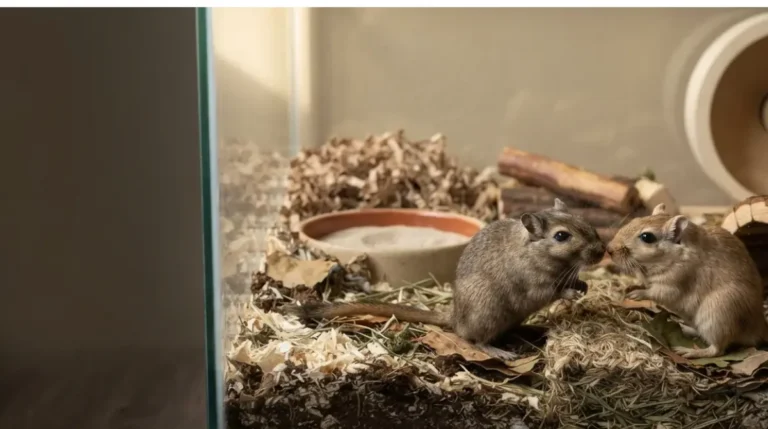
Mongolian gerbils dig to feel safe, so depth comes before brand.
What welfare groups recommend
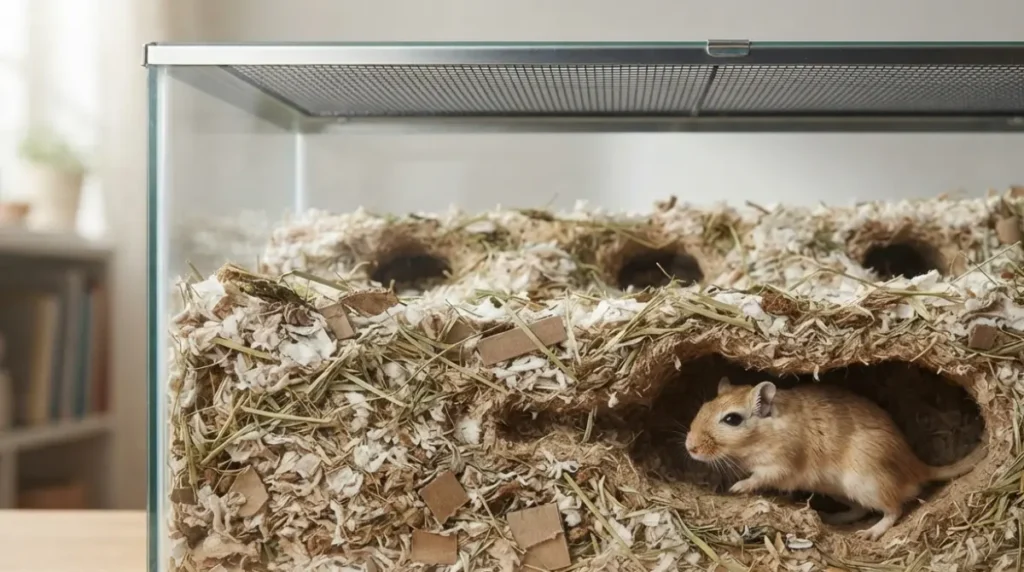
The RSPCA recommends 20–30 cm (8–12 in) of bedding in a tank about 50 cm tall. Merck’s owner page says to fill the tank about one-third deep, and Blue Cross sets a 100 × 40 × 40 cm minimum for two to four gerbils with no depth figure.
What that means in litres
In a 100 × 40 cm tank, pressed bedding takes 80 L at 20 cm and 120 L at 30 cm. Measure it with our bedding-depth guide and choose the tank in our gerbil tank setup for a pair.
🔄 Outdated Advice: “A couple of inches is enough” is outdated; use the RSPCA’s range of 20–30 cm.
Which gerbil bedding is safe, and which is contested
Sources agree on paper, hay, and a short list to avoid, and split on aspen and kiln-dried pine.
Safe by consensus: paper and hay
Merck calls paper bedding safe and digestible if eaten, and Blue Cross lists hay, cardboard, and shredded paper for nests and burrows.
Contested or avoid
| Material | What the sources say |
|---|---|
| Aspen, kiln-dried pine | Merck: use remains controversial. American Gerbil Society: well tolerated by most gerbils. |
| Cedar, untreated pine | Merck: oils may be toxic. American Gerbil Society: unsafe. |
| Sawdust | RSPCA: may cause respiratory problems. |
| Cotton-style fluff | RSPCA: serious welfare risk. Blue Cross: can wrap around legs. |
🔄 Outdated Advice: Cedar and untreated pine shavings were once pet-store standard, but the American Gerbil Society says they are no longer considered safe. If a gerbil keeps getting sore noses, ask a vet experienced with gerbils.
The best gerbil bedding to buy, compared
Paper-based bedding plus hay is the best-supported combination, but we haven’t tested brands, so this compares materials by what the sources say.
Our picks at a glance
| Material | Role | Best For | Key Detail |
|---|---|---|---|
| Paper-based bedding | Absorbent base | New owners | Merck: safe, digestible if eaten. American Gerbil Society: generally dustier. |
| Hay | Burrow structure, nesting | Any pair | RSPCA and Blue Cross both name it. |
| Cardboard, shredded paper | Shreddable burrow material | Any pair | Blue Cross lists both. |
| Aspen | Optional base | Keepers who accept the split | Merck: controversial. American Gerbil Society: well tolerated. |
How to keep gerbil tunnels from collapsing
Tunnels hold when the bedding is deep enough and gives burrows structure.
Depth first, then structure
Check depth against the 20–30 cm range first. Hay is the structure material both the RSPCA and Blue Cross name, and Blue Cross adds cardboard for gerbils to shred into burrows. Our best gerbil cage guide covers glass tanks deep enough to hold it.
When digging looks stuck
If gerbils dig repetitively in one corner, the RSPCA advises more enrichment, more hiding places, and a gerbilarium with added depth.
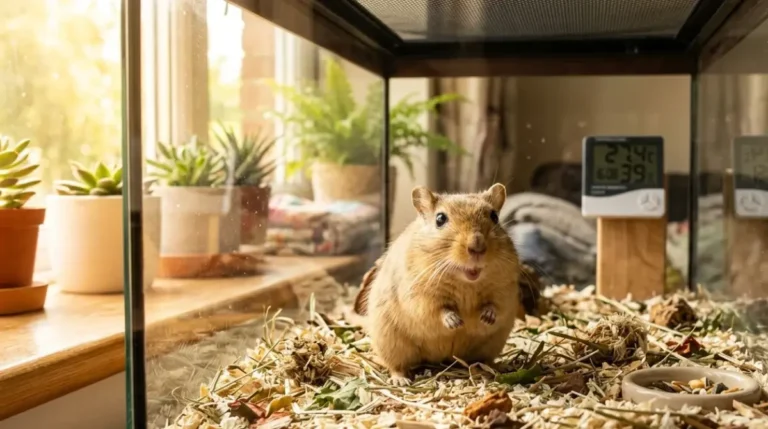
⚠️ Watch Out: Merck links relative humidity above 50% to sore noses in gerbils, so don’t add water to bedding to firm up tunnels.
How often to change gerbil bedding
Gerbils make little mess, but the groups still disagree on how often to clean.
What the groups say
| Source | Spot clean | Full clean |
|---|---|---|
| RSPCA | Every few days | Every 2–3 weeks |
| Blue Cross | Every few days | Every 3–6 weeks, by group size and mess |
| Merck | Not specified | At least every 2–3 weeks |
Keeping the smell down
Merck notes gerbils excrete little urine and produce hard, dry droppings, so they need less frequent cleaning than other pet rodents. We haven’t measured odor, so we can’t say which bedding smells least.
Red or sore nose? See a vet, then check the bedding
If your gerbil has a red, raw, or crusty nose, see a vet experienced with gerbils before changing anything.
What the sources say
Merck’s professional page describes sore nose as a skin condition and links it to relative humidity above 50%. The American Gerbil Society adds that some gerbils react to a particular bedding, which does not mean bedding caused it.
What to tell your vet
- Bedding type, depth, and how often you change it
- When the redness started and whether it has spread
- Whether the tank is damp or in a humid room
Gerbil bedding questions, answered
1. What is the best bedding for gerbils?
Paper-based bedding plus hay is the best-supported combination, deep enough to dig, according to Merck, the RSPCA, and Blue Cross.
2. How deep should gerbil bedding be?
The RSPCA recommends 20–30 cm (8–12 in) in a tank about 50 cm tall; Merck says fill the tank about one-third.
3. Is aspen bedding safe for gerbils?
Sources split: Merck calls aspen controversial, while the American Gerbil Society says most gerbils tolerate it. Ask a vet experienced with gerbils.
4. Is paper bedding good for gerbils?
Merck calls paper bedding safe and digestible if eaten, though the American Gerbil Society says it is generally dustier.
5. Can I use pine or cedar bedding?
Avoid cedar and untreated pine; Merck says their oils may be toxic. Kiln-dried pine is contested, so ask a vet experienced with gerbils.
6. Is cotton or fluffy bedding okay for gerbils?
No. The RSPCA calls cotton-style fluff a serious welfare risk, and Blue Cross says it can wrap around legs.
7. How often should I change gerbil bedding?
Spot clean every few days. Full cleans range from every 2–3 weeks (RSPCA, Merck) to every 3–6 weeks (Blue Cross).
8. How do I stop gerbil tunnels collapsing?
Start with 20–30 cm of bedding, then add hay and cardboard. Don’t dampen it; Merck links humidity above 50% to sore noses.
9. Which gerbil bedding smells least?
We haven’t measured odor. Merck notes gerbils excrete little urine and need less frequent cleaning than other pet rodents.
10. What if my gerbil has a sore nose?
See a vet experienced with gerbils promptly. Merck links sore noses to humidity above 50%, so don’t treat it at home.
Your next step for a gerbil tank that works
Choose paper-based bedding plus hay, fill the tank 20–30 cm deep, and spot clean every few days. Next, check your tank against our gerbil tank size for a pair guide.