Fat Tailed Gerbil or Mongolian Gerbil? Get the Care Right

Fat tailed gerbils are described as docile and slow-moving. See where company, housing and diet advice differs from Mongolian gerbils.

Table of Contents
Tail bleeding or missing skin? Call a vet experienced with gerbils now, then read the tail health section.
A fat-tailed gerbil (Pachyuromys duprasi) and a Mongolian gerbil (Meriones unguiculatus) are both sold as “a gerbil,” but company, housing and food advice differ between them. Choosing a species? Start with the table below. Already own one? Go to company and housing. Our Mongolian gerbil tank setup guide covers pairs and deep bedding; don’t copy those numbers across. Where no reliable fat-tailed source exists, we say so.
🩺 Health Note: This is general information, not a substitute for an exam by a vet experienced with gerbils. A tail that has lost skin, or any bleeding wound, needs a vet. If you don’t have an exotics vet yet, find one before you need one.
Fat-tailed vs Mongolian gerbil: the differences at a glance
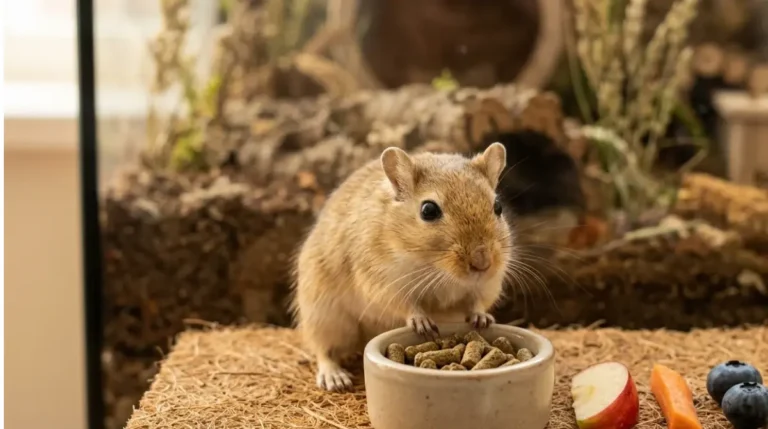
The quickest tell is the tail: a fat-tailed gerbil has a short, thick, club-shaped one.
| Trait | Mongolian gerbil | Fat-tailed gerbil | Key detail |
|---|---|---|---|
| Tail | Longer, up to about 120 mm | Club-shaped, about 58 mm | Animal Diversity Web lengths |
| Captive lifespan | 2–3 years (Merck); 2–5 (Omlet) | 5–7 (Animal Diversity Web); 5–8 (Omlet); 2–4 (Crittery) | Sources disagree |
| California, Hawaii | Restricted; prohibited | Restricted; prohibited | Rules name gerbils, not species |
How to tell them apart
🔄 Outdated Advice: Omlet’s US guide says the fat-tailed gerbil’s tail is longer than its body. Animal Diversity Web measures it shorter than the head and body.
Where gerbils are restricted
California’s restricted species rule exempts only certain hamsters, rats, mice, guinea pigs and chinchillas, and gerbils aren’t among them. Hawaii’s agriculture department lists gerbils as prohibited. Neither names a species, and cities can add rules, so confirm locally.
Can fat-tailed gerbils live together, or alone?
Company is where the species split most, and the fat-tailed evidence is thinnest.
Mongolian gerbils: pairs
The RSPCA says gerbils should never live alone, and Merck recommends same-sex pairs, ideally littermates. We apply both to Mongolian gerbils only. Our lone gerbil guide covers next steps.
Fat-tailed gerbils: what keepers report
No welfare charity or vet manual we could access sets a pairing standard for fat-tailed gerbils. Keepers disagree:

- Animal Diversity Web: social and found in colonies, but can live alone and can be aggressive toward their own species.
- Crittery: groups of males are possible, but fallouts come fast and without warning; alone is fine with enough space, enrichment and time.
If you pair them, keep a spare tank ready, as Crittery advises.
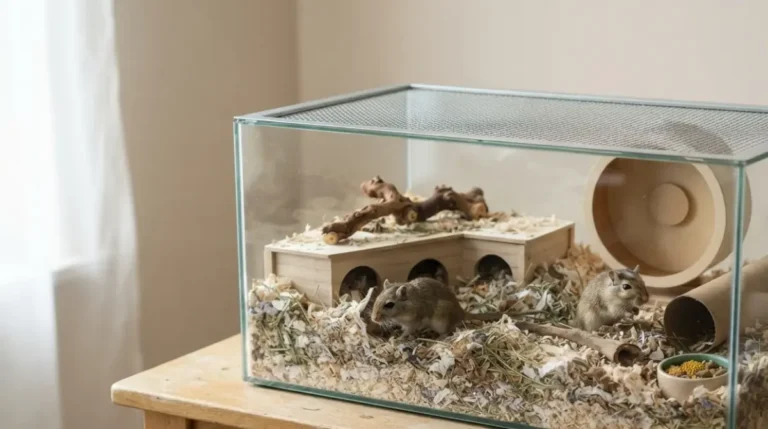
Housing: how much floor and bedding each species needs
Housing numbers don’t transfer between species, and the fat-tailed figures below come from keepers, not a welfare or veterinary standard.
Floor and height
Crittery says fat-tailed gerbils aren’t good climbers, so floor space matters more than height.

| Item | Mongolian gerbil | Fat-tailed gerbil | Key detail |
|---|---|---|---|
| Floor | About 5 gallons per gerbil (Merck) | At least 60×45 cm (Crittery) | Furry Critter lists a smaller 24×12 in |
| Bedding | 20–30 cm (RSPCA) | At least 2 in, about 5 cm (Crittery) | RSPCA names no species |
| Wheel | Solid; sizes disputed | Solid, 6.5 in or larger (Crittery) | Keeper practice |
| Sand bath | Needed (Merck) | Needed, can stay in (Crittery) | Both species |
Bedding depth
🔄 Outdated Advice: Omlet says fat-tailed gerbils have the same requirements as Mongolians. Crittery’s much shallower bedding figure says otherwise.
Wheel and sand bath
For Mongolian gerbils, see our wheel size guide and Merck’s housing page.
Feeding each species: insects, pellets and moisture
Wild gerbils of both species eat insects, but captive feeding advice differs.
Mongolian gerbils: pellets
Merck calls gerbil pellets with 18–20% protein the healthiest choice and advises avoiding seed-and-pellet mixes. Our Mongolian gerbil food guide goes deeper.
Fat-tailed gerbils: insects and moisture
Animal Diversity Web calls wild fat-tailed gerbils mostly insectivorous. Crittery uses a gerbil or hamster mix as the base, adds insects and egg, and warns against too much moisture.
⚠️ Watch Out: Merck’s 18–20% protein figure concerns Mongolian gerbils. We found no reliable fat-tailed target, so ask an exotics vet before changing a diet.
Handling: which gerbil is easier to tame and hold?
Speed and reaction to being woken differ.
Mongolian gerbils: quick and agile
The RSPCA says gerbils are quick and agile and don’t like being picked up; cup them with two hands once they know your voice.
Fat-tailed gerbils: slow and docile
Crittery describes them as docile, slow-moving and unlikely to bite unless woken from deep sleep, though some are cage-defensive.
💡 Keeper Tip: Crittery suggests placing a toilet roll tube in the enclosure and lifting it once the gerbil climbs in, or scooping from the sides with both hands.
Tail health and when to call an exotics vet
🚨 Vet Now: If a gerbil’s tail has lost skin or is bleeding, or it has bite wounds, call a vet experienced with gerbils now rather than waiting.
What a plump tail tells you
Animal Diversity Web says tail thickness is used to judge a fat-tailed gerbil’s condition, and a skinny tail may mean it isn’t getting enough food. If it looks thin, call a vet rather than changing the diet yourself.
Handling the tail
The RSPCA says never lift gerbils by the tail, as they can shed its skin. We found no source on tail-skin loss in fat-tailed gerbils, or saying lifting one is safe, so scoop with both hands. Ask a clinic before you need it whether it sees duprasi; the AEMV directory lists exotic vets.
Fat-tailed gerbil questions, answered
1. What’s the main difference between a fat tailed gerbil and a Mongolian gerbil?
A fat tailed gerbil has a short, club-shaped tail and is described as docile; its company, housing and diet advice differ too.
2. How long does a fat tailed gerbil live?
Sources disagree: Animal Diversity Web says 5–7 years, Omlet 5–8, Crittery 2–4. No fat tailed gerbil lifespan is settled.
3. Do fat tailed gerbils need a friend?
Crittery says a fat tailed gerbil can live alone with enough space, enrichment and time; Animal Diversity Web reports both social and solitary behavior.
4. How big a tank does a fat tailed gerbil need?
Crittery suggests at least 60×45 cm of floor for a fat tailed gerbil, favoring floor over height. No welfare standard was found.
5. How deep should fat tailed gerbil bedding be?
Crittery says at least 2 inches (about 5 cm) for a fat tailed gerbil. Don’t borrow the RSPCA’s 20–30 cm gerbil figure.
6. Do fat tailed gerbils need a sand bath?
Crittery says a fat tailed gerbil must have a sand bath, which can stay in permanently.
7. What do fat tailed gerbils eat?
Wild fat tailed gerbils are mostly insectivorous. Crittery feeds gerbil mix plus insects and egg, watching moisture; no reliable nutrient target was found.
8. Are fat tailed gerbils friendly and easy to handle?
Crittery describes a fat tailed gerbil as docile and slow-moving, rarely biting unless woken from deep sleep.
9. Is a fat tailed gerbil legal in California?
California restricts all gerbils, so owning a fat tailed gerbil without a state permit is unlawful. Check city and county rules too.
10. Can you pick up a fat tailed gerbil by the tail?
We found no source saying it’s safe, so don’t. If a fat tailed gerbil’s tail skin is missing or bleeding, call a vet now.
Your next step
Before you buy or change anything, confirm which species you have and whether it’s legal where you live. Set up floor and bedding for that species, not the other. Then find an exotics vet before you need one.