Calm Old Gerbil Care for a Mongolian Gerbil Slowing Down

Old gerbil slowing down? About half of gerbils over two develop inner-ear masses that can tilt the head. Here’s how to tell normal aging from illness.
Table of Contents
🚨 Vet Now: Call a vet experienced with gerbils today if an older gerbil stops eating, struggles to breathe, suddenly tilts its head or loses its balance, can’t move around the tank, has a lump that is open or bleeding, or quickly loses or gains weight.
Is your gerbil getting old, or getting sick?
This guide covers Mongolian gerbils, the usual pet gerbil. Fat-tailed gerbils (duprasi) age differently, so these ages don’t apply to them.
In gerbils, aging and illness look alike. The American Gerbil Society says gerbils hide symptoms so well that even experienced owners often notice late. If that happened to you, it’s not a failure; it’s how prey animals survive.
If something looks wrong right now
Use the red box above and call a vet today.
If your gerbil is just slowing down
Start with the table on normal aging versus a vet visit.
If you’re preparing for the end
Go to the quality-of-life section near the end.
🩺 Health Note: This is general information, not a substitute for an exam by a vet experienced with gerbils. Don’t give medicines or home treatments; the RSPCA says to give gerbils only medicines their vet recommends.
When is a gerbil old? Lifespan and first signs
A Mongolian gerbil often shows age well before its last year.
How long gerbils live: sources differ
Merck’s veterinary chapter puts the normal lifespan at 2–3 years. The RSPCA says up to three to four years, some longer, and the American Gerbil Society (AGS) says most live about 2.5 to 3.5.
First signs of aging, from about 18 months
AGS says a gerbil may slow down by 18 months: moving less, sleeping more, ignoring the wheel and drinking more. It shows most beside the partner, and AGS advises closer monitoring from age two.
| Age | What’s reported | Source |
|---|---|---|
| From 10 months | Amyloid deposits possible | Merck |
| Over 1 year | Kidney disease common | Merck |
| By 18 months | First aging signs may show | AGS |
| From 2 years | Monitor more closely | AGS |
| Over 2 years | About half develop inner-ear masses | Merck |
📊 Tested / Spec: Sourced from Merck and AGS, not tested. Each age marks when a change becomes possible or common, not a deadline.
Normal aging or a vet visit? How to tell
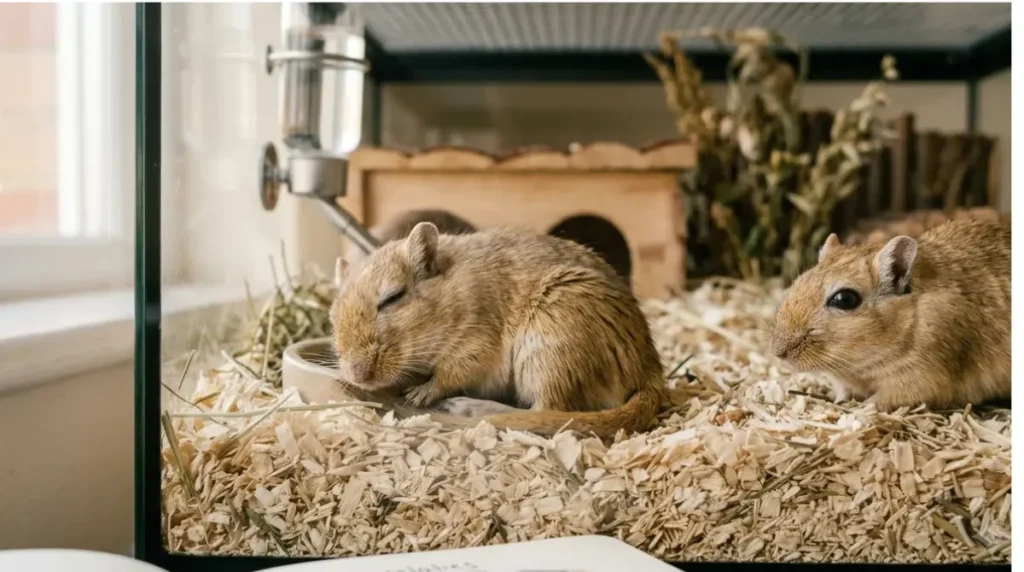
Sleeping more can be aging in a Mongolian gerbil, but PDSA lists it as a reason to see a vet straight away.
Changes AGS describes as aging
AGS lists slowing down, sleeping more and drinking more as normal aging changes.
Signs PDSA and Merck say need a vet
Several of those same changes appear on PDSA’s see-a-vet-straight-away list and among Merck’s early warning signs of illness.
| Change | AGS | PDSA / Merck | Key Detail |
|---|---|---|---|
| Sleeping more, less active | Aging | PDSA: vet straight away; Merck: warning sign | Book a vet check |
| Drinking more | Aging | Merck: kidney disease sign; PDSA: vet straight away | Book a vet check |
| Steady or sudden weight change | Sign of trouble | PDSA: big change over a short time | See a vet promptly |
| Not eating | Not listed | PDSA: vet straight away | Call a vet today |
| New lump | Not listed | PDSA: vet straight away | See a vet promptly |
Why “just old age” isn’t a safe assumption
🔄 Outdated Advice: PetMD’s lifespan guide says late-life lethargy usually lasts a week or two before a gerbil dies of old age. Merck lists inactivity as an early warning sign and says to bring the gerbil to a vet if it appears.
Health problems that show up in older gerbils
Each condition below is linked to age in Mongolian gerbils, and each needs a vet experienced with gerbils. For general illness signs, see our full list of sick gerbil symptoms.
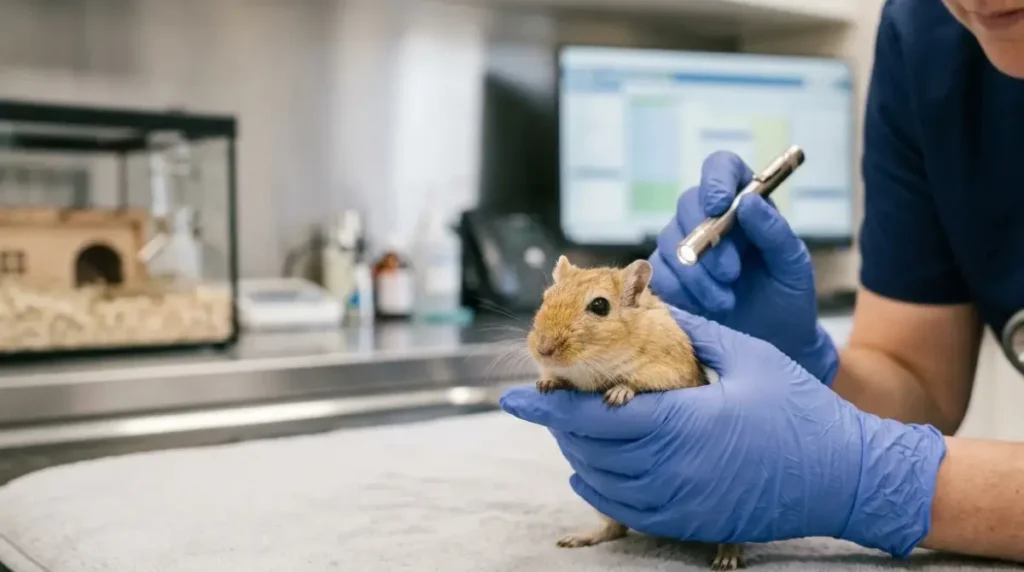
Belly lumps and the scent gland
Merck’s guide to gerbil disorders says older gerbils can develop benign or malignant scent gland tumors, sometimes with open sores. Masses may be removed surgically, and prompt treatment improves the outlook; ask your vet about the risks at your gerbil’s age.
Head tilt and inner-ear masses
Merck says about half of gerbils over two develop inner-ear masses, which can cause a head tilt.
Thirst, weight loss and kidneys
Merck says gerbils over a year old often develop kidney disease, with more thirst, urination and weight loss.
Other conditions linked to age
Merck also lists amyloid deposits, eye problems and greater risk of mites. AGS adds strokes, tooth problems, respiratory infection and ovarian cysts.
Weigh monthly and book a senior check-up
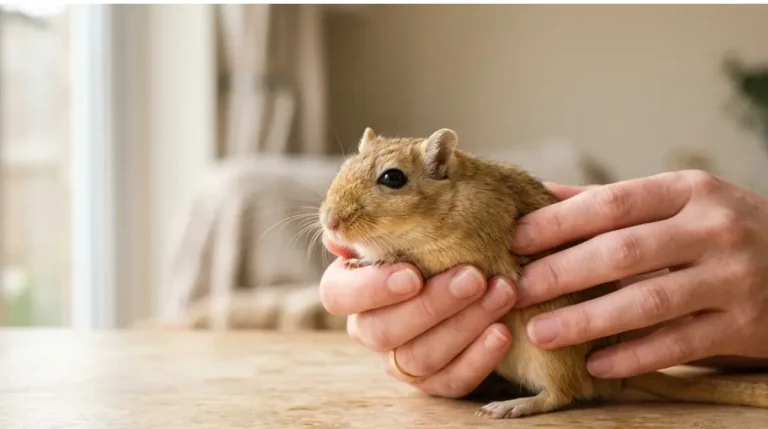
A digital scale gives you the earliest objective sign of change in an aging Mongolian gerbil.
Start a monthly weight log
AGS suggests weighing gerbils at least once a month from age two and keeping a written record.
✅ Do This: Log the date, each gerbil’s weight in grams, whether it’s eating and drinking normally, and anything new. Bring the log to every vet visit.
What a weight change can mean
AGS says any steady or sudden loss or gain can signal trouble: loss may mean overgrown teeth or illness, and rapid gain may mean a tumor. Either way, see a vet experienced with gerbils promptly.
Daily checks and a yearly vet visit
The RSPCA recommends daily health checks for gerbils, including their teeth. The Royal Veterinary College’s exotics service recommends a health check every year.
Making life easier for an older gerbil
AGS says elderly Mongolian gerbils need only small changes.
Wheels, platforms and bedding
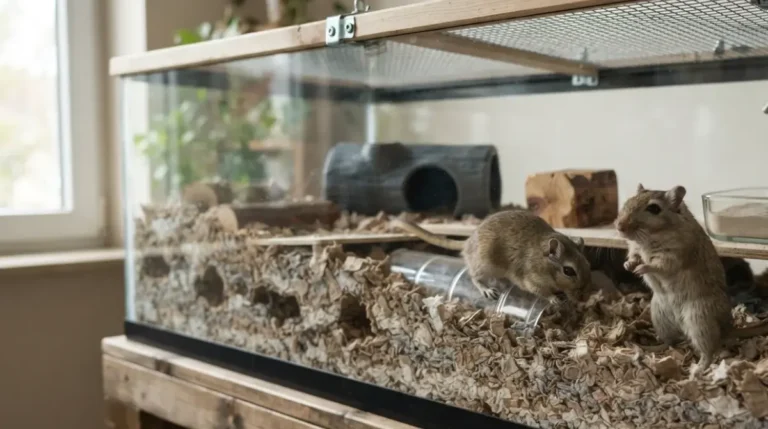
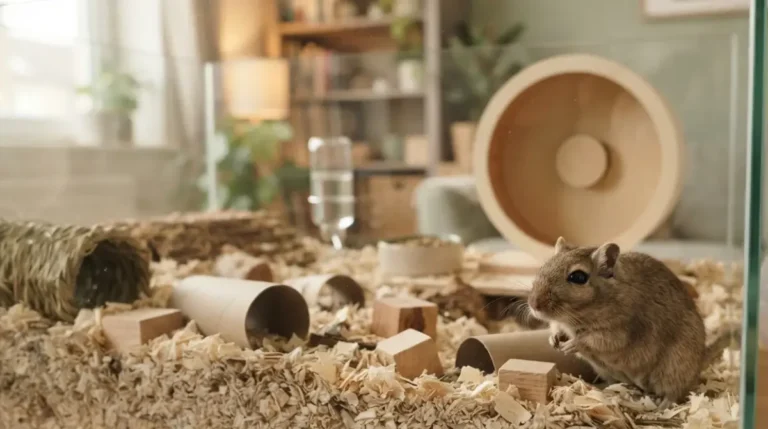
Start from our standard tank setup for a pair. For a wobbly gerbil, AGS suggests a more enclosed wheel for side support and possibly lower bedding, and PetMD suggests removing tall platforms.
The RSPCA’s 20–30 cm bedding depth stays the standard for healthy gerbils, so lower it only for one that’s struggling.
⚠️ Watch Out: Woodgreen warns that a weaker gerbil can get stuck under solid shelves. Check every shelf and gap with slower movement in mind.
Food: keep it the same unless your vet says otherwise
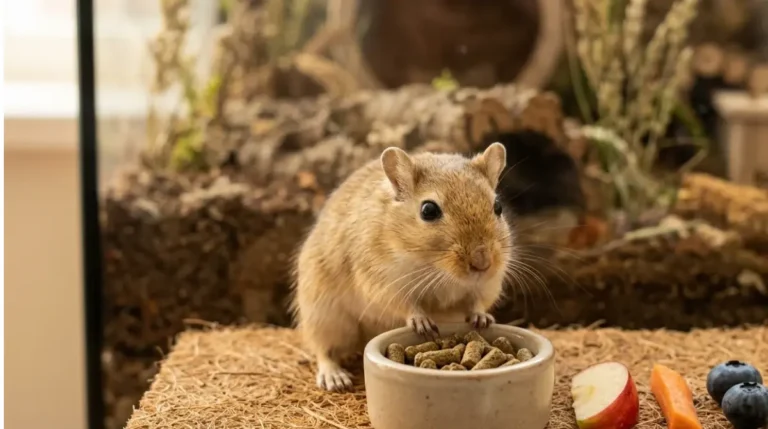
AGS says elderly gerbils can keep their regular food while their teeth stay healthy. If yours is losing weight, see a vet before changing its diet.
If your older gerbil loses its partner
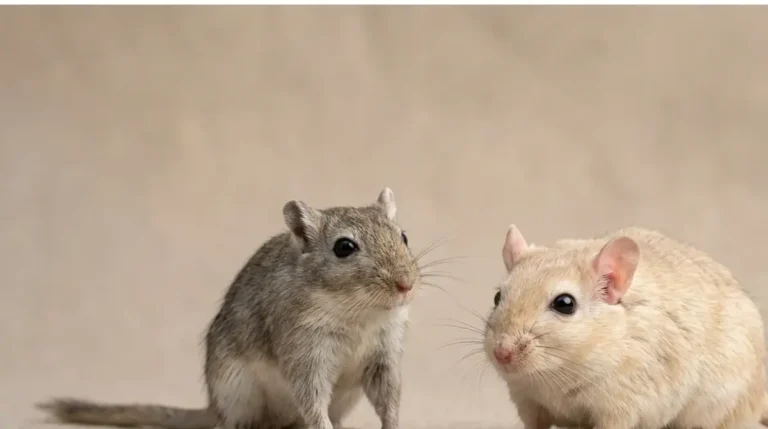
AGS says a gerbil left alone can be paired with a pup. Read what to do if one gerbil is left alone, and get guidance from a vet or experienced rescue first.
Quality of life: knowing when it’s time
This is a decision to make with a vet experienced with Mongolian gerbils, never alone or in a hurry.
What a good day still looks like
AGS describes a gerbil’s normal life as chewing, nesting, digging, grooming, eating, drinking and running. While your gerbil still enjoys these, AGS says it has quality of life.
Signs the stress outweighs the good days
AGS says to consider humane euthanasia when a gerbil can’t move about safely, is in so much pain it only hides, or stops trying to eat. The AEMV exotic vet directory can help you find a vet to talk it through. The grief afterward is real.
Quick answers about old gerbil care
1. How old is an old gerbil?
The American Gerbil Society says an old gerbil may show signs of aging by 18 months and needs closer monitoring from two.
2. How long do gerbils live?
Sources differ: Merck gives 2–3 years, the RSPCA up to three to four, and AGS says most gerbils live 2.5–3.5.
3. Is it normal for an old gerbil to sleep more?
AGS lists it as aging, but PDSA says an old gerbil sleeping more or low on energy needs a vet straight away. Call a vet experienced with gerbils.
4. Why is my old gerbil drinking more?
AGS links drinking more to aging, but Merck says older gerbils often develop kidney disease, which raises thirst. Call a vet experienced with gerbils.
5. Why is my old gerbil losing weight?
AGS says weight loss in an old gerbil can mean overgrown teeth or an underlying condition, so it needs checking promptly. Call a vet experienced with gerbils.
6. Why does my old gerbil tilt its head?
Merck says about half of gerbils over two develop inner-ear masses, which can make an old gerbil tilt its head. Call a vet experienced with gerbils.
7. Is a lump on my old gerbil’s belly cancer?
Merck says older gerbils can develop scent gland tumors that are benign or malignant, and prompt treatment improves the outlook. Call a vet experienced with gerbils.
8. Can an old gerbil have surgery?
Merck says masses can be removed surgically, and the outlook depends on when treatment happens. Ask a vet experienced with gerbils about the risks for an old gerbil.
9. Should I get a friend for my old gerbil?
The American Gerbil Society says a gerbil left alone can be paired with a pup; get guidance from a vet or rescue first.
10. When is it time to put an old gerbil to sleep?
AGS says to consider it when an old gerbil can’t move safely, hides in pain, or stops trying to eat. Decide with a vet experienced with gerbils.
Your next step: start a weight log this week
Weigh each gerbil this week and write it down. One number now gives you something to compare next month, and gives your vet something to work with.
Then find a vet experienced with gerbils before you need one. If anything in the red box at the top applies today, call now.