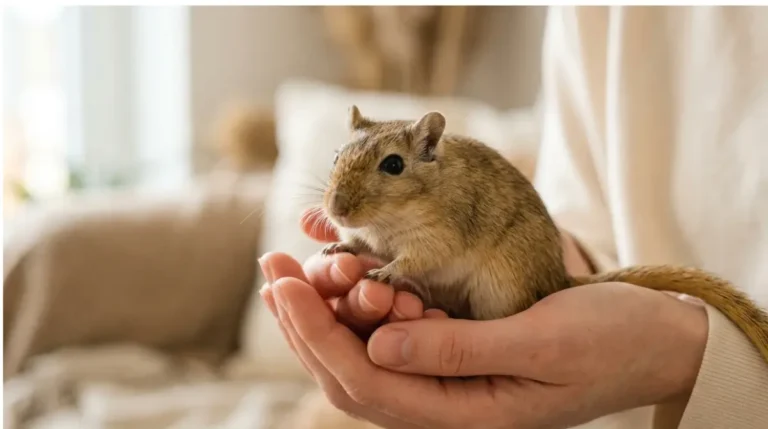
Sick Gerbil Symptoms and the Right Time to Call a Vet

Sick gerbil symptoms in Mongolian gerbils: eight early warning signs, and why wait-and-see advice no longer holds up.

Table of Contents
🚨 Vet Now: Call a vet experienced with gerbils now for trouble breathing; watery diarrhea with a hunched, weak or not-eating gerbil; bleeding or missing tail skin; or a seizure it doesn’t recover from. Every other sign below needs a vet too.

Gerbils hide illness, so early signs matter
This guide covers Mongolian gerbils. The American Gerbil Society says gerbils hide symptoms as long as they can, so assume any sign needs a vet and don’t wait.
Injury, not illness?
Missing tail skin is in our gerbil tail slip guide. Stuck limbs and bite wounds are in the injury section of our tank setup guide.
Noticed it late?
That’s common, because gerbils hide illness. Call a vet today.
🩺 Health Note: General information, not a substitute for an exam by a vet experienced with gerbils. Don’t give medicine or home treatments.
Early signs your gerbil is unwell
The Merck Veterinary Manual lists eight early warning signs in Mongolian gerbils and says to bring a gerbil to a vet if any appear.
The eight signs
| Sign (Merck) | Key Detail |
|---|---|
| Inactivity | Vet visit |
| Hunched posture | Vet visit |
| Appetite or weight loss | Vet visit |
| Dehydration | Vet visit |
| Urine or dropping changes | Vet visit |
| Eye, ear or nose discharge | Vet visit |
| Rough, matted coat | Vet visit |
| Trouble breathing | Vet now (Omlet) |
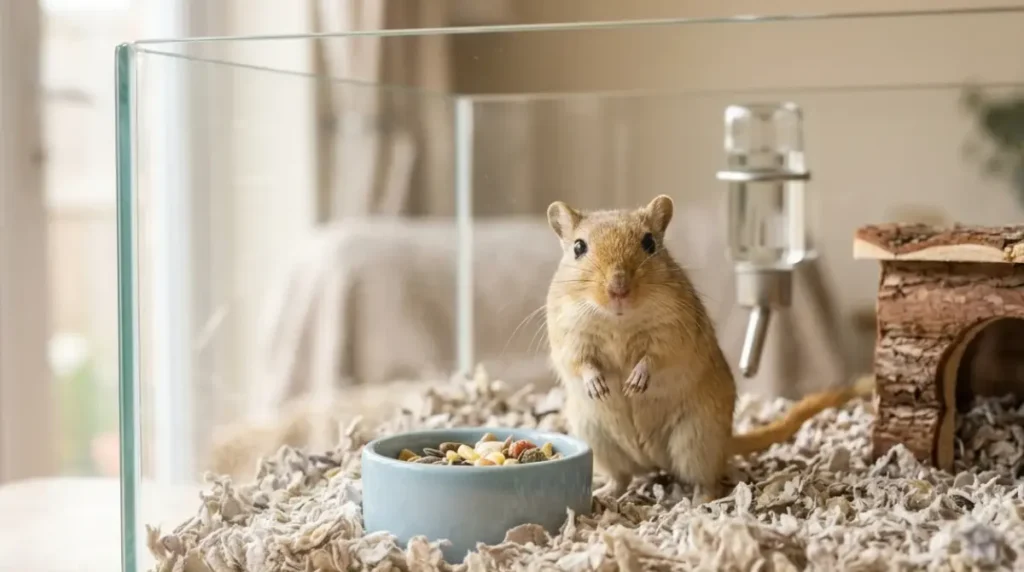
More signs to watch
PDSA says to see a vet straight away for diarrhea, not eating, low energy, lumps, limping, bleeding, runny eyes or nose, or overgrown teeth.
🔄 Outdated Advice: Some pages say to keep a gerbil with a runny nose warm and wait. PDSA and Merck say discharge needs a vet.
Diarrhea, hunched posture and not eating
🚨 Vet Now: Watery diarrhea with a hunched, weak or not-eating gerbil needs a vet experienced with gerbils now.
Tyzzer disease signs
Merck calls Tyzzer disease the most common infectious disease in Mongolian gerbils, in young or stressed ones. Signs include a rough coat, hunched posture, poor appetite, dehydration and watery diarrhea. A vet may give fluids, medication and feeding support.
Separation and hygiene
Merck says to separate a gerbil with Tyzzer disease. Crittery advises against, noting long separations need a split-cage reintroduction. Ask your vet.
Merck says handle sick gerbils last, wash your hands and disinfect the cage; Salmonella can reach people even when a gerbil looks well.
Red around the nose or eyes: porphyrin or injury?
What the red usually is
Crittery says reddish-brown staining around a Mongolian gerbil’s nose or eyes is porphyrin, not blood. Merck says stress can make the glands release too much.
When it needs a vet
Merck says irritation can lead to scratching, hair loss, scabs and infected sores, and a vet prescribes the ointment. Don’t treat it yourself.
Environment and bedding clues
Merck names incompatible cage mates, overcrowding and high humidity as stressors, and advises keeping humidity below 50%. See our gerbil temperature guide. Burgess says mouth sores may mean rough bedding; our best gerbil bedding guide compares options.
Gerbil seizures: usually pass, but know when to call
🚨 Vet Now: Slow recovery after a seizure, or repeated seizures without normal rest between, needs a vet experienced with gerbils, per Colorado Exotic Animal Hospital.
What seizures look like
Merck says seizures affect about 20–40% of Mongolian gerbils, peaking by 6 months. They range from twitching to convulsions, with no permanent damage. The American Gerbil Society says a gerbil may stay stiff or fall on its side.
During a seizure
Crittery says not to touch a gerbil mid-fit; the American Gerbil Society says to return a held gerbil to its nest. Merck says seizures last several minutes; Colorado Exotic advises a call over one minute.
Lumps, head tilt and thirst in older gerbils
Thirst and weight loss
Merck says Mongolian gerbils over 1 year often develop kidney disease, with more urination, thirst and weight loss.
Head tilt
Merck says about half of gerbils over 2 years develop inner-ear masses, which can cause a head tilt. Treatment is surgery by a vet.
Belly lumps
Wood Green says the belly scent gland is normal. Merck says older gerbils can develop tumors of it, and prompt treatment helps. Take any unusual lump to a vet.
Finding a gerbil-savvy vet, and what to bring
Finding an exotics vet
Wood Green advises a vet who specialises in small mammals. The AEMV directory lists exotics vet clinics, though it doesn’t name gerbils, so ask whether one sees them before you need it.
What to bring, and skip
Note when signs began, eating and drinking, droppings, weight and any tank change, per Merck’s list. The RSPCA says to give gerbils only medicines their vet recommends.
🔄 Outdated Advice: Q&A threads suggest peroxide, sugar water or syringe-fed sports drinks. Merck puts fluids, medication and feeding support with the vet.
Quick answers about sick gerbil symptoms
1. What are sick gerbil symptoms?
Merck lists inactivity, hunched posture, appetite or weight loss, dehydration, dropping changes, discharge, rough coat and trouble breathing. Call a vet experienced with gerbils.
2. When should a sick gerbil see a vet?
Straight away, per PDSA, for diarrhea, not eating, lumps, limping, bleeding or runny nose. Call a vet experienced with gerbils.
3. Why is my gerbil lethargic?
Inactivity and low energy are warning signs, per Merck and PDSA. Call a vet experienced with gerbils.
4. Why is my gerbil not eating?
Appetite loss is an early warning sign, per Merck, and PDSA lists overgrown teeth. Call a vet experienced with gerbils.
5. Why does my gerbil have diarrhea?
Watery diarrhea with hunched posture can signal Tyzzer disease, per Merck. Call a vet experienced with gerbils now.
6. Why is my gerbil twitching?
Merck says seizures affect about 20–40% of gerbils, without permanent damage. If recovery is slow, call a vet experienced with gerbils.
7. Why is my gerbil’s nose red?
Often porphyrin, not blood, says Crittery. Merck warns of scabs and sores, so see a vet experienced with gerbils.
8. Can I treat a sick gerbil myself?
No. The RSPCA says to give only medicines the vet recommends, so call a vet experienced with gerbils.
9. Should I separate a sick gerbil?
Merck says separate for Tyzzer disease; Crittery advises against. Ask a vet experienced with gerbils.
10. How do I find a gerbil vet?
Wood Green advises a small-mammal specialist. Use the AEMV directory and ask if the clinic sees gerbils.
Your next step: check your gerbil tonight
Tonight, check your gerbil’s posture, coat, eyes, nose and droppings, and note how much it eats. If any sign above is true, call a vet experienced with gerbils instead of waiting, and bring your notes on when signs began. Find an exotics vet before you need one.