How to Introduce Two Gerbils the Smart Way, Using a Split Cage

Introducing Mongolian gerbils starts with a split cage, and no source promises a timeline. See the routine and where rescue guides disagree.
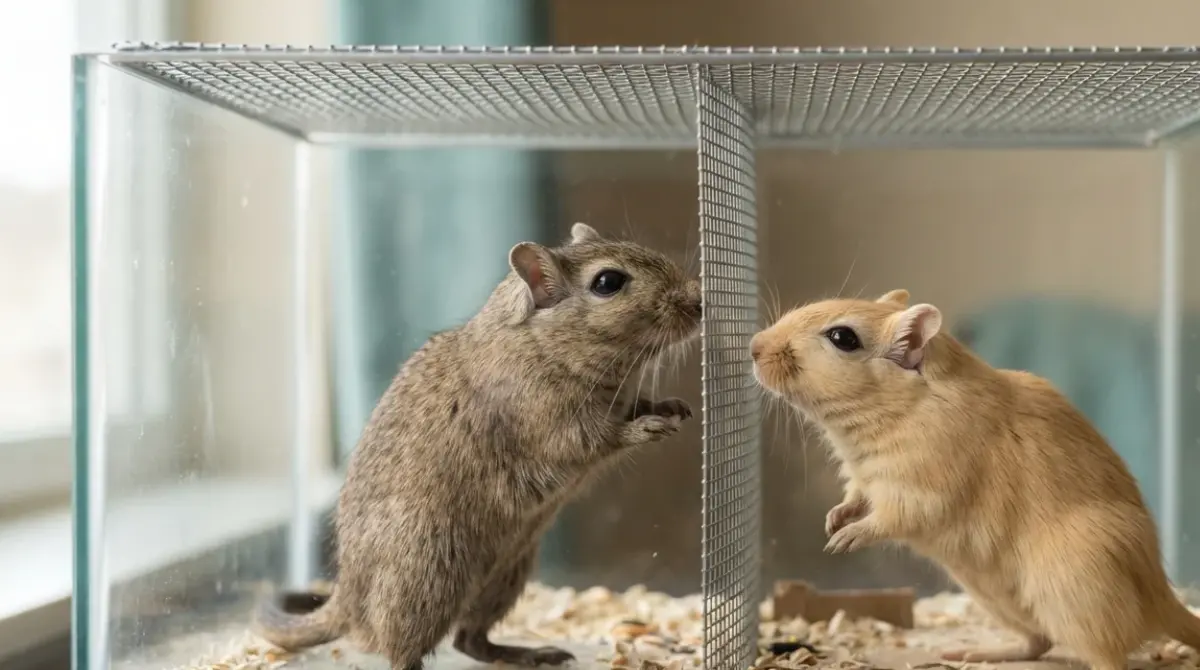
Table of Contents
🚨 Vet Now: If gerbils are locked in a rolling ball, one is bleeding, or one cowers while the other chases, separate them now in thick gloves, then call a vet experienced with gerbils.
Why two strange gerbils can’t just be put together
Unfamiliar adult Mongolian gerbils can treat each other as intruders. The RSPCA says gerbils should never live alone and established groups are unlikely to accept newcomers. Most steps come from rescues and keeper societies, so we name who said what.
Fighting right now?
Use the box above, then read divider-lift day.
New pair or lone survivor?
Both start with a split cage.
Already put them together?
Common and fixable: separate them and restart.
🩺 Health Note: General information, not a substitute for an exam by a vet experienced with gerbils. Fight wounds can need veterinary care; find an exotics vet before you need one.
Who can bond, and how old is too old?
Age and sex decide how hard this is for Mongolian gerbils, and sources disagree on the cut-off.
| Source | Type | Key Detail |
|---|---|---|
| RSPCA | Welfare charity | Possible exception for juveniles under 5 weeks |
| Crittery | Rescue | Under 8 weeks; about 5 is ideal |
| gerbilcare | Rescue | Under 8 weeks |
| Springs Gerbils | Breeder | Under 10 weeks preferred |
The Merck Veterinary Manual puts male sexual maturity at 70–84 days. Adults can still bond by split cage, but no source promises success.
Crittery rates male pairs moderate and female pairs very difficult, and rescue guides say never add a newcomer to an existing group. Lone gerbil? Read why gerbils shouldn’t live alone.
Build a split cage: divider, space and a bare setup
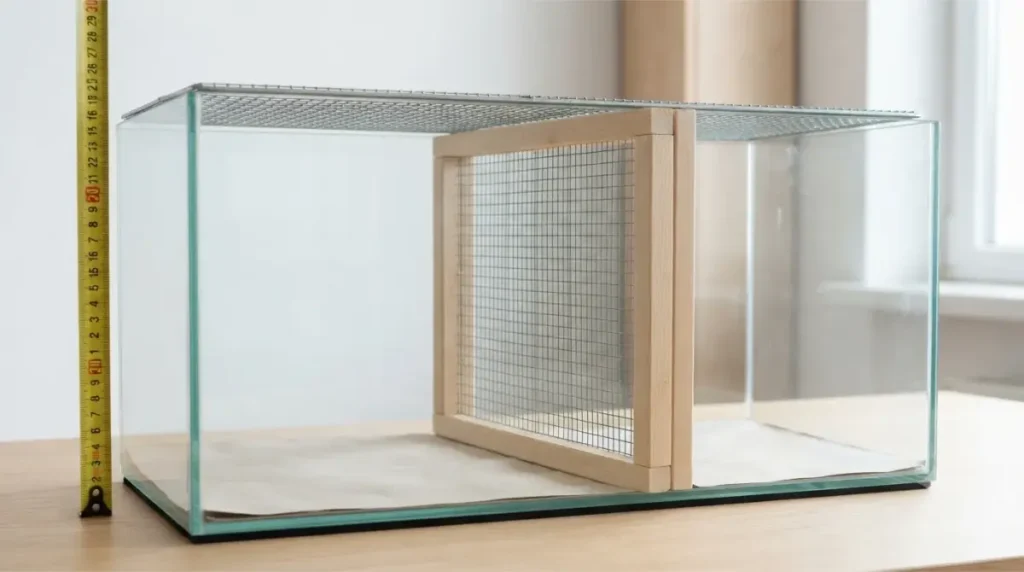
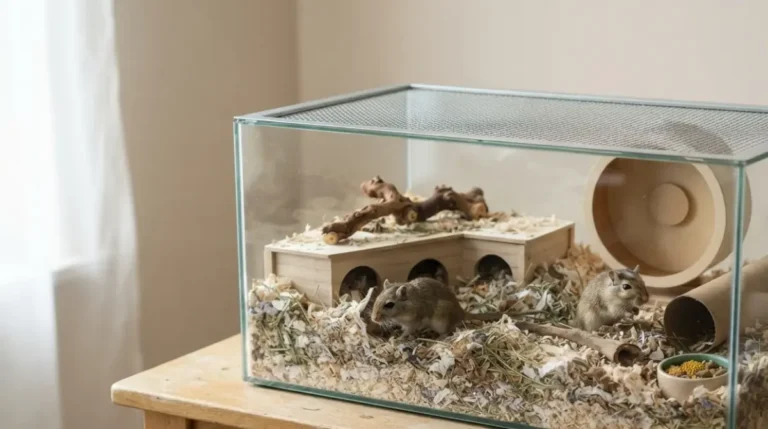
A split cage halves one tank with a secure mesh divider, so each gerbil smells the other without contact. Mongolian gerbils climb, so add a lid too.
The American Gerbil Society says some gerbils bite through ½-inch hardware cloth and ¼-inch is safer. gerbilcare suggests about 40 × 40 cm per side; halving the tanks in our gerbil tank setup for a pair gives:
| Tank (nominal) | Per side | Key Detail |
|---|---|---|
| 20-gallon long | ≈ 38 × 30 cm | Below 40 × 40 |
| 20-gallon high | ≈ 30 × 30 cm | Below 40 × 40 |
| 40-gallon breeder | ≈ 46 × 46 cm | Above; section off part |
📊 Tested / Spec: Arithmetic from nominal sizes with a straight divider, not a measurement. Measure your own tank.
gerbilcare keeps the split bare: 1–2 inches of bedding, scattered food, no bowls or toys. That is far below the 20–30 cm in our gerbil bedding depth guide, and no welfare body addresses a temporary shallow setup.
Week by week: swapping sides and reading the mesh
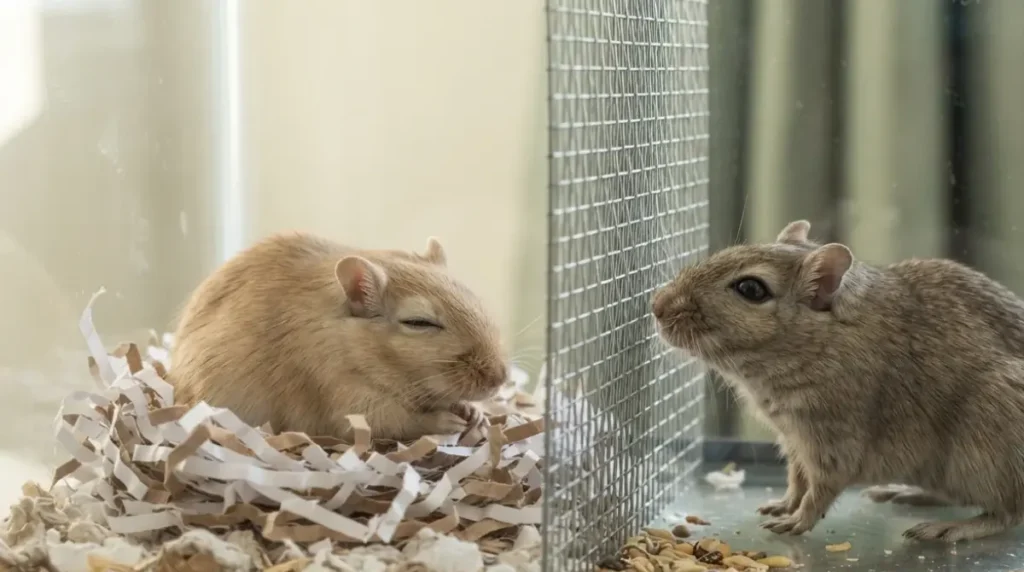
Rescue sources describe the split-cage routine in four steps:
- Put one gerbil on each side, divider and lid secure.
- Swap sides so each sleeps in the other’s scent.
- Wait for calm signs at the mesh.
- Lift the divider when you can watch all day.
gerbilcare swaps once a day; Crittery says several times a day. Crittery says at least a week for male pairs and several weeks for female pairs; gerbilcare says two weeks to a couple of months.
Sleeping side by side across the mesh, grooming or nose-bumping through it, and eating next to each other are positive signs. Neutral ground is contested: gerbilcare says never, while the American Gerbil Society uses a neutral-space step.
🔄 Outdated Advice: Seeing each other isn’t enough. gerbilcare says gerbils recognise one another by scent, so side-by-side tanks alone do nothing.
Divider-lift day: normal squabbles vs. separate now
🚨 Vet Now: If a gerbil is bitten or bleeding, separate the pair and call a vet experienced with gerbils. Don’t treat wounds at home.
Keep thick gloves within reach. The Merck Veterinary Manual says to supervise introductions. Watching time varies: Pets4Homes says 30 minutes, gerbilcare three hours, Crittery a day.
Crittery and gerbilcare say boxing, sniffing and light chasing are normal. Both say separate if blood is drawn, the pair lock into a ball, or one chases without stopping to eat, dig or chew.
Restore the divider for at least another week. Never lift a gerbil by the tail, per the RSPCA.
After the bond: adding things back, and de-clan signs
Bite wounds need a vet experienced with Mongolian gerbils; the AEMV directory helps you find one.
gerbilcare leaves the tank unchanged for two days after a successful lift, then adds items and space over about two weeks. Crittery says a few weeks.
gerbilcare lists pinning one gerbil down and one cowering as warning signs. The Merck Veterinary Manual says fighting wounds can show as hair loss around the tail and hindquarters. Omlet says separate if blood is drawn, but not for long; gerbilcare says not over minor squabbles without blood.
If the bond won’t hold: second tries and new partners
gerbilcare repeats the split for at least another week, ideally two, and reports pairs that bonded on a second try. If fighting continues after two or three attempts, it says the pair may never bond.
For a lone adult, the RSPCA says unfamiliar adults housed side by side can find it stressful, while gerbilcare accepts short solitude while waiting for a partner. None of our sources settles how to hold a lone adult safely, so ask a gerbil rescue.
Quick answers about introducing gerbils
1. How long does bonding take?
Sources say at least a week for male pairs and several weeks, or a couple of months, for adults. None promises a date.
2. Can two adult gerbils bond?
Rescue sources say only by split cage, with no guarantee. The RSPCA warns unfamiliar adults housed side by side can find it stressful.
3. Can I add a gerbil to an existing group?
No. The RSPCA says established groups are unlikely to accept newcomers, with a possible exception for juveniles under five weeks.
4. How often should I swap sides?
gerbilcare swaps once a day; Crittery says several times a day. Sources differ, so pick one routine and stay consistent.
5. Fighting or playing?
Boxing, sniffing and light chasing are normal. Blood, a ball-lock or non-stop chasing means separate now; call a vet experienced with gerbils.
6. What if my gerbils draw blood?
Separate them wearing thick gloves, keep the divider up at least another week, and call a vet experienced with gerbils about any bite.
7. Can gerbils that fought try again?
Sometimes. gerbilcare repeats the split for another week or more, but says some pairs never bond. See a vet experienced with gerbils for injuries.
Your next step: build the divider first
Measure your tank and halve it on paper to see whether each side lands near 40 × 40 cm. Build the divider and lid first, and plan on weeks, not days. Gerbils need company, so the patience is worth it.