Spotting Gerbil Tail Slip and Getting Your Gerbil to a Vet Fast

Gerbil tail slip is permanent: the tail does not regrow, though most gerbils adapt. See what a vet does and how to lift a gerbil safely.

Table of Contents
Skin missing from your gerbil’s tail? Call a vet today
🚨 Vet Now: The Scottish SPCA says any gerbil tail injury needs immediate veterinary attention. Call an exotics vet today and say “gerbil, tail skin injury.” The Association of Exotic Mammal Veterinarians’ Find a Vet search can help.
Call an exotics vet first, read second
If the tail looks bare, bloody or dragging, call now and read afterwards. Here to prevent it? Skip to the handling and tank checks. This takes a second and is a gerbil’s built-in escape trick, so you’re not a bad owner.
What gerbil tail slip is, in one line
Gerbil tail slip is when a Mongolian gerbil’s tail skin and fur pull off after a grab or snag, leaving muscle and bone showing. If you keep fat-tailed gerbils, never grab their tails either, and see an exotics vet for any tail injury.
🩺 Health Note: This is general information, not a substitute for an exam by a vet experienced with gerbils. PetMD warns sepsis can kill a small animal within days, so don’t wait to see whether a tail injury settles.
What a slipped gerbil tail looks like
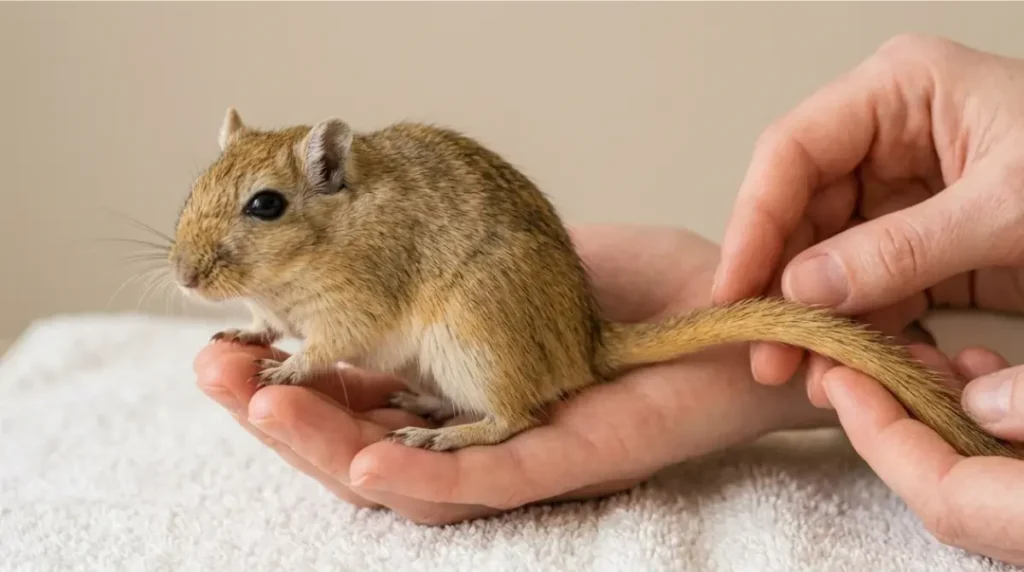
Gerbil tail slip shows up in stages, and only a vet can confirm it.
🔍 Why It Works: A gerbil’s tail skin is built to come off: when a predator grabs the tail, the skin slips and the gerbil escapes, says PetMD. The loose skin, cut off from its blood supply, then starts to die.
Signs the tail skin has slipped
- A bald spot on the tail is often the first sign.
- Loose skin follows, then bare muscle and bone.
Look-alikes: fur loss, bite wounds, fractures
Fighting, overcrowding or cage mates chewing fur can also cause hair loss near the tail, says the Merck Veterinary Manual, and PetMD lists a limp, dragged tail as a fracture sign. Lifting by the middle or end of the tail causes degloving and fractures, according to the University of Missouri’s veterinary school entry on tail slip. A vet tells them apart, so don’t self-diagnose.
When to see a vet: signs in order of urgency
🚨 Vet Now: A gerbil with a tail injury that seems less active is an emergency. PetMD says infection can reach the bloodstream and kill a small animal within days. Go now to an emergency vet that sees small mammals.
Vet today: skin gone, bone showing, tissue dying
| What you see | What to do | Source |
|---|---|---|
| Bald patch, skin intact | Call an exotics vet today for advice | PetMD |
| Skin loose or missing, muscle or bone showing | Vet today; exposed tissue often rots and needs amputation | Merck Veterinary Manual; Scottish SPCA |
| Tissue dying or decaying | Vet today | PetMD |
| Limp, dragged or unused tail | Vet today; possible fracture | PetMD |
Why “wait and see” is the wrong call
🔄 Outdated Advice: Some hobbyist and retailer guides say a bare tail will dry up and fall off, or heal without a vet. The Merck Veterinary Manual’s gerbil disorders page says exposed portions often rot and must be amputated.
What the vet does for a slipped tail
A vet examines your gerbil, rules out other causes of hair loss (sometimes with a skin scraping for mites), then usually removes the damaged part of the tail.

Why amputation is the usual treatment
Exposed tail tissue often rots, and PetMD says amputation stops infection spreading and stops the gerbil chewing the wound. The vet will likely prescribe an oral antibiotic; ask about pain relief too. Ask the clinic for a cost estimate when you call.
Will the tail grow back? Life afterwards
No, the tail does not regrow, but most gerbils adapt quickly and live a normal life, according to PetMD.
Before the vet visit: what to do and what to skip
What to say when you call
Say “gerbil” and “tail skin injury,” and ask for the first available slot. PetMD notes many hospitals only treat cats and dogs, so confirm they see gerbils. Take a photo of the tail to show the vet.
⚠️ Watch Out: Ask your vet before putting any ointment or antiseptic on the tail, and keep handling to a minimum until the appointment.
Do I separate my gerbil from its partner?
Ask your vet. PetMD advises moving an injured gerbil to a clean tank with soft bedding, but the UK site Crittery warns that gerbils kept apart too long need a split cage to be reunited. Our split-cage guide covers that; see also whether a gerbil can live alone.
How to pick up a gerbil without grabbing its tail
The two-hand scoop
- Rest an open hand flat in the tank and let the gerbil step on, rather than grabbing from above (Omlet’s handling guide).
- Cup your other hand around it, fully supporting its body, as the Scottish SPCA’s gerbil care guide advises.
- Stay seated or over a table, never at height.
When your gerbil bolts
Don’t grab. The American Gerbil Society says degloving can happen when you grab an escaping gerbil. Let it run; a missed catch costs nothing.
Omlet allows steadying the tail base, but the Scottish SPCA and Iowa State say never lift by the tail, so skip it.
Kids and tail slip
Teach children never to grab a tail, and have them sit on the floor when holding a gerbil (Dumb Friends League).
Tank hazards that snag a gerbil’s tail
Handling is half the risk; the tank is the other half.
Wheels with gaps
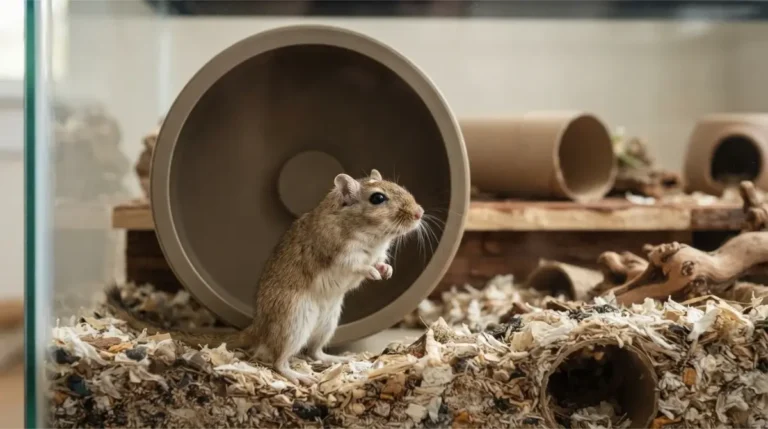
Use a wheel without openings, so tails can’t catch, says Iowa State’s gerbil care sheet. Merck notes gerbil limbs and tails can be injured when stuck in wire wheels or mesh flooring. Check our gerbil wheel size guide for diameter.
Cage-mate conflict and overcrowding
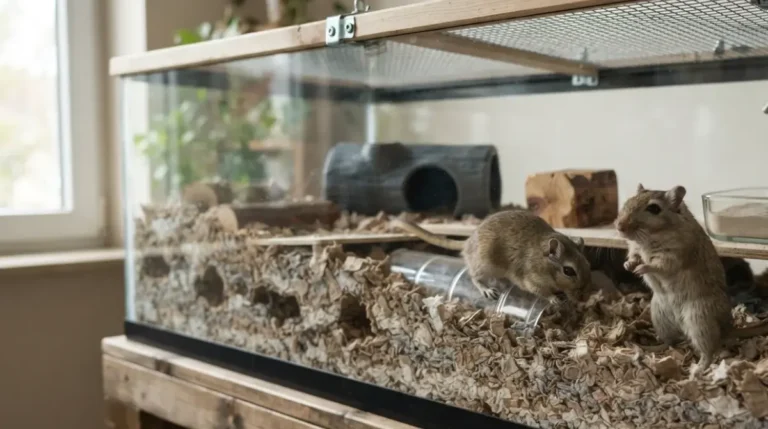
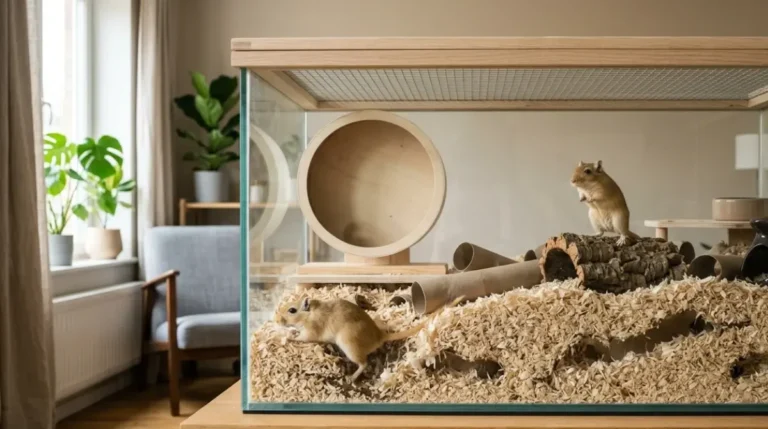
Overcrowding, fighting and cage mates chewing fur cause hair loss near the tail (Merck), and fights can leave bite wounds (PetMD). A correctly sized tank helps; see choosing the right gerbil tank setup for a pair. For running outside the tank, see gerbil ball alternatives.
Gerbil tail slip: your questions answered
1. What is gerbil tail slip?
Gerbil tail slip is when tail skin and fur pull away after a grab or snag, leaving muscle and bone exposed.
2. What causes gerbil tail slip?
Gerbil tail slip usually follows lifting or grabbing the tail; a gappy wheel can also injure tails.
3. Does gerbil tail slip need a vet?
Yes. Gerbil tail slip needs prompt veterinary attention, because exposed tail tissue often rots and needs amputation. Call an exotics vet today.
4. Will a gerbil’s tail grow back after tail slip?
No. After gerbil tail slip, the tail does not regrow, though most gerbils adapt quickly. Ask your exotics vet what recovery looks like.
5. Can a gerbil die from tail slip?
The tail loss isn’t fatal, but infection after gerbil tail slip can reach the bloodstream and kill a small animal within days. Call an exotics vet today.
6. Will a slipped gerbil tail fall off on its own?
With gerbil tail slip, the exposed tail often rots and needs amputation, so don’t wait for it to fall off. Call an exotics vet today.
7. Can I treat gerbil tail slip at home?
No. Ask an exotics vet before putting any ointment on a tail with gerbil tail slip; the vet decides treatment. Call an exotics vet today.
8. How do I pick up a gerbil to avoid tail slip?
To avoid gerbil tail slip, cup both hands under the gerbil’s body to support it fully, and never lift by the tail.
9. Can gerbils live normally without a tail?
Yes, most gerbils adapt quickly after gerbil tail slip and live a normal life, according to PetMD.
10. Should I separate my gerbil from its partner after tail slip?
Ask your vet. PetMD advises a clean recovery tank after gerbil tail slip, but long separation means using a split cage to reunite.
Next step: call the vet, then check the tank
If your gerbil’s tail is injured, call an exotics vet today; that one call matters more than anything else here. If it isn’t, check your wheel for gaps and practise the two-hand scoop this week. Tail slip is painful, but most gerbils adapt.