Why Is My Gerbil Biting Me? A Calm Way to Read the Cause

A gerbil biting you is often fear, pain or scent, not meanness. See how to tell which, and when a sudden biter needs a vet.

Table of Contents
🚨 Vet Now: A gerbil with a wound, bleeding, or trouble breathing needs a vet experienced with gerbils straight away. So does one that suddenly bites and also stops eating. Don’t treat it at home.
Why gerbils bite: fear, pain, or a strange smell
The American Gerbil Society (AGS), a keeper society, says gerbils bite from fear, pain, another gerbil’s scent on your fingers, or being reached into during a fight. A Mongolian gerbil is a timid prey animal, per the RSPCA, and a sudden biter may be ill, so see a vet.
Nibble, nip or bite: which is it?
| Level | AGS definition | Skin |
|---|---|---|
| Nibble | Mouthing, painless | Unbroken |
| Nip | Painful pinch | Unbroken |
| Bite | Teeth puncture skin | Broken |
Where to start if you were just bitten
New owner? Read the fear and taming sections. If your gerbil changed overnight, jump to the sudden-biting section.
🩺 Health Note: This is general information, not a substitute for a vet exam. A gerbil that suddenly bites or has a wound needs to be seen, and a bite that breaks your skin needs a doctor’s check.
Fear bites: what a gerbil sees in your hand
Fear heads the AGS list for a Mongolian gerbil, and most bites have an identifiable cause, so look for the trigger before calling a gerbil mean.
A hand from above, or a hand that closes
Omlet, a retailer, notes that birds strike from above. PangoVet says closing your hands around a gerbil invites a bite.
🔍 Why It Works: PDSA notes gerbils are hunted in the wild, so a much larger animal reaching in is naturally frightening.
Lid lifted, nest disturbed
The AGS lists an unannounced lifted lid, a hand in the nest during sleep, overlong handling, rough children and a nervous owner as triggers for nipping.
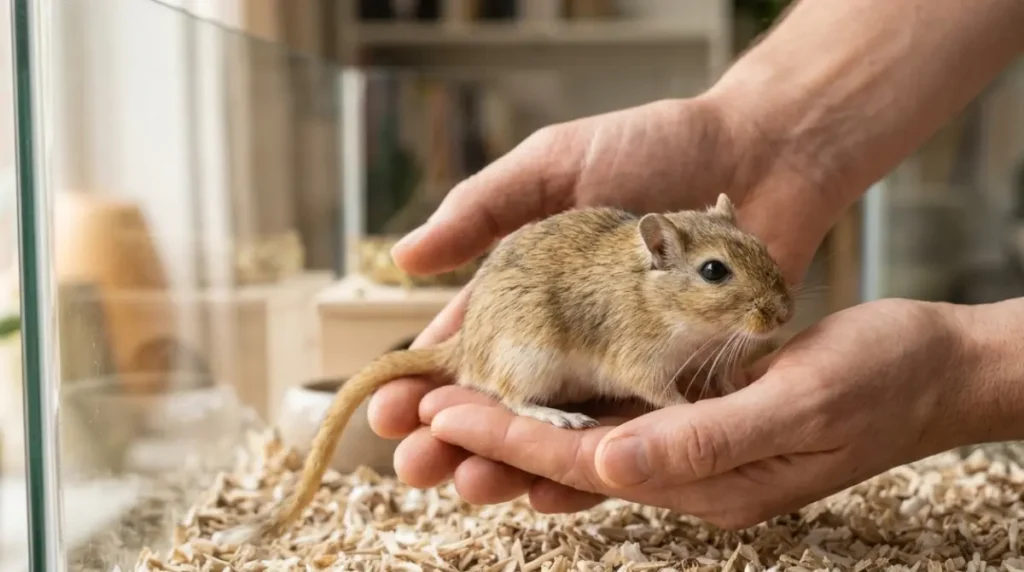
Pick-up fixes: scoop from the side, hold low
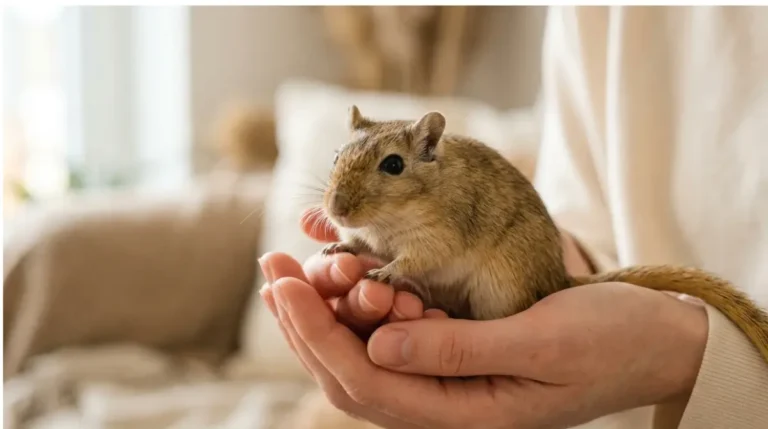
PDSA’s guide to holding a gerbil and the Merck Veterinary Manual’s gerbil handling advice describe one method for a Mongolian gerbil:

- Cup your hands on either side of the gerbil.
- Scoop it up from underneath, onto your palm.
- Do not squeeze.
- Hold it low, over your lap or the tank, so a wriggle ends in a short drop.
Why never the tail
Some guides allow gripping the tail base, but Merck says never to lift a gerbil by the tail. Our guide to gerbil tail slip explains why an injured tail needs a vet.
Children and gerbils
Merck does not recommend gerbils for very young children, and PDSA says small children should not pick them up.
Smell, food and fights: bites that aren’t about you
For a Mongolian gerbil, scent can cause a bite unrelated to fear.
Hands that smell of another gerbil
The AGS says an unfamiliar gerbil’s scent on your fingers can bring a hard bite. PetMD advises washing hands before and after handling.
Reaching into a fight
⚠️ Watch Out: Never use bare hands on fighting gerbils. Use thick gloves or a solid object, as our guide on how to tell play from a real fight explains.
If a gerbil bites you
Stay calm, keep your hand low and pause handling. The AGS calls serious bites rare but very painful, and health services advise rinsing any bite that breaks the skin and having a doctor check it.
How to tame a gerbil that bites
The RSPCA says positive interactions and gentle familiarity reduce stress in a Mongolian gerbil, so start in the tank:
- Let a new gerbil settle first.
- Sit by the tank and speak softly.
- Rest an open palm in the tank with a small treat.
- Let the gerbil come to you, then try the side scoop.
Gloves or a sleeve while trust rebuilds
The AGS suggests gloves, or a hand inside a sleeve, so a bite does not startle the gerbil further.
When a gerbil would rather not be handled
| Source | Advice | Key Detail |
|---|---|---|
| Crittery | Settle a few days first | UK site |
| Omlet | Handling within a day or two possible | Retailer |
| AGS | Gloves or sleeve, or no handling | Keeper society |
For a badly mishandled gerbil, the AGS says not handling it can work if it lives with a gerbil companion; the RSPCA says never alone.
🔄 Outdated Advice: Some guides use sunflower seeds as the taming treat. Our gerbil treats guide shows welfare sources calling them a rare, fatty treat.
Home stress that keeps gerbils jumpy
For a Mongolian gerbil, less stress means fewer frightened bites, though no source ties one tank to biting.
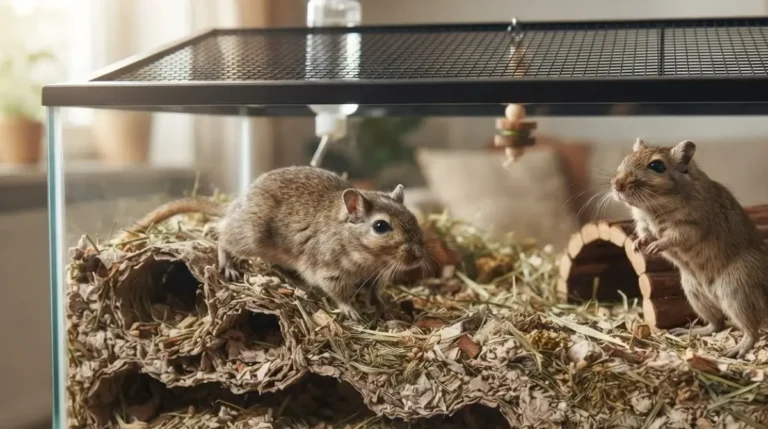
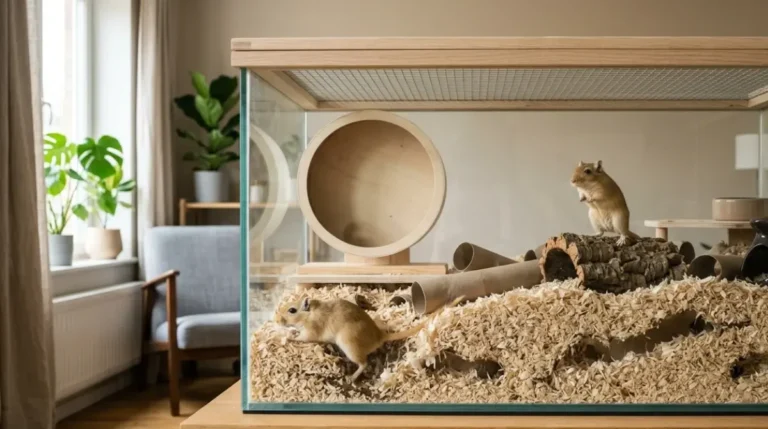
A pair, a place to hide, and room to dig
The RSPCA says gerbils need to hide and dig at all times and should never be kept alone. Our gerbil tank setup for a pair lays out the sources.
Noise, other pets and moving the tank
The RSPCA says never to startle gerbils with loud noises, that other pets’ scent can stress them, and to avoid moving them unless necessary. Read its guidance on keeping gerbils together.
Biting that starts suddenly: when to call a vet
🚨 Vet Now: A gerbil that suddenly bites, or flinches when touched, may be in pain. Call a vet experienced with gerbils straight away.
Signs that go with sudden biting
PDSA lists not eating, low energy, limping, unusual bleeding, runny eyes or nose, and signs of pain such as not wanting to be touched; Merck adds hunched posture and trouble breathing. See PDSA’s gerbil health page and our guide to the signs a gerbil may be sick.
What to tell the vet
Say when the biting began, what else changed, and any fall or fight. Find a clinic through the AEMV directory.
Quick answers about gerbil biting
1. Why is my gerbil biting me?
Fear, pain, another gerbil’s scent on your hands, or reaching into a fight, per the AGS. A sudden change needs a vet.
2. Is it normal for a gerbil to nibble or nip?
Nibbling is painless mouthing and nipping is a noticeable pinch; neither breaks skin. The AGS treats nipping as a gerbil showing displeasure.
3. Why did my gerbil suddenly start biting?
It may be in pain or ill, and PDSA lists any behaviour change as a vet sign. Call a vet experienced with gerbils.
4. Does a gerbil bite hurt, and is it dangerous?
Serious bites are rare but very painful, says the AGS. Rinse any bite that breaks your skin and have a doctor check it.
5. What should I do right after a gerbil bite?
Stay calm, keep your hand low and pause handling. Rinse any broken skin and have a doctor check it.
6. How do I stop gerbil biting?
Let it settle, offer a treat on an open palm in its tank, then scoop from the side and hold it low.
7. Why does my gerbil bite when I put my hand in the tank?
A hand dropping in from above, or appearing in the nest, can frighten a gerbil, and strange scents on your fingers can trigger a bite.
8. Can a gerbil that bites be tamed?
The AGS says patient, gentle handling can rehabilitate biters, though a badly mishandled gerbil may be better left unhandled.
9. Should I wear gloves with a biting gerbil?
The AGS suggests gloves, or a hand inside a sleeve, at first so a bite does not startle the gerbil further.
10. Is a gerbil safe for a young child to hold?
Merck does not recommend gerbils for very young children; PDSA says small children shouldn’t pick them up. Call a vet for any injury.
Your next step: slow down the hand
This week, rest an open hand in the tank with a small treat, let your gerbil come to you, and lift it from the side with both hands held low. If gerbil biting starts suddenly or comes with other changes, call a vet experienced with gerbils straight away.