Are hamster balls safe for Syrian and dwarf hamsters?

Hamster balls for Syrian and dwarf hamsters run 5 to 7 inches across, and none of 25 models passed a 2022 welfare review. Yours can become a hide.
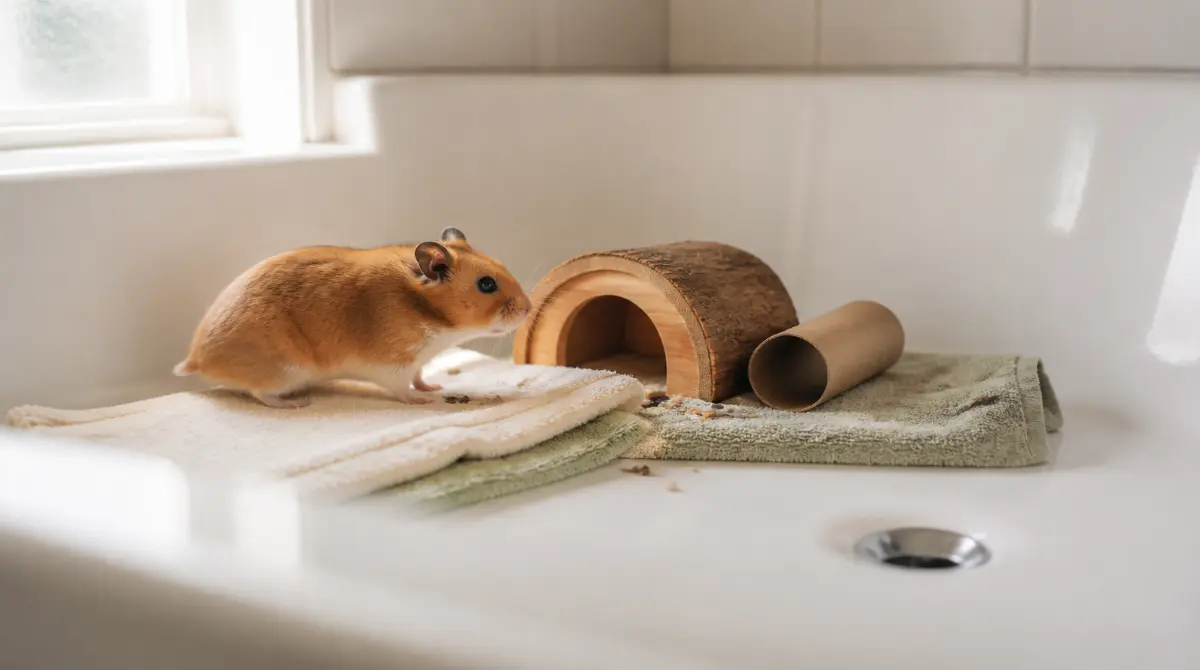
Table of Contents
Care guidance checked on October 26, 2026.
No. Exercise balls are not safe for hamsters, and both the Royal Veterinary College’s exotics service and the RSPCA advise against using one. The advice covers the Syrian hamster and every dwarf species: Campbell’s, winter white, Roborovski and Chinese.
What changes between them is the size of ball sold for each, and how far that falls short of the space a hamster needs to run with a straight back.
Ball sizes sold vs the space a running hamster needs
Kaytee’s Run-About Mini is 5 inches (12.7 cm) across and sold for dwarf hamsters and mice. The standard Run-About measures 7 inches (17.8 cm) and is listed for hamsters and gerbils, with no line drawn between a Syrian and a dwarf.
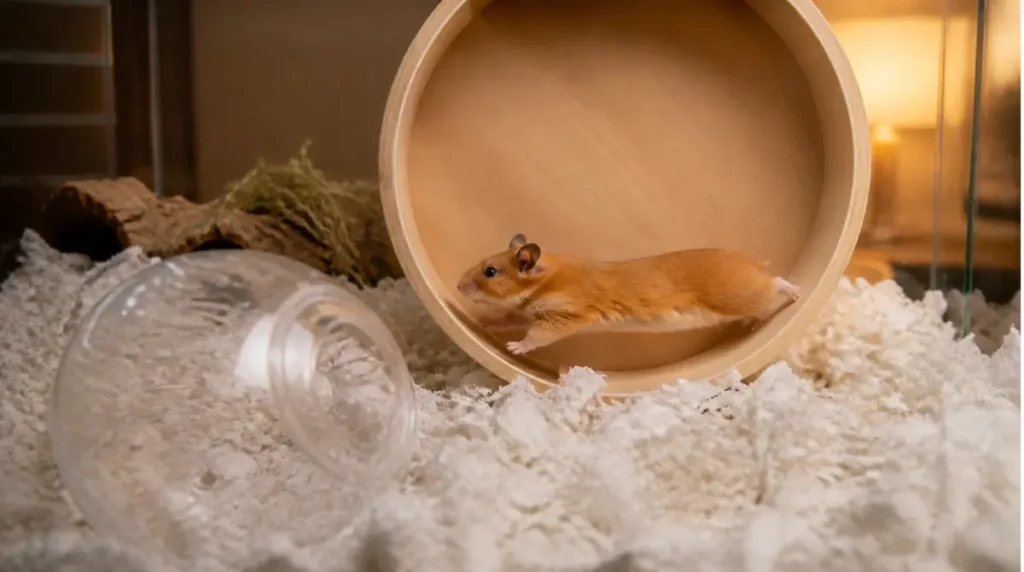
Welfare vets judge running space by wheel diameter, because a curve that is too tight bends the spine. Germany’s veterinary welfare association (TVT) rates a wheel under 20 cm (7.9 in) as welfare-adverse for dwarf hamsters and under 30 cm (11.9 in) for other small pets, Syrians included (PLOS ONE, 2022). A ball’s floor is the same kind of curve, so the same yardstick shows the gap.
| Hamster | Ball sold for it (Kaytee listing, US, Oct 2026) | TVT wheel minimum (Germany) | Wood Green wheel (UK) | Ball’s shortfall vs TVT |
|---|---|---|---|---|
| Syrian | 7 in (17.8 cm) | 11.9 in (30 cm) | 12 in (30.5 cm) | 4.8 in (12.2 cm) |
| Dwarf, except Chinese | 5 in (12.7 cm) | 7.9 in (20 cm) | 8 in (20.4 cm) | 2.9 in (7.3 cm) |
Sources: Kaytee 5-inch and 7-inch listings; TVT minimums as reported in the PLOS ONE study; Wood Green Hamster Care Guide.
A stricter rule of thumb from the same study sets wheel diameter at twice the body length. That puts a large Syrian of 15 to 18 cm (5.9 to 7.1 in) at 36 cm (14.2 in) or more.
Size still does not rescue the ball. The researchers assessed 25 exercise-ball models on sale in Germany, from 12 to 32 cm (4.7 to 12.6 in) across, and none of the 25 passed, because a ball of any size can strike a wall or roll off a raised surface. Kaytee’s Giant Run-About comes nearest the Syrian figure at 11.5 inches (29.2 cm), and it is sold for rats and chinchillas.
Chinese hamsters in the wheel standards
The TVT dwarf figure doesn’t name species. Wood Green puts the Chinese hamster with the Syrian at a 12-inch (30.5 cm) wheel and gives 8 inches (20.4 cm) for the other dwarf species, so a Chinese hamster in a 5-inch ball falls short by either measure.
A ball cuts a hamster off from its senses
Hamsters find their way by touch, smell and hearing, and a sealed ball restricts all three while leaving the hamster no say in where it rolls (RSPCA hamster ball leaflet). Collisions with furniture add to the stress, and paws and legs can catch in the air holes.
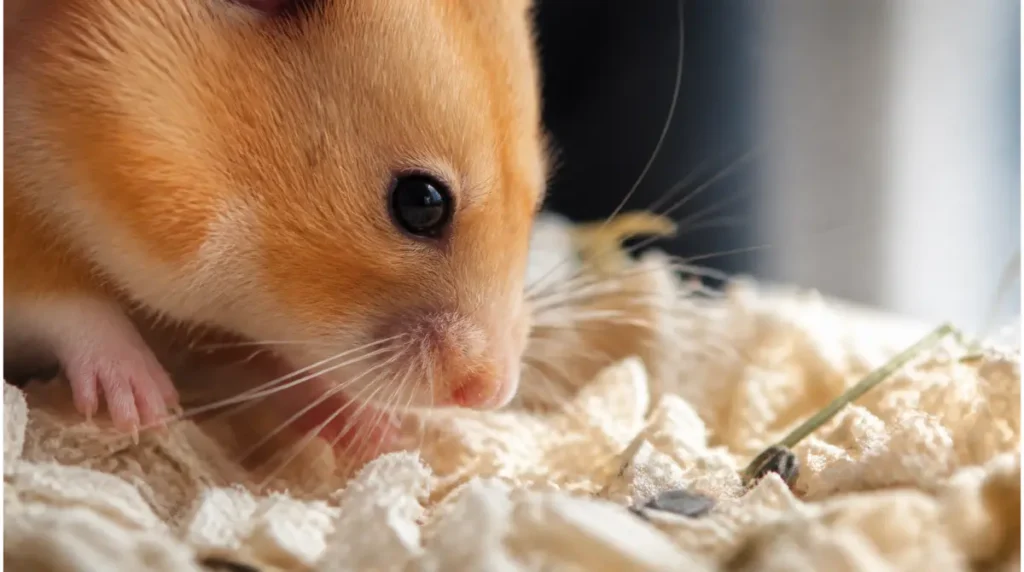
As a prey species, a hamster dislikes being exposed in the open with nowhere to hide (RVC).
The ventilation slots are small, too. Plastic balls with narrow holes give poor airflow and can run low on oxygen inside (PLOS ONE), and there is no water on board (Wood Green).
No study separates these risks for Syrians and dwarfs, so each one applies to every pet hamster. Gerbils are sold the same product, and whether a ball suits Mongolian gerbils is covered separately.
Hamster cars and tracks
Kaytee’s Hamtrac raceway is sold as a way to make ball use safer, and some stores stock enclosed hamster cars. Hamster cars sit on the same welfare-adverse list as balls (PLOS ONE). A track can keep a ball away from the stairs, yet the hamster is still sealed in with no hide or water, behind the same slots.
See a vet today if: your hamster limps, a toe or foot looks swollen or is bleeding, it fell or was dropped while in the ball, or it is breathing hard afterward. Many vets rarely see hamsters, so use the AEMV vet finder to find one with exotic mammal experience.
Why do hamsters run so fast in a ball?
A hamster racing across a kitchen floor looks keen. The speed shows the ball is rolling and says nothing about how the hamster feels.
With its senses muffled and no control over its surroundings, a hamster sealed inside is likely to be very stressed (RSPCA; RVC). No welfare source gives a safe time in one, so shorter sessions leave the advice where it is.
Syrian and dwarf hamsters out of the cage: pen, bath or room
Give out-of-cage time a floor and walls instead. Either setup below suits a Syrian or a dwarf (Wood Green; RSPCA):
- Put the plug in a dry, empty bathtub and lay towels across the bottom, or set up a pop-up fabric or Correx playpen.
- Add hides and toys so the hamster can explore and duck out of sight.
- Bring the hamster out when it is awake, and stay with it for the whole session.
- Keep dogs and cats out of the room.
- Return it to its cage before you leave; never leave a hamster out unattended or overnight.
Pen time is extra room on top of a cage that already meets the hamster cage size minimums, with its own wheel and deep bedding.
How wide can pen gaps be for a dwarf?
Use the cage bar figures for wire pen panels. Bar spacing of 1 cm (0.39 in) suits Syrian and Chinese hamsters, and 7 mm (0.27 in) is the safest gap for dwarf and Roborovski hamsters (Wood Green). A panel spaced for a Syrian can let a Roborovski straight through, and the Roborovski bar spacing guide shows how to check gaps.
Before you buy: find the gap width in the pen’s listing. If it isn’t given and you keep a dwarf or Roborovski hamster, choose solid fabric or Correx sides.
Cage cleaning without the ball
Run-About balls are also sold as a holding area for cage-cleaning day (Kaytee listing). A hard plastic carrier does that job without sealing the hamster in: line it with bedding from the cage, scatter a little food, add a small house, and move it to a quiet room while you clean (Wood Green).
A cardboard box gets chewed through.
Turn the ball into a hide, then check the wheel
The ball you already own can stay in the cage with its lid off. Filled with soft tissue bedding, it becomes one more hiding place (Wood Green).
Before it goes in, look over your hamster’s toes and feet, since those are what the air holes catch, and use the vet signs listed further up if anything looks wrong.
Running belongs on a solid upright wheel inside the cage, large enough to prevent injury (RVC). Tonight, measure the wheel your hamster has now against the wheel diameters for Syrian and dwarf hamsters, and replace it if your hamster’s back curves as it runs.