What the Right Hamster Setup Costs, Item by Item

A proper hamster setup costs more than the kit suggests. The Syrian wheel we priced was $76.90; the dwarf’s, $35.90. Here’s every line.
Table of Contents
The short answer: what a proper setup costs
A proper hamster setup that meets current welfare guidance costs roughly $380–$500 for a Syrian and $340–$460 for a dwarf hamster, based on our price check on September 25, 2026.
The number, up front
That total covers a 775-square-inch enclosure, a correctly sized wheel, deep paper bedding, a sand bath, and hides. It doesn’t include the hamster itself, food, or a vet visit.
- Still deciding? Go straight to the itemized price table.
- Already bought a starter kit? Read the next section first, because you can still use it.
- Budgeting long term? Skip to the section on monthly costs and the vet fund.
Why it’s more than the starter kit
Most of the gap is one item: a large enclosure. Everything else scales around it.
Why the pet-store starter kit isn’t the real cost
The price gap comes down to one number: floor space.
What the welfare groups actually say
PDSA cites the German Veterinary Association for Animal Welfare (TVT), which sets a minimum of 100 × 50 cm for hamsters. That is about 775 square inches, and it applies to Syrian and dwarf hamsters alike. The RSPCA no longer publishes a fixed minimum; it says only to give as much space as possible.
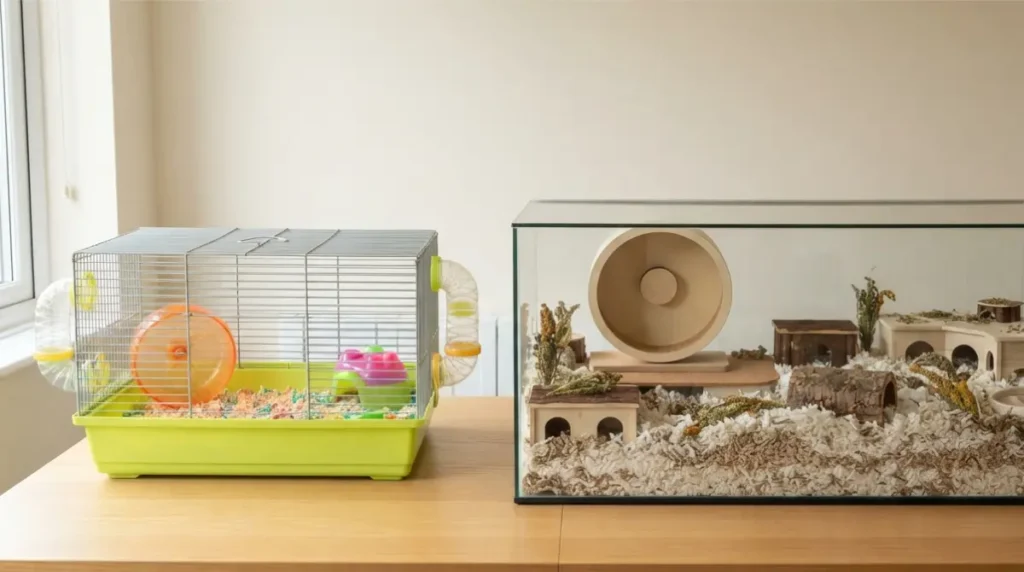
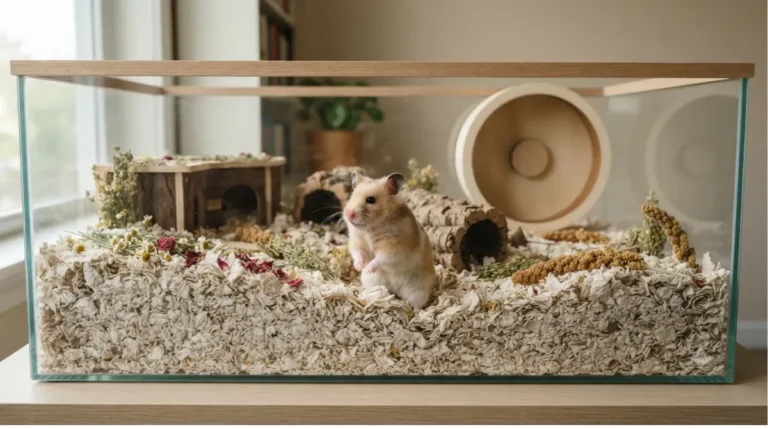
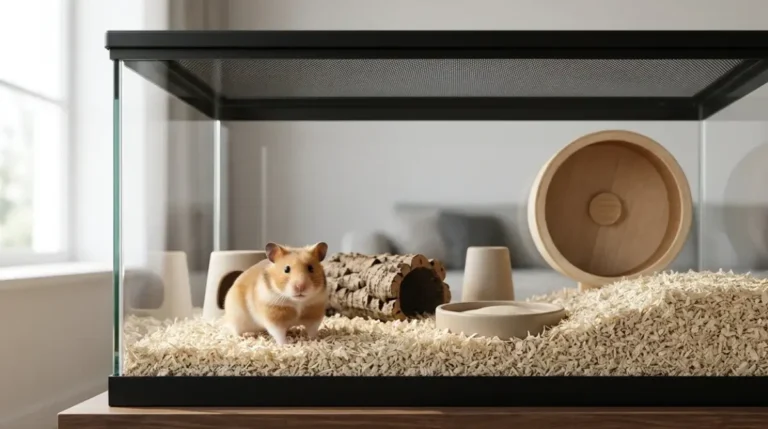
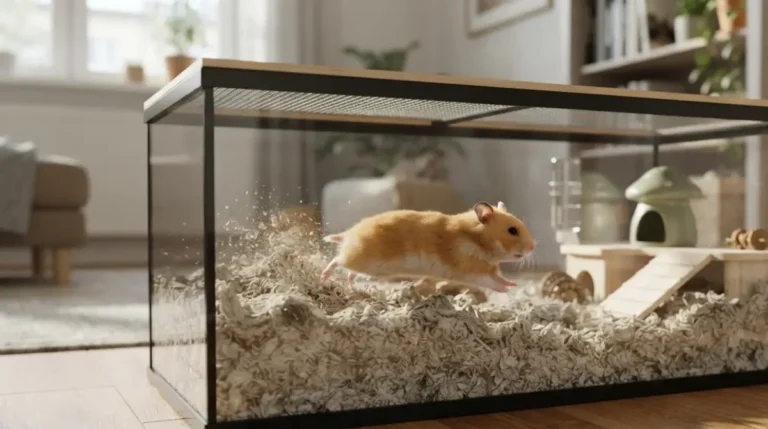
PDSA also notes that most cages sold in shops aren’t big enough to meet a hamster’s basic needs. You can see the full standard in PDSA’s guide to the ideal hamster home. If you want to picture the size, here’s what 775 square inches actually looks like.
🔄 Outdated Advice: “A standard pet-store hamster cage is enough.” Current guidance from PDSA, citing TVT, is at least 100 × 50 cm of unbroken floor space. Levels and tubes don’t count toward it.
Already bought a kit? Here’s what to do
Most first-time owners start with a kit, so don’t feel bad about it. First, check whether your pet-store cage is big enough. If it isn’t, keep it as a holding box for cleaning days.
The enclosure: your biggest single cost
The enclosure is the largest line on the bill, and the minimum is the same for Syrian and dwarf hamsters.
Bin cage, Detolf, tank or large cage
A DIY bin cage is usually the cheapest route. The catch is that it takes some DIY work, and the bin must still give 775 square inches of unbroken floor. Building a bin cage that meets the minimum walks through sizing.
For a ready-made option, we priced the Niteangel Bigger World in size M. The manufacturer lists its inside as 39.4 × 19.7 inches, which is about 776 square inches. On September 25, 2026 it was listed at $190.90 on the brand’s own site.
⚠️ Watch Out: The same product line comes in a small size with a 30 × 15-inch interior — about 450 square inches, well under the minimum. Check the size you’re buying, not just the product name.
Does a dwarf hamster cost less to house?
No. The TVT minimum PDSA cites covers all hamsters, so a dwarf hamster needs the same enclosure as a Syrian. The wheel is the only place a dwarf setup costs less.
Bedding, wheel and hides: the costs people forget
The empty enclosure still needs its fill-out items, and for most people bedding is the surprise.
Bedding: why you need more than one bag
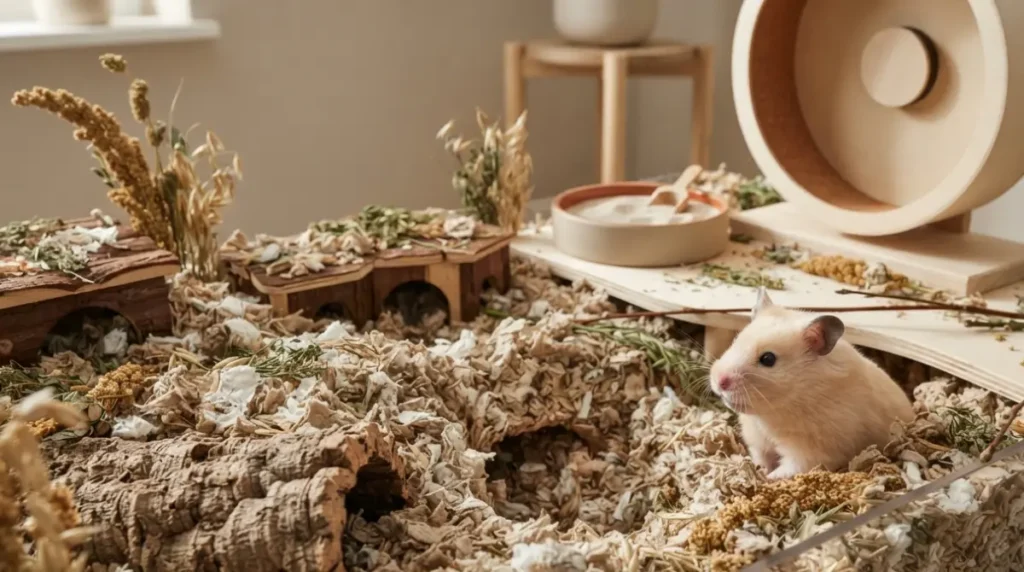
PDSA recommends a bedding layer about 25 cm (10 inches) deep so hamsters can burrow. Filling a 775-square-inch enclosure to that depth takes roughly 150–250 liters, depending on the bedding type. That usually means three to four 60-liter bags. For layout and depth zones, see how deep hamster bedding should be.
🔍 Why It Works: 775 square inches × 10 inches deep = 7,750 cubic inches, about 127 liters of packed-down bedding. Loose bedding settles and compresses, which is why real fills run higher than that figure.
Listed prices for a 60-liter bag of paper bedding ranged from about $24 to $42 across the US retailer listings we found. PDSA advises against several types:
- pine or cedar shavings;
- scented bedding;
- fluffy bedding such as cotton wool, kapok, or bamboo fluff.
Wheel size by hamster type
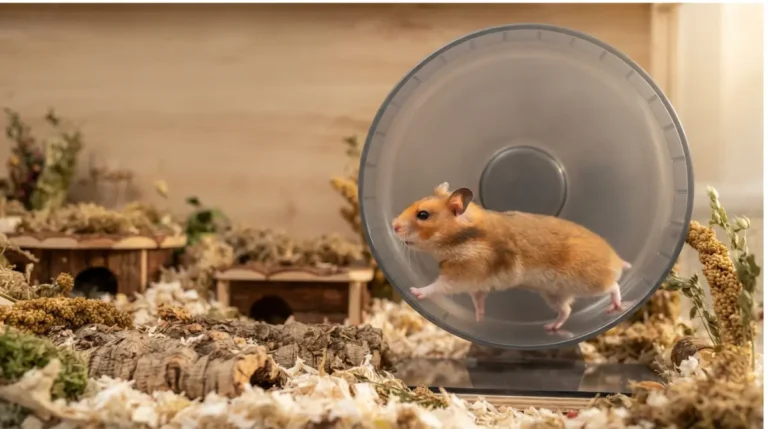
PDSA, citing TVT, recommends a solid-surface wheel of at least 20 cm (8 in) for dwarf hamsters and 30 cm (12 in) for Syrians. One RSPCA branch sets 25 cm or more for dwarfs and 28 cm or more for Syrians. The full breakdown is in wheel size for Syrian vs dwarf hamsters.
On September 25, 2026, Niteangel listed two sizes that meet both standards:
- the 12.6-inch Super-Silent wheel, for Syrians, at $76.90;
- the 10-inch, for dwarfs, at $35.90.
⚠️ Watch Out: A large wheel on its stand plus deep bedding can be taller than the enclosure. Keep the deepest bedding at one end and put the wheel in a shallower zone.
Hides, sand and chews
Published cost guides estimate $30–$50 for hides, tunnels, and chews, and $10–$15 for sand and a dish. PDSA lists small cardboard boxes as suitable hides, so this line can shrink.
Our price check: every item and what it costs
Here is every line, with each price’s source and date.
The full itemized table
| Item | What we priced | Price | Source & date | Key Detail |
|---|---|---|---|---|
| Enclosure | Niteangel Bigger World, size M | $190.90 | Brand site, Sept 25, 2026 | ~776 sq in inside; meets 100 × 50 cm |
| Wheel (Syrian) | Niteangel Super-Silent, 12.6 in | $76.90 | Brand site, Sept 25, 2026 | Meets the 30 cm guidance |
| Wheel (dwarf) | Same line, 10 in | $35.90 | Brand site, Sept 25, 2026 | Meets the 25 cm guidance |
| Paper bedding | 3–4 × 60 L bags | $72–$168 | Retailer listings, Sept 2026 | Biggest swing item |
| Sand + dish | Sand and a ceramic dish | $10–$15 | Published estimate | Small, one-time cost |
| Hides & chews | Mixed | $30–$50 | Published estimate | Cardboard works too |
| Total (Syrian) | $380–$501 | Excludes hamster, food, bottle, tax | ||
| Total (dwarf) | $339–$460 | Same exclusions |
Where the range comes from
Bedding drives most of the spread, because bag prices vary widely between retailers. Buying large bags, or during a sale, pushes you toward the low end.
Monthly costs and the vet fund nobody budgets
Setup is a one-time cost, but a hamster costs money every month after that.
Monthly consumables
Published cost guides estimate roughly $15–$50 a month for food, bedding, and supplies. Larger enclosures use more bedding per refill, but they need full cleans less often.
Budgeting for an exotics vet
One US estimate puts a hamster wellness exam at $75–$90 or more, and sick visits cost more. Find a vet experienced with small mammals before your hamster comes home. The Association of Exotic Mammal Veterinarians (AEMV) runs a member directory you can search. Hamsters typically live about two to three years, so plan the vet fund over that span.
Before you buy: a legality check
Hawaii prohibits hamsters as pets. Check the state’s list of prohibited animals, and check local rules wherever you live.
Where to save money and where not to
Some costs are fixed by welfare guidance, and others are flexible.
Never cut these three
- Floor space: at least 100 × 50 cm.
- Wheel size: matched to your hamster type.
- Bedding depth: about 25 cm.
These three items shape your hamster’s daily life most.
Easy savings that don’t hurt your hamster
- Use cardboard boxes and tubes as hides.
- Buy a secondhand enclosure, but check its measurements and clean it thoroughly.
- Build a bin cage if you’re comfortable with DIY.
FAQ
1. How much does a hamster setup cost?
A proper hamster setup costs roughly $380–$500 for a Syrian and $340–$460 for a dwarf, based on our September 2026 price check.
2. What’s the most expensive part of a hamster setup?
The enclosure. The 775-square-inch model we priced cost $190.90, roughly 40–50 percent of the total hamster setup cost.
3. Does a dwarf hamster setup cost less than a Syrian setup?
Only slightly. Both need the same 100 × 50 cm floor space, and the dwarf’s smaller wheel saved about $41 in our check.
4. Is a pet-store starter kit enough for a hamster?
Usually not. PDSA notes most shop cages are too small; measure for at least 100 × 50 cm of unbroken floor space.
5. How much bedding does a hamster setup need?
Roughly 150–250 liters to fill a 775-square-inch enclosure about 10 inches deep, which is typically three to four 60-liter bags.
6. How big should a hamster wheel be?
PDSA, citing TVT, recommends at least 20 cm (8 in) for dwarf hamsters and 30 cm (12 in) for Syrian hamsters.
7. Is a bin cage cheaper than a bought enclosure?
Usually, yes. A hamster bin cage still needs 775 square inches of unbroken floor space, and it takes some DIY work.
8. What does a hamster cost per month?
Published cost guides estimate roughly $15–$50 a month for hamster food, bedding, and supplies, depending on enclosure size and brands.
9. Should I budget for a hamster vet?
Yes. One US estimate puts a hamster wellness exam at $75–$90 or more; find an exotics vet before bringing your hamster home.
10. Can you own a hamster anywhere in the US?
No. Hawaii prohibits hamsters as pets, so check your state and local rules before buying a hamster or its setup.
The bottom line
A proper hamster setup costs roughly $380–$500 for a Syrian and $340–$460 for a dwarf, and most of that goes to the enclosure. Protect three things, floor space, wheel size, and bedding depth, and save on everything else. Before you shop, see what 775 square inches actually looks like.