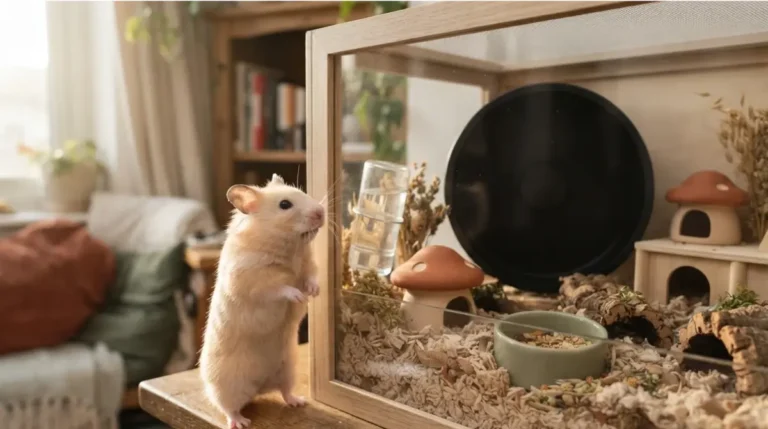
Picking a Safe Hamster Cage for Kids Starts With Floor Space

A hamster cage for kids needs the same floor space as any other. PDSA says most shop cages fall short, and we measure one large kit against 775 sq in.
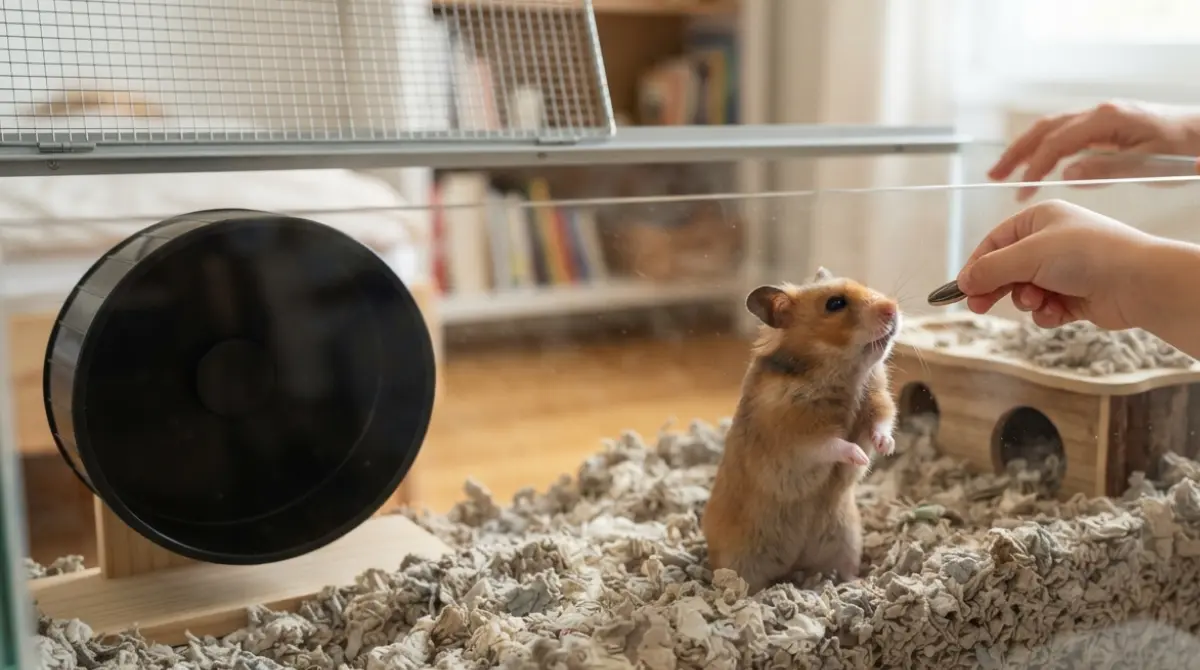
Table of Contents
Buying a hamster cage for a child? Start with size
A hamster cage for kids needs the same floor space as one for an adult: at least 100 × 50 cm, about 775 square inches. A child’s age changes who does the caring, not how much room a Syrian or dwarf hamster needs. This guide covers live pet hamsters, not toy cages.
Choosing a hamster for a child? Jump to the age and handling section. Comparing cages? Read the size, shop-cage and buying sections. Already holding a small starter kit or a gift? PDSA says most shop cages are too small, so you’re in common company, and the last section shows the way up.
🩺 Health Note: This is general housing and hygiene guidance, not veterinary or medical advice. For any concern about your hamster’s health, contact a vet experienced with hamsters. For your child’s health, ask your doctor.
How big should a hamster cage be for a child?

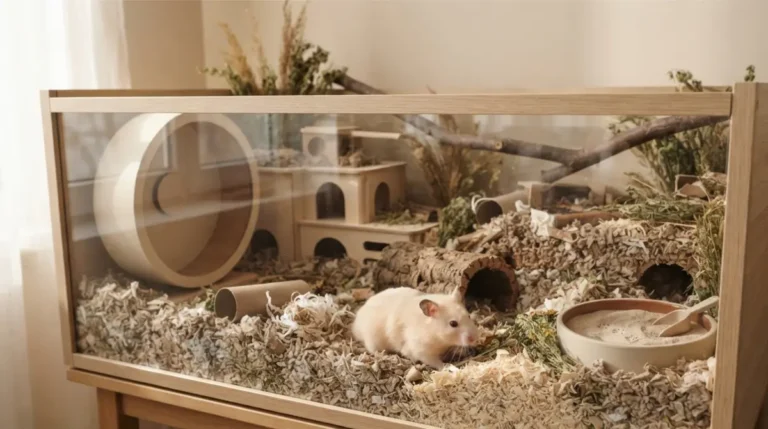
For Syrian and dwarf hamsters, Blue Cross says the ideal home is no smaller than 100 × 50 cm of floor, 50 cm tall. PDSA cites the same minimum from Germany’s Veterinary Association for Animal Welfare, while noting the evidence for an exact size is limited. Our pillar guide shows what 775 square inches actually looks like.
The number to plan around
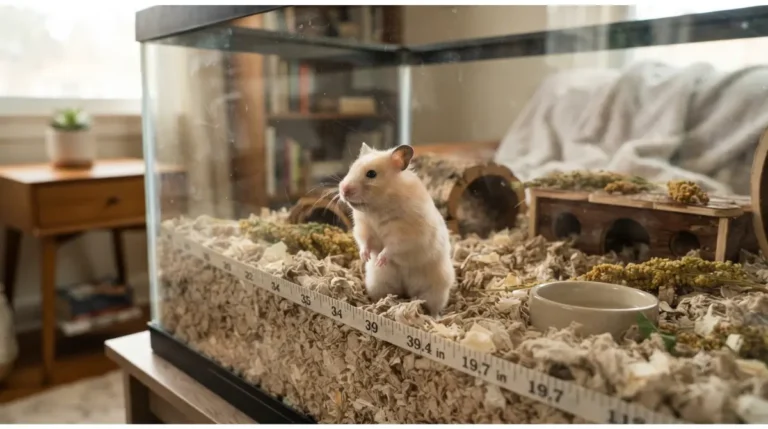
📊 Tested / Spec: 100 × 50 cm is 5,000 cm², about 775 sq in, which is Blue Cross’s minimum floor for hamsters. Measure the unbroken base; ledges and upper levels don’t add to it.
Why some guides say less
Some retail guides quote 360 to 450 square inches, and a few give dwarf hamsters a lower minimum. Blue Cross and PDSA give one figure, so plan on 775 and go bigger where space allows.
Why shop “kids’ hamster cages” are usually too small
PDSA says most cages sold in shops aren’t big enough for a hamster’s basic needs. A small kit is the market’s problem, not a parenting mistake, and the table shows how far short one example sold as “large” falls.
Starter kit vs 775 sq in
| Setup | Floor area | Share of 775 sq in | Key detail |
|---|---|---|---|
| Blue Cross / PDSA minimum | 775 sq in | 100% | The floor to aim for |
| Commonly quoted retail figure | 450 sq in | about 58% | Still below the minimum |
| Ferplast Favola (60 × 36.5 cm) | about 340 sq in | about 44% | Listed as “large”; 5.5 in wheel vs PDSA’s 8 in dwarf minimum |
Favola size is from Ferplast’s manual; base area and wheel size are from retailer listings. Percentages are our arithmetic, so recheck listings before relying on them. To check any cage yourself, see how to measure unbroken floor space.
🔄 Outdated Advice: “A cage sold as large is big enough for a first hamster.” Blue Cross and PDSA now cite 100 × 50 cm as the minimum, so check the floor measurement, not the label.
Levels, pods and bright plastic
Multi-level cages look bigger than they are. PDSA prefers larger single-level cages, because hamsters see poorly and can fall, and extra levels add height, not floor.
Already own one?
That’s common and fixable. The last section shows the upgrade.
Is a hamster right for your child, and which kind?
None of the sources below calls a hamster an easy pet for a young child, and their age advice varies.
What age? Sources differ
- CDC: children under 5 should avoid contact with rodents, hamsters included.
- Texas A&M’s vet school: small rodents aren’t pets for small children, and under-10s need close supervision.
- Chewy (retailer): roughly 6–8 and up, with supervision.
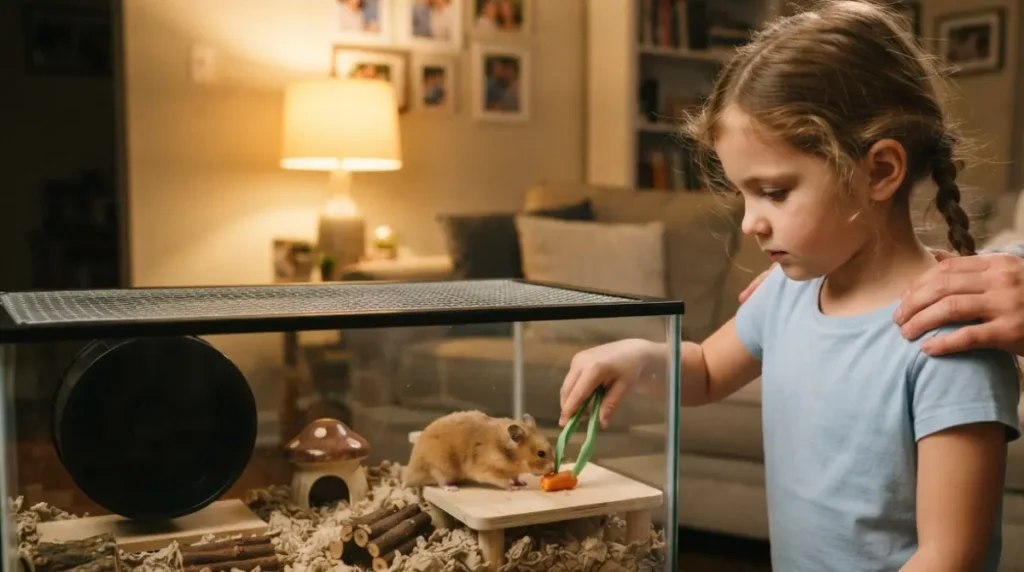
PDSA adds that children should be supervised and ideally not hold hamsters, feeding treats and stroking them in the cage instead.
Nocturnal and nippy
Hamsters sleep by day, are active in the evening and night, and may bite if frightened. Handle only an awake, active hamster.
Syrian or dwarf?
Neither is easy for small hands. PDSA advises housing hamsters separately, Russian dwarfs included. For everyday differences, see how dwarf and Syrian cage needs compare.
What to buy instead: enclosures that meet the size
Three enclosure types can reach 100 × 50 cm, and PDSA names them: an extra-large cage, a glass tank or a homemade enclosure. We haven’t hands-on tested any product, so this section gives checks, not brand picks.
Bin cage, tank or large cage?
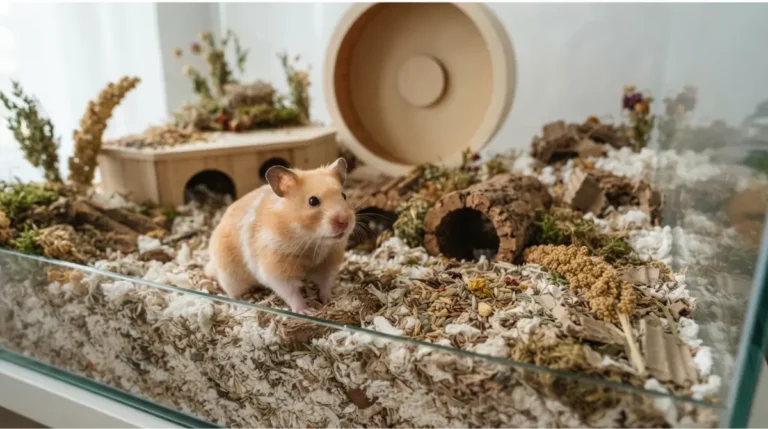
Blue Cross calls tanks and aquariums ideal, since they allow deep bedding and reduce the risk of escapes through bars. For cages that reach the size, see large hamster cages that reach 775 square inches.
What to check before you pay
- Floor at least 100 × 50 cm and 50 cm tall (Blue Cross).
- A secure lid and doors (PDSA).
- Wire bar gaps under 1 cm (Blue Cross).
- Room for at least 25 cm of bedding (PDSA).
Where a wheel and hides fit
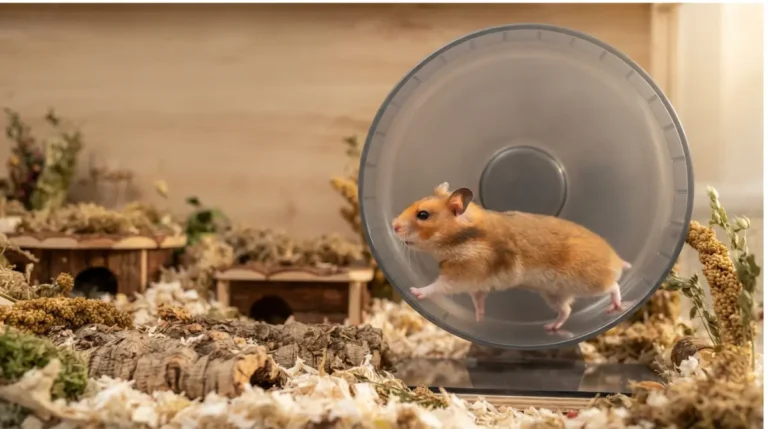
PDSA says wheels should be at least 20 cm for dwarfs and 30 cm for Syrians, with a solid running surface. Add hidden nest boxes, since hamsters sleep most of the day.
Making the setup safe for a child
These points apply to pet hamsters and follow CDC and PDSA general guidance.
Lock the lid, place the cage
CDC’s small-mammal guidance advises a habitat that closes and locks securely, and PDSA notes hamsters escape easily. Choose a quiet spot away from the TV or washing machine, out of drafts and direct sun.
Out-of-cage time
CDC says small mammals shouldn’t roam freely through the home and should be supervised whenever they’re out of their habitat.
Handwashing and germs
CDC says hamster food, equipment and habitats can carry Salmonella. Wash hands after handling hamsters, their waste, food or supplies, and supervise children’s handwashing, since children under 5 are more likely to get sick. CDC also advises pregnant people to avoid handling pet rodents where possible. Contact a vet experienced with hamsters about a sick hamster, and your child’s doctor about a sick child.
Already bought a small cage? Here’s the way up
You’re not alone
An undersized kit is a common starting point, not a failing. Upgrade when you can.
The budget route
PDSA lists homemade enclosures among suitable options. Our bin cage size and build guide shows one way to reach the size.
Moving your hamster over
Blue Cross says hamsters rely on familiar smells, so keep some clean, used bedding for the new home. PDSA advises cleaning when hamsters are awake to reduce stress, and the same timing suits a move.
Hamster cage for kids: quick answers
1. What size hamster cage does a child need?
A hamster cage for kids needs the same floor as any hamster’s: at least 100 × 50 cm, about 775 square inches.
2. Is a smaller cage OK for a first hamster?
A smaller hamster cage isn’t recommended: Blue Cross and PDSA cite 100 × 50 cm as the minimum, and most shop cages fall short.
3. At what age can a child have a hamster?
Sources differ: CDC says children under 5 should avoid rodents, Texas A&M says under-10s need close supervision, and Chewy suggests roughly 6–8 and up.
4. Can a child hold a hamster?
PDSA suggests children ideally don’t hold hamsters, but feed treats and stroke them in the cage, with adult supervision.
5. Why is my child’s hamster asleep all day?
That’s normal: hamsters sleep by day and are active in the evening and night, and shouldn’t be handled while asleep.
6. Are multi-level hamster cages for kids better?
No. PDSA prefers larger single-level cages over tall multi-level ones because hamsters see poorly and can fall from height.
7. Which hamster is best for a child?
No cited source calls any hamster easy for young children, and PDSA advises housing each hamster alone.
8. Does a hamster cage for kids need a lock?
Yes. CDC advises a habitat that closes and locks securely, and PDSA notes hamsters are escape artists.
9. How can my child stay safe from hamster germs?
Supervise handwashing after touching hamsters or their cage, as CDC advises; children under 5 are more likely to get sick. Contact a vet experienced with hamsters about a sick hamster.
10. I already bought a small cage. What now?
Upgrade to at least 100 × 50 cm with a tank, large cage or bin cage, keeping some clean, used bedding for familiar smell.
Measure first, then buy
Size comes first because every other choice in a child’s hamster setup depends on it. Tape out 100 × 50 cm on the floor, check any cage against it, and let an adult own the daily care.
✅ Do This: Bring a tape measure to the shop and measure the floor of any cage before you pay.