Moving Your Hamster to a New Cage the Gentle Way

Moving your hamster to a new cage? Use a carrier, not an exercise ball, and bring the old nest along so the home still smells like theirs.

Table of Contents
Upgrading your hamster’s cage is the right call — here’s how to move calmly
Moving your hamster into a bigger enclosure is one of the best things you can do for them. The move itself only takes a little planning.
Already moved and something looks wrong?
If your hamster has wet fur around the tail or diarrhea, contact a vet experienced with hamsters today. Then read the warning-signs section below. If they’re simply hiding, jump to what’s normal in the first week.
The short version (move day in one line)
Finish setting up the new enclosure first. Then carry over their scent, move them in the evening when they’re awake, and leave them alone.
🩺 Health Note: This is general information, not a substitute for an exam by a vet experienced with hamsters. Stress can make diarrhea more likely in hamsters, and in young Syrians it can become serious quickly. If you see wet fur around the tail, lethargy, or a hamster that stops eating, call a vet the same day. If you don’t have an exotics vet yet, find one before you need one.
Set up the new enclosure fully before moving day
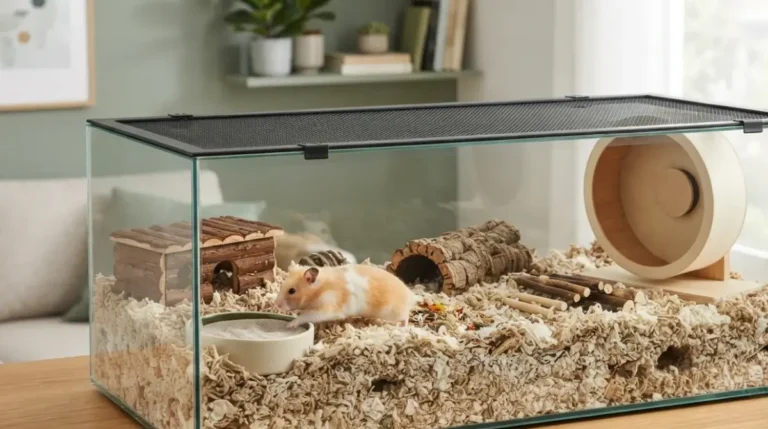
The move goes smoothest when the new home is finished before your hamster sees it. That means food, water, bedding, hides, and wheel all in place.
Check it’s a real upgrade
Blue Cross and PDSA both use 100 × 50cm of floor space as a minimum for all hamster species. That’s roughly the 775-square-inch benchmark in our guide to what 775 square inches of floor space actually looks like.
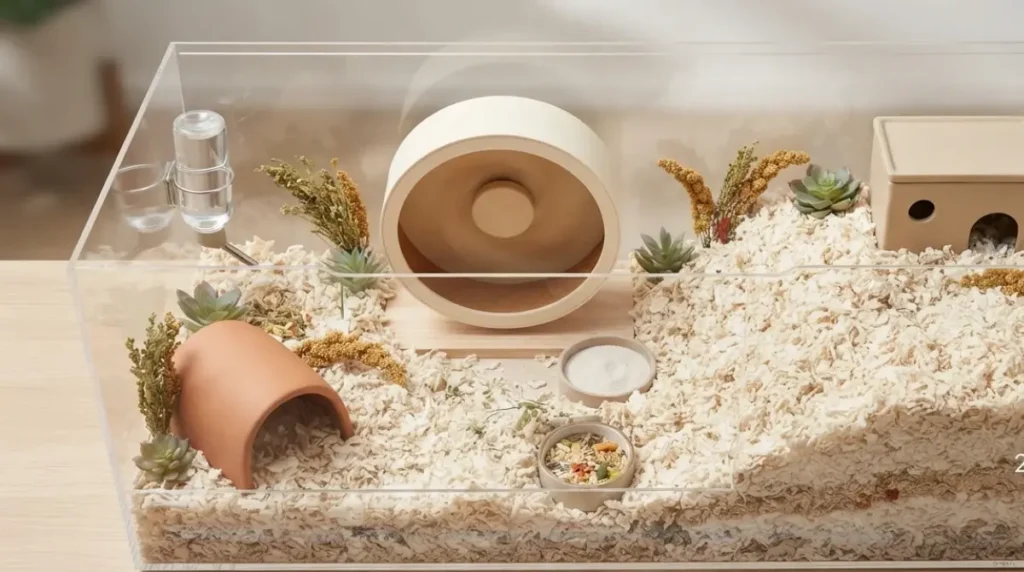
Bedding guidance differs slightly by organization. Blue Cross hamster housing guidance asks for at least 20cm of digging bedding, while PDSA’s hamster care guide says the enclosure should hold at least 25cm. Our hamster bedding depth guide covers the details.
Bar spacing and wheel size for Syrians vs dwarfs
Blue Cross advises bar gaps under 1cm for all hamsters. Dwarf species are smaller, so a solid-sided tank removes the escape question entirely.
Wheels sold with cages are often too small. Your hamster should run with a straight back and without raising their head. Check your wheel against our Syrian vs dwarf wheel size guide.
Keep it in the same spot if you can
PDSA advises a quiet spot away from TVs and washing machines, since noise and vibration stress hamsters. Keeping the same room also means your hamster faces one change instead of two.
🔄 Outdated Advice: Cages built around elaborate tube systems are still sold as “fun” upgrades. Blue Cross advises avoiding them, noting that dwarf hamsters in particular struggle to climb.
Should you put old bedding in the new cage? Yes — here’s what to move
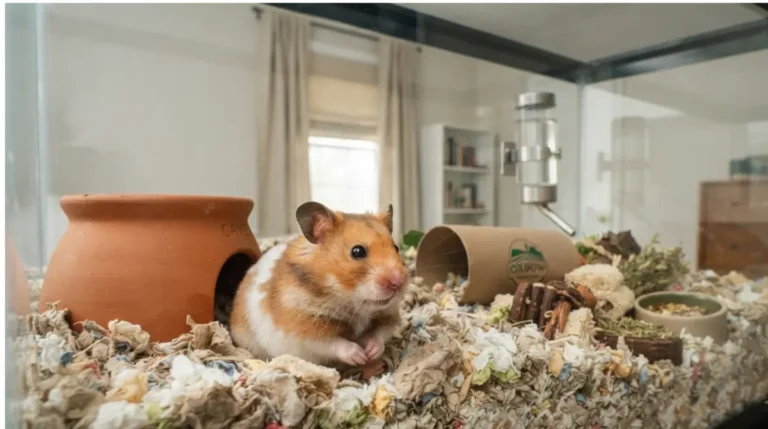
Yes. Carry over your hamster’s used, dry bedding, their nest material, and their familiar hides, so the new enclosure smells like home.
What to carry over
- The nest: lift it out as intact as you can and place it in a similar spot.
- Dry used bedding: scatter it over the fresh bedding. Leave wet or soiled patches behind.
- Hides and chews your hamster already uses.
- The wheel, but only if it’s the right size.
What to hold back and add later
Save new toys and hides for the following weeks, and add them one at a time.
What the evidence does and doesn’t say
Experienced keepers and retailer care guides widely recommend scent transfer. Hamster-specific research on cage moves is limited, though, so treat this as low-cost good practice rather than proven science.
How to move your hamster into the new cage, step by step
Wait until evening, move your hamster in a secure carrier, and release them beside their relocated nest.
Pick the right time: evening, when they’re awake
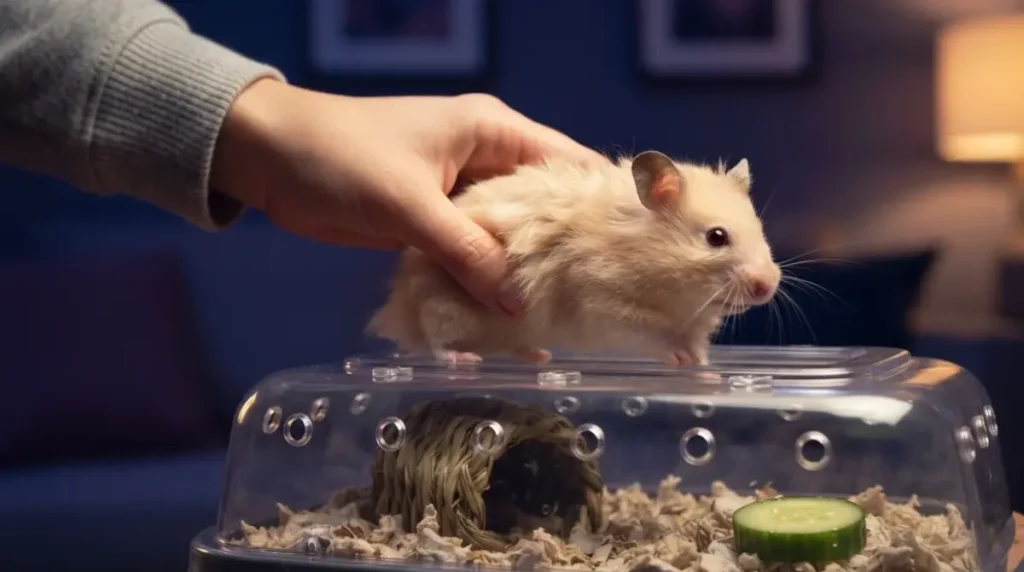
Hamsters sleep most of the day. Research on Syrian hamsters found that disturbances during their daytime rest have a greater impact. Blue Cross likewise advises never waking a hamster to move them into a playpen.
The move in six steps
- Finish the new setup a day ahead, with water and food in place.
- Wait until your hamster is awake and moving around.
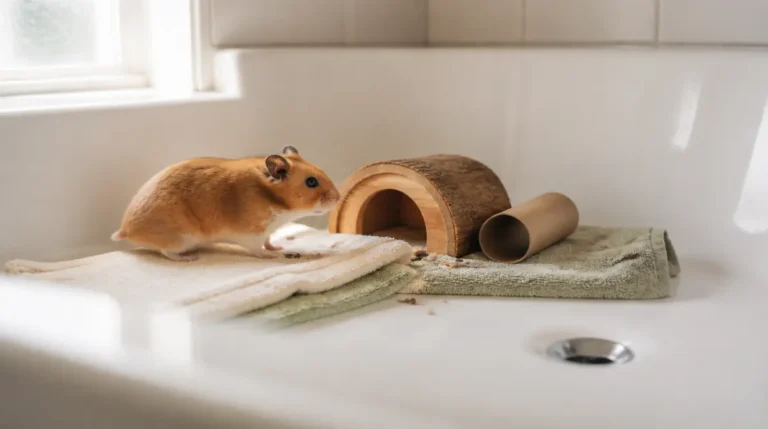
- Coax them into a secure carrier or a cup rather than grabbing them.
- Transfer the nest and used bedding.
- Release them next to their relocated nest.
- Dim the lights and step away.
Using a carrier, not a ball
⚠️ Watch Out: Don’t park your hamster in an exercise ball while you work. Blue Cross says exercise balls must not be used, because hamsters can become exhausted, can’t escape, get poor ventilation, and can’t reach food, water, or a hiding place. More in our guide on whether hamster balls are safe.
What’s normal in the first week after the move
Most hamsters are unsettled at first, and quiet behavior usually means adjustment, not illness.
Hiding, rebuilding the nest, and moving the food stash
Expect your hamster to hide more and to rebuild their nest in a new spot. They may also relocate their food stash and explore mostly at night. A skittish first day is common, and many settle within days.
When to start handling again
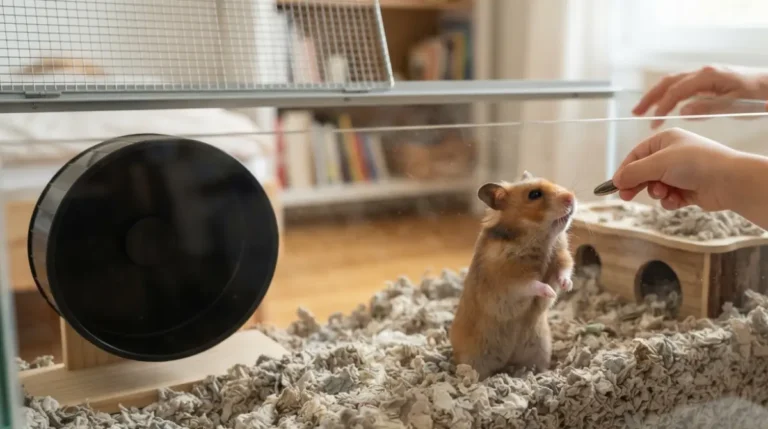
Hold off on handling for a few days, and let your hamster approach your hand when they’re ready. Avoid rearranging the setup during this first week.
✅ Do This: Check food and water quietly each evening, and note whether they’re eating. That record will matter if anything changes.
Signs your hamster needs a vet after the move
🚨 Vet Now: Wet fur around the tail, diarrhea, low energy, or not eating after a move means calling a vet experienced with hamsters today. Don’t wait to see if it passes.
Call a vet today if you see these
According to the Merck Veterinary Manual, stress from travel, crowding, illness, or diet changes can make diarrhea more likely in hamsters. Merck lists these signs:
- wet fur around the tail
- low energy
- poor appetite
- weight loss
Tell the vet when you moved your hamster, when the signs started, and whether you changed their food.
Why young Syrians are most at risk
🔍 Why It Works: Merck describes proliferative ileitis, a bacterial intestinal disease often called “wet tail,” as the most serious intestinal disease of 3–10-week-old Syrian hamsters, with high mortality. It is stress-related, which is why a big change can tip a young hamster over.
Dwarf hamsters with diarrhea need a vet too. See Merck’s guide to disorders and diseases of hamsters for background.
Moving mistakes owners make (and easy fixes)
If you’ve already made one of these, your hamster can still settle well.
Deep-cleaning everything first
If you still have old bedding, add a handful. If not, keep things quiet and let them rebuild.
Moving them while they were asleep
No lasting harm is expected from a single wake-up. Just give them extra quiet time.
Moving a dwarf pair into new territory
Watch closely for chasing, fighting, or wounds, and separate them if fights break out. Injuries need a vet. See how dwarf and Syrian needs differ.
FAQ: moving hamster to a new cage
1. How long does it take a hamster to adjust to a new cage?
Many hamsters settle into a new cage within days, though some take longer, especially if the nest and scent weren’t carried over.
2. Should I clean everything before moving my hamster to a new cage?
No. Carry over dry used bedding and nest material; a fully fresh new cage removes your hamster’s familiar scent.
3. What time of day should I move my hamster?
Move your hamster in the evening once awake. Blue Cross advises never waking a hamster to relocate them.
4. Is moving to a new cage stressful for hamsters?
Any cage move is a change, and stress can make diarrhea more likely in hamsters, so plan the move carefully.
5. Can I move my hamster’s cage to another room at the same time?
Keep the new cage in the same quiet spot if possible, away from noisy appliances like TVs and washing machines.
6. Should I handle my hamster after moving to a new cage?
Hold off handling for a few days after moving, and let your hamster approach your hand when ready.
7. Why is my hamster hiding after moving to a new cage?
Hiding and rebuilding the nest are normal first-week behaviors after moving a hamster to a new cage.
8. Can stress from moving make a hamster sick?
Yes, stress can make diarrhea more likely in hamsters, especially young Syrians. Wet fur around the tail means contacting a vet experienced with hamsters today.
9. Can I move two dwarf hamsters into a new cage together?
Watch a dwarf pair closely after moving to a new cage and separate them if they fight. Injuries need a vet.
10. Should I add new toys to the new cage right away?
Add new toys gradually after moving, one at a time, so your hamster’s new cage still smells familiar.
Your hamster’s new home
A finished setup, familiar scent, an evening move, and a quiet first week are what matter most. Watch for eating and droppings, and act fast on wet fur or diarrhea. Get those right, and your hamster gets the space they needed without a rough start.