Which Type of Hamster Cage Is Right for Your Hamster?

Best type of hamster cage? PDSA says most shop cages aren’t big enough. See how wire, glass and bin stack up on floor space, bedding and airflow.
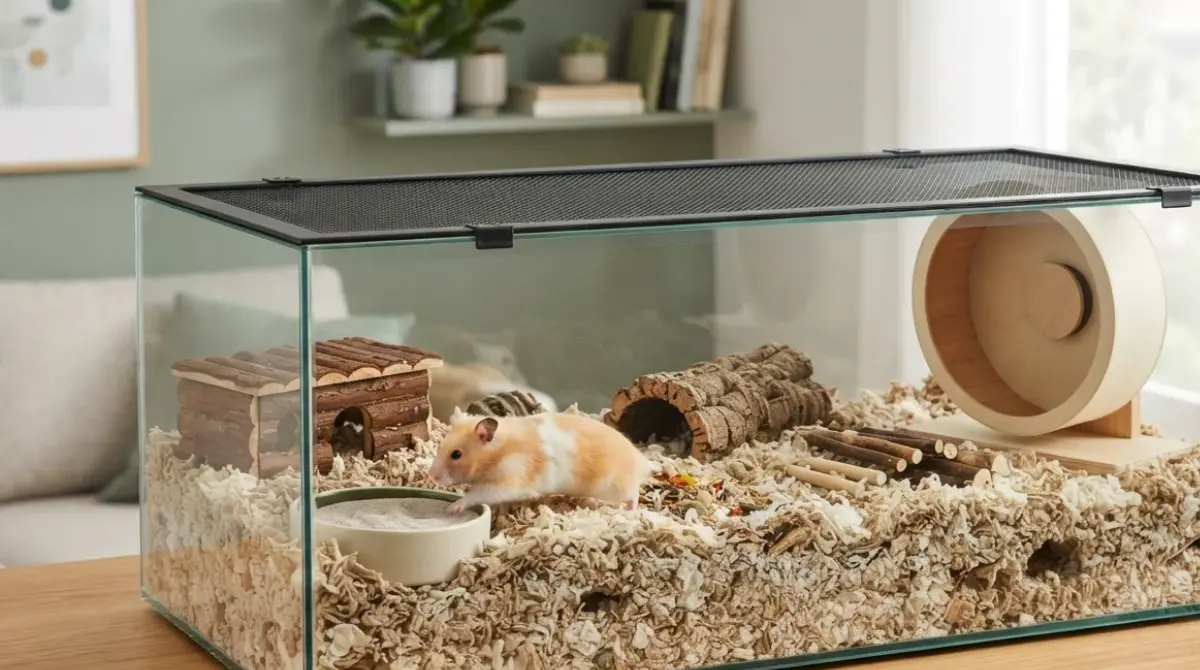
Table of Contents
Which type of hamster cage is actually best?
The short answer
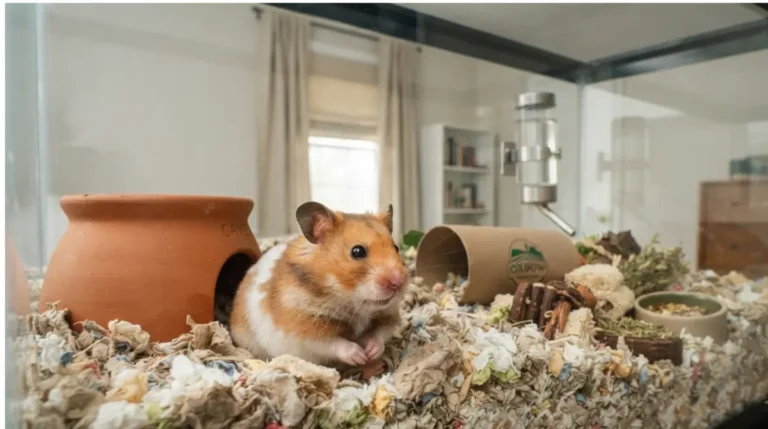
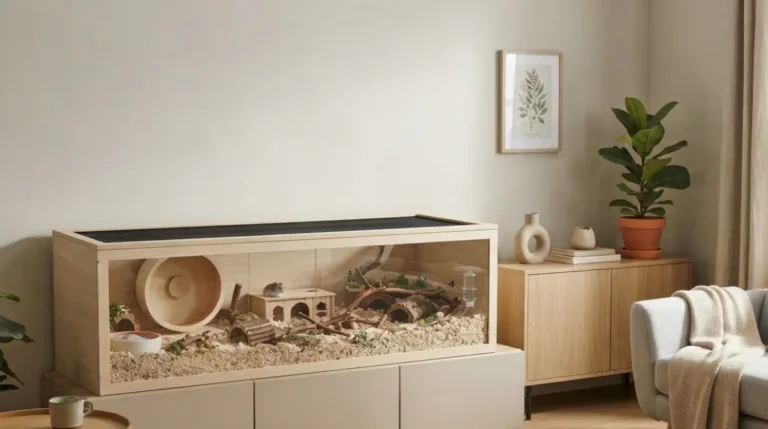
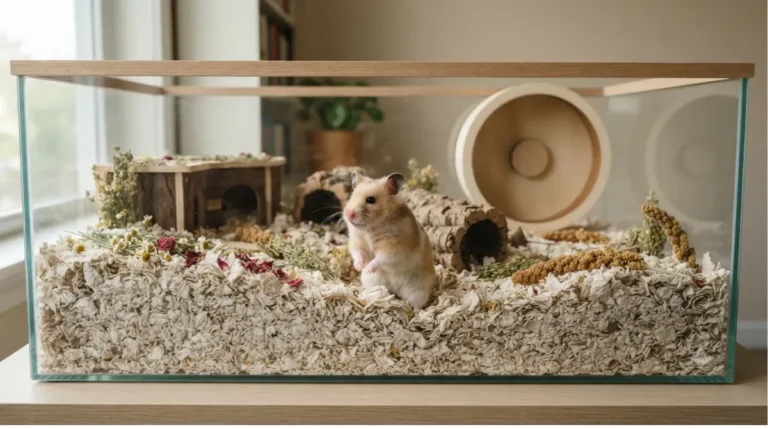
The best type of hamster cage is a tank-style enclosure with a ventilated mesh lid. The UK charity Blue Cross calls tanks ideal because they allow deep bedding, and says the home should be no smaller than 100 x 50 cm of floor space and 50 cm tall.
Material matters less than four things: floor space, bedding depth, airflow and escape-proofing. Our pillar guide to 775 square inches of unbroken floor space explains the standard; this article compares wire, glass and bin.
Syrian or dwarf? Start here
Blue Cross gives one size for every hamster. Where advice differs between Syrian hamsters and dwarfs (Campbell’s, Winter White, Roborovski, Chinese), we say so.
🩺 Health Note: This is general welfare information, not a substitute for an exam by a vet experienced with hamsters. If your hamster seems overheated, injured or unwell, contact one promptly.
Wire cages: good airflow, but the base is the problem
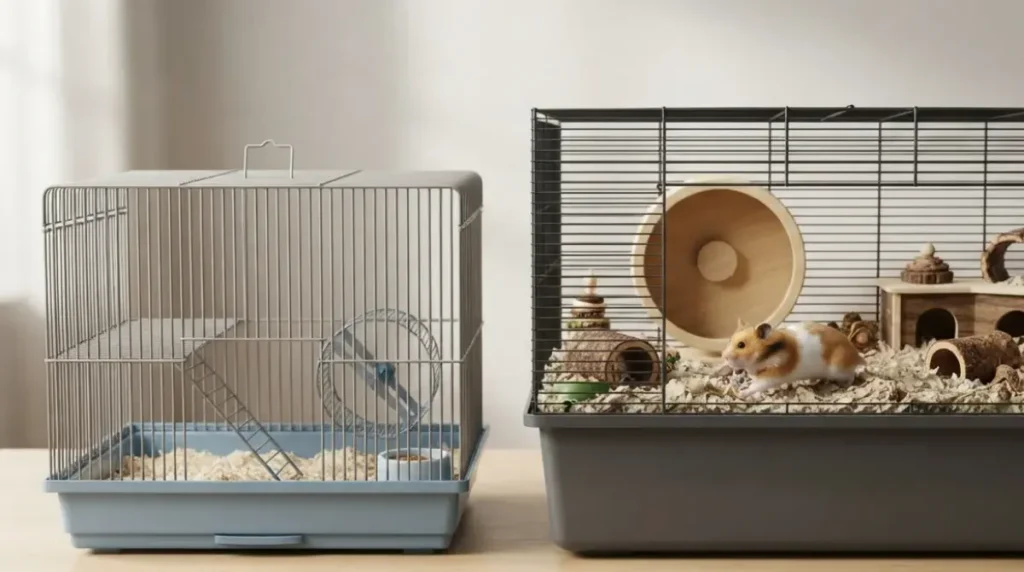
Wire cages give the best airflow, but many store-bought models pair it with a shallow tray and bars hamsters can bite and climb.
Bar spacing for Syrians vs dwarfs
Blue Cross says gaps in bars or mesh should be under 1 cm so hamsters can’t escape. That limit applies to every hamster, but smaller dwarfs, especially Roborovskis, may squeeze through gaps a Syrian can’t, so measure before you buy.
Shallow bases and bar biting
A shallow tray can’t hold deep bedding. In a Veterinary Record owner survey of Syrian hamsters, owners using deeper bedding were less likely to report bar biting, an association, not proof of cause. PDSA also prefers single-level cages, since hamsters have poor eyesight and can fall.
Glass tanks: deep bedding, with a catch
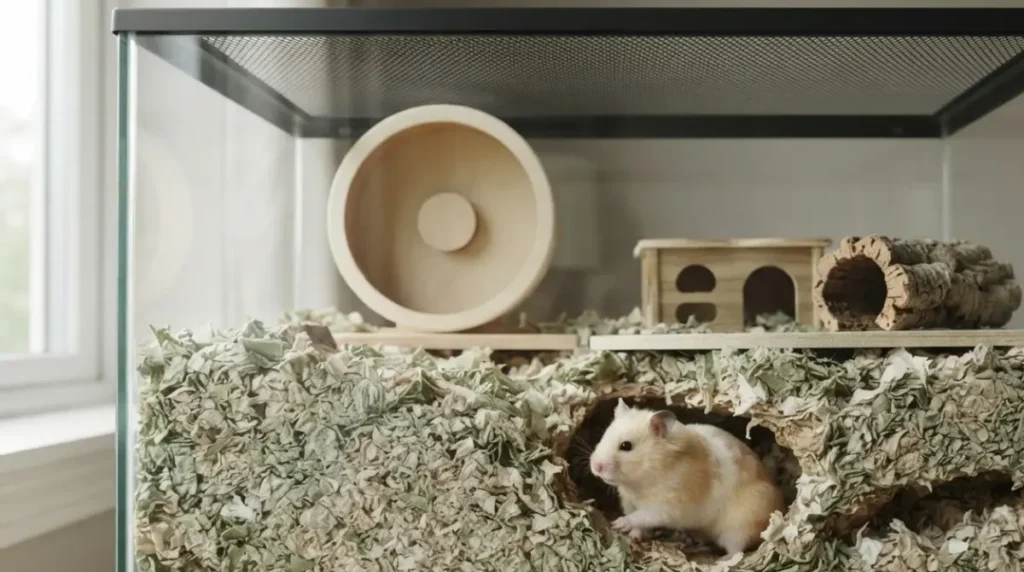
Blue Cross calls glass tanks and aquariums ideal for hamsters because the solid sides hold deep bedding and there are no wire bars to escape through.
Why tanks suit burrowing
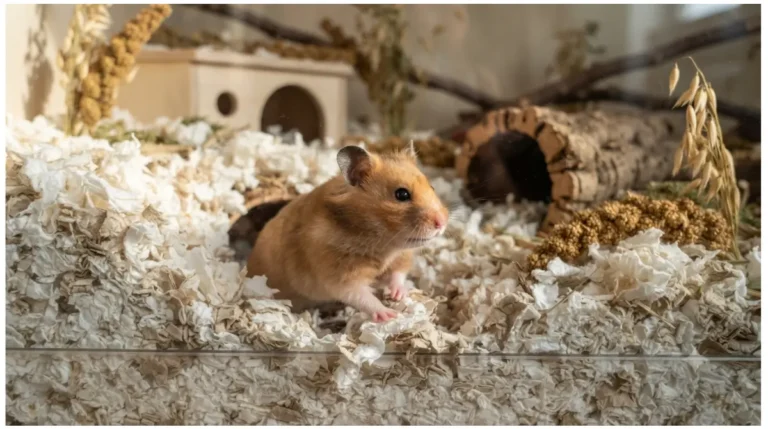
Blue Cross asks for at least 20 cm of digging bedding and PDSA for 25 cm; a tank’s solid sides can hold that. A tank is also naturally single-level, which PDSA prefers. A popular route is converting an IKEA Detolf cabinet; our IKEA Detolf floor-space guide covers its size.
The lid, the weight and the cost
Blue Cross says a tank needs a secure mesh lid for ventilation, and PDSA stresses a secure lid because hamsters are escape artists. Glass is heavy and usually costs more, so check live prices.
Bin cages: cheap and deep, but check the size
A converted storage bin is the lowest-cost route to deep bedding, but forum guides put the common 50-gallon bin at only about 650 square inches.
Is the bin big enough?
If accurate, that’s roughly 16% under 775. It’s forum-reported, not measured by us, so measure the inside base of your exact bin. Our bin cage guide covers size and build.
Chewing and lids
Bins can be chewed through, and holes give less airflow than mesh, so use a metal mesh lid panel.
⚠️ Watch Out: Some bin-cage guides allow half-inch hardware cloth. At about 1.3 cm, that is wider than Blue Cross’s under-1 cm limit, so choose quarter-inch (about 6 mm).
What every cage type has to get right
Whichever type you choose, floor space, bedding depth and ventilation decide whether it works.
Floor space: where the standards differ
Blue Cross says no smaller than 100 x 50 cm (775 square inches). PDSA cites the German Veterinary Association for Animal Welfare’s 100 x 50 cm minimum, noting that evidence for an exact size is limited. To check a listing, use our floor-space measuring guide.
🔄 Outdated Advice: Some US shelter handouts still recommend a 10-gallon aquarium. A standard one is 20 x 10 inches, about 200 square inches, roughly a quarter of 775.
Bedding depth
Blue Cross says at least 20 cm of digging bedding; PDSA says no less than 25 cm (10 inches). In research on Syrian (golden) hamsters, 10 cm of bedding produced more wire-gnawing, and none was seen at 80 cm (Hauzenberger et al., 2006).
Ventilation and heat
PDSA advises a steady 18–21 °C (about 64–70 °F) because an overheated hamster can’t escape the cage and could develop heatstroke. Blue Cross says tanks still need a mesh lid for ventilation. If your hamster seems overheated, contact a vet experienced with hamsters. Our guide to hamster glass tanks that get too hot has more.
Wire vs glass vs bin hamster cages compared
We haven’t measured these cages, so figures are source-attributed or typical, not test results.
| Type | Floor vs 775 sq in | Bedding depth | Airflow | Best for |
|---|---|---|---|---|
| Wire cage | Often short (PDSA) | Shallow tray | Excellent | Large, deep-base models |
| Glass tank | Meets it at 100 x 50 cm or larger | Deep | Needs mesh lid | Burrowers |
| Bin cage | ~650 (forum-reported) | Deep | Needs mesh panel | Budget builds, if big enough |
For Syrian hamsters
Pick a tank-style home with deep bedding. PDSA wants a wheel of at least 30 cm for Syrians, so check the height.
For dwarf and Roborovski hamsters
Blue Cross says dwarfs struggle to climb, and PDSA prefers single-level homes, so a tank-style enclosure with narrow gaps suits them. Some retailer guides still recommend wire for dwarfs; Blue Cross favors tanks.
On a budget or renting
A bin cage is usually cheapest if it reaches 775 square inches; glass is heavy to move.
Already bought a small cage? Here’s the fix
PDSA says most shop-bought hamster cages aren’t big enough, so you’re in good company.
Upgrade without starting over
✅ Do This: Measure the inside floor (length x width) and compare it with 775 square inches.
If it’s short, plan an upgrade; a right-sized bin is the lowest-cost route. If your hamster is biting the bars, try more space and deeper bedding first.
What to do with the old cage
It’s best not to keep your hamster in it long-term; for cleaning days, Blue Cross suggests a carrier or playpen. If you see wounds, limping or patchy fur loss, see a vet experienced with hamsters.
Hamster cage type FAQs
1. What is the best type of hamster cage?
Per Blue Cross, the best type of hamster cage is a tank at least 100 x 50 cm with a mesh lid.
2. Is a glass tank or wire cage better for a hamster?
Blue Cross rates tanks ideal for deep bedding; a wire cage needs a deep base and gaps under 1 cm.
3. Can you use a plastic bin as a hamster cage?
Yes, a plastic bin works if its inside floor reaches 775 square inches and its lid has metal mesh. Common 50-gallon bins may fall short.
4. Are wire cages bad for hamsters?
Not inherently, but PDSA says most shop cages are too small, and shallow wire-cage trays limit burrowing depth.
5. How much bedding does a hamster need?
Blue Cross says at least 20 cm and PDSA at least 25 cm; Syrian hamster research found less wire-gnawing with deeper bedding.
6. What bar spacing does a hamster cage need?
Blue Cross says gaps should be under 1 cm; smaller dwarfs may squeeze through wider ones, so measure first.
7. Do glass hamster tanks need ventilation?
Yes, Blue Cross says a tank needs a mesh lid for ventilation. PDSA warns an overheated hamster can develop heatstroke. Contact a vet experienced with hamsters if yours seems overheated.
8. Will a hamster chew out of a bin cage?
It can happen, so use a metal mesh lid panel. Quarter-inch mesh, about 6 mm, fits Blue Cross’s under-1 cm limit.
9. Is a 10-gallon tank big enough for a hamster?
No. A standard 10-gallon tank’s floor is about 200 square inches; Blue Cross recommends 775 (100 x 50 cm).
10. Which hamster cage type is cheapest?
A bin cage is usually cheapest, but its inside floor must still reach 775 square inches.
The bottom line
Blue Cross and PDSA point to the same targets: at least 100 x 50 cm of floor, 20–25 cm of bedding, a secure lid and good airflow. A glass tank or well-sized bin gets there easily; a large, deep wire cage can too. Next step: measure your cage’s inside floor.