A Calm Senior Hamster Care Setup for a Slowing Hamster

Senior hamster care setup is mostly about what you keep: Blue Cross says small wheels can damage the spine over time. Here’s what else stays.
Table of Contents
Your hamster is slowing down: what to change first
Species: Syrian and dwarf hamsters
If your hamster seems unwell right now, go straight to when to call the vet.
Otherwise, here’s the short answer for the senior hamster you’re watching slow down: keep the cage’s full floor space and change what’s inside it. Slowing down is normal as a hamster nears the end of its two-to-three-year life, and a layout built for a young hamster can start working against it. Below: which changes help, which “fixes” backfire, and how age differs for Syrian and dwarf hamsters. If your setup has been less than ideal, that’s fixable, and you’re already here.
🩺 Health Note: This is general information, not a substitute for an exam by a vet experienced with hamsters. The RSPCA says hamsters lose condition quickly and don’t show pain outwardly, so a hamster that seems ill needs a vet promptly. If you don’t have an exotics vet yet, find one before you need one.
When a Syrian or dwarf hamster counts as senior
There’s no single “senior birthday” for hamsters, so lifespan is the best guide: Blue Cross and PDSA both put it at about two to three years.
Syrian hamsters
PDSA says larger species like the Syrian hamster tend to live longer. A Syrian past its second birthday is in the last stretch of that range.
Dwarf hamsters
PDSA says smaller species such as Russian dwarfs tend to live less long, so start adapting sooner. We found no dwarf-specific lifespan from a charity or vet source; see how Syrian and dwarf needs differ.
Slowing down, or something else?
Blue Cross says small pets slow down with age and can develop arthritis. Slower is normal; not eating isn’t. See the vet section below.
Don’t shrink the cage: rearrange it
Species: Syrian and dwarf hamsters
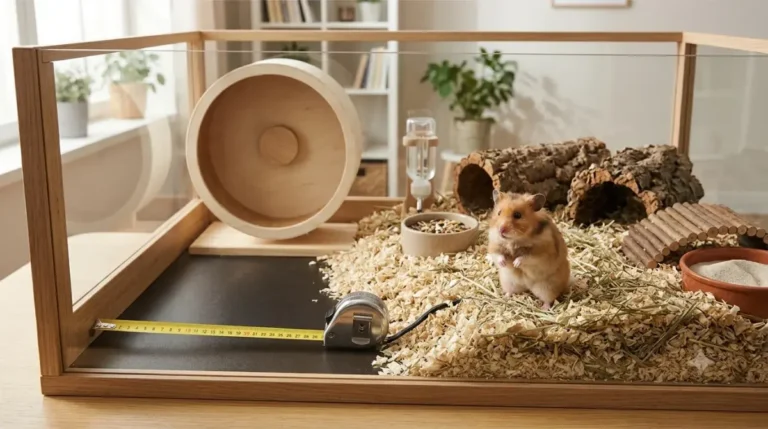
Don’t make the cage smaller. Keep the full floor space and rearrange the inside.
What some guides advise
Some keeper guides advise shrinking the cage or blocking off part of it.
What the welfare charities say
Blue Cross advises no smaller than 100 × 50 cm (about 775 square inches), 50 cm tall. PDSA gives the same minimum, citing a German veterinary welfare association, while noting little evidence exists for an exact size. Neither lists a smaller size for older hamsters (as of September 2026).
Our recommendation
Our position, editorial rather than a charity rule: keep the floor space and build a compact senior zone inside it. If your vet restricts space, after an injury for example, follow the vet. See how we set the site’s floor-space minimum.

Rebuild the layout around the nest
Species: Syrian and dwarf hamsters
Hamsters are short-sighted and misjudge drops, so Blue Cross warns about falls; PDSA prefers single-level cages over tall ones.
Bring essentials to the nest
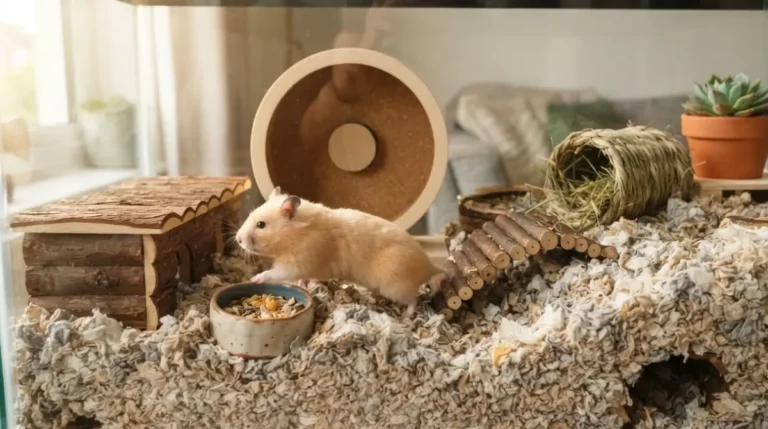
Our suggestion, untested: put the hide, food and water close together so a slower hamster walks less.
Gentle ramps, not tall platforms
Blue Cross says dwarf hamsters struggle to use tunnels on steep inclines and advises against elaborate tube systems. Keep platforms low and ramps shallow.
Change less once it works
PDSA notes hamsters like nests, toys and bowls kept in the same places.
Suggested senior zones on a 100 × 50 cm floor (our design, untested; measure yours first)
| Zone | Where | Key Detail |
|---|---|---|
| Nest | One short end | Hidden, padded with nesting material |
| Food and water | Beside the nest | Short walk |
| Dig area | Far end | Deep bedding stays |
Keep the digging depth and the right-sized wheel
Neither Blue Cross nor PDSA lowers bedding or wheel figures for older hamsters.
Bedding depth: two charities, two figures
Blue Cross says at least 20 cm (8 in) of digging bedding; PDSA says no less than 25 cm (10 in).
Wheel size by species
Wheel diameters by species (Syrian vs dwarf wheel guide)
| Species | Blue Cross | PDSA |
|---|---|---|
| Syrian | 27–32 cm | at least 30 cm |
| Campbell’s, Winter White | 22–25 cm | at least 20 cm |
| Roborovski | 20–22 cm | at least 20 cm |
| Chinese | 25–27 cm | not listed separately |
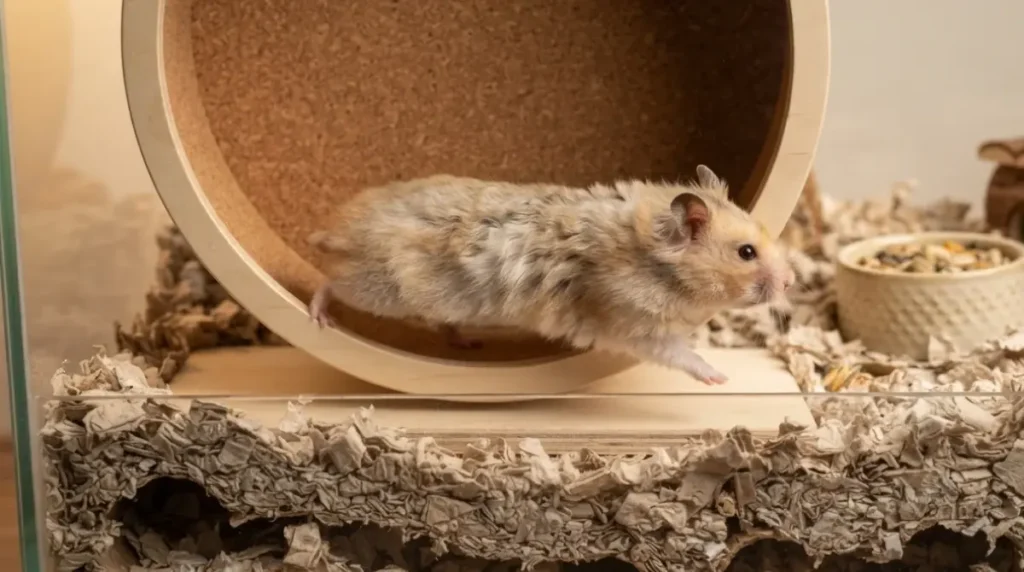
🔄 Outdated Advice: Wheels sold with cages are often too small, and Blue Cross says small wheels can damage the spine over time. Replace, don’t downsize.
What changes for an older hamster
Our suggestion, untested: keep a deep dig zone plus a shallower path to food and water. If yours struggles on the wheel or in deep bedding, ask a vet experienced with hamsters.
Keep an older hamster warm, never overheated
Species: Syrian and dwarf hamsters
🚨 Vet Now: If your hamster seems unwell in a hot room, contact a vet experienced with hamsters immediately.
Both charities ask for a steady room, away from draughts and direct sun.
A steady room
PDSA advises a steady 18–21°C (about 64–70°F). Keep the cage away from radiators, draughts and sun; Blue Cross gives the same advice. See keeping the room steady in winter.
Too hot
PDSA says a too-hot cage can cause heatstroke because hamsters can’t move away from it.
Too cold
Blue Cross and PDSA both warn that hamsters kept too cold can slip into torpor, a dangerous hibernation-like state. If you think that’s happening, contact your vet.
Slowing down or sick? When to call the vet
Species: Syrian and dwarf hamsters
🚨 Vet Now: A hamster that isn’t eating, seems unwell, or has changed in behaviour or appearance needs a vet experienced with hamsters immediately.
The RSPCA says hamsters don’t show outward signs of pain, so changes matter.
What normal slowing looks like
Blue Cross says small pets slow down with age; if you’re worried it’s more, speak to a vet straight away.
Changes that need a vet
Blue Cross lists not eating or drinking, not being active, breathing difficulty, lumps and poor grooming as warning signs in small pets.
Lumps, teeth and weight
The RSPCA says tumours and dental problems aren’t uncommon, tumours especially along the abdomen’s underside. PDSA says new lumps deserve a vet check; overgrown teeth can cause weight loss and drooling.
Frequently asked questions
1. When is a hamster considered senior?
There’s no single age. Blue Cross and PDSA give a two-to-three-year lifespan, so a senior hamster is nearing the end of that range.
2. Should a senior hamster’s cage be smaller?
No. Blue Cross and PDSA give a 100 × 50 cm minimum with no smaller size for older hamsters, so rearrange rather than shrink.
3. Does a senior hamster still need a wheel?
If yours uses one, keep the right-sized solid wheel; Blue Cross says undersized wheels can damage the spine.
4. How deep should bedding be for an old hamster?
Blue Cross says at least 20 cm and PDSA at least 25 cm; neither gives a lower figure for older hamsters.
5. How warm should a senior hamster’s room be?
PDSA advises a steady 18–21°C (about 64–70°F) away from draughts and direct sun; Blue Cross adds keep away from direct heat. If your hamster seems unwell in heat or cold, contact a vet experienced with hamsters immediately.
6. Should I rearrange a senior hamster’s cage?
Only when access is the problem. PDSA notes hamsters like nests, toys and bowls kept in the same places.
7. Is it normal for an old hamster to sleep more?
Slowing down is normal with age, per Blue Cross, but if you’re worried it’s more than that, speak to a vet straight away.
8. Do old hamsters get lumps or tumours?
RSPCA says tumours aren’t uncommon, especially on the abdomen’s underside; PDSA says any new lump deserves a vet check. Contact a vet experienced with hamsters.
9. Do dwarf hamsters need a different senior setup?
Sizes differ: wheel diameters vary by species, and PDSA says smaller species live less long, so adapt dwarf setups sooner.
10. How do I know when it’s time to say goodbye?
That’s a quality-of-life decision for your vet; Blue Cross explains vets weigh whether a pet can enjoy life without pain. Speak to a vet experienced with hamsters.
What to keep, what to change
Keep the floor space, bring the essentials close, hold on to the digging depth and right-sized wheel, and keep the room steady. When you’re unsure whether slower has become sick, ask a vet. Blue Cross explains how vets weigh quality of life when the time comes.