Hamster Escaped From Cage? A Calm Plan for Tonight and Beyond

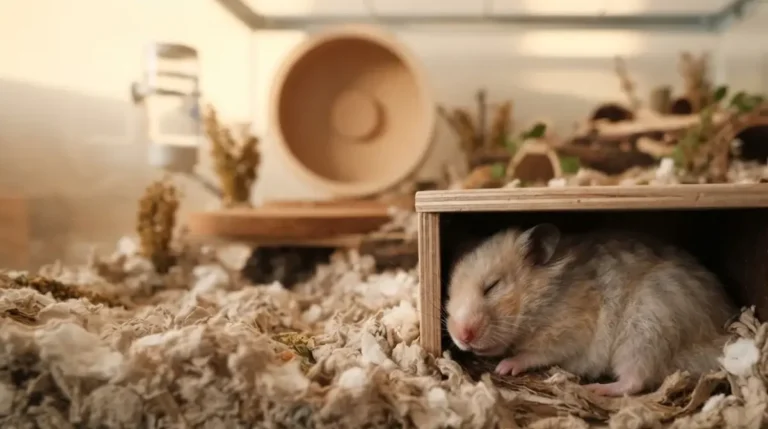
A hamster escaped from its cage is usually more active at night. Here’s a calm catch plan, then the lid, mesh and corner checks that come after.

 BySameer Patel
Last Updated:
A hamster escaped from its cage is usually more active at night. Here’s a calm catch plan, then the lid, mesh and corner checks that come after.
 BySameer Patel
Last Updated:
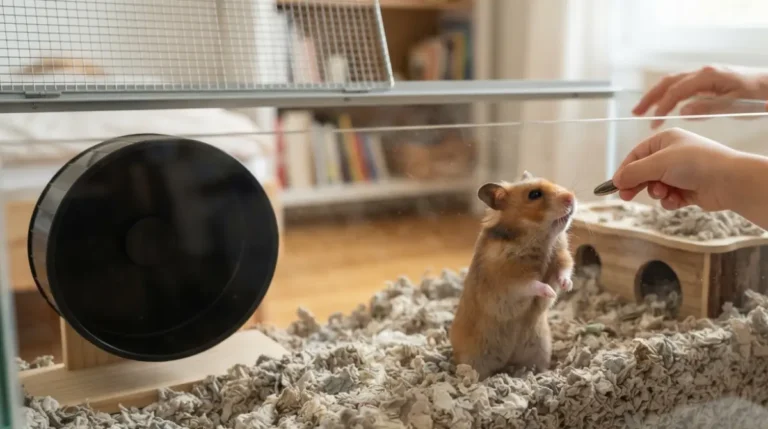
Senior hamster care setup is mostly about what you keep: Blue Cross says small wheels can damage the spine over time. Here’s what else stays.
 BySameer Patel
Last Updated:
A hamster cage for kids needs the same floor space as any other. PDSA says most shop cages fall short, and we measure one large kit against 775 sq in.
 BySameer Patel
Last Updated:
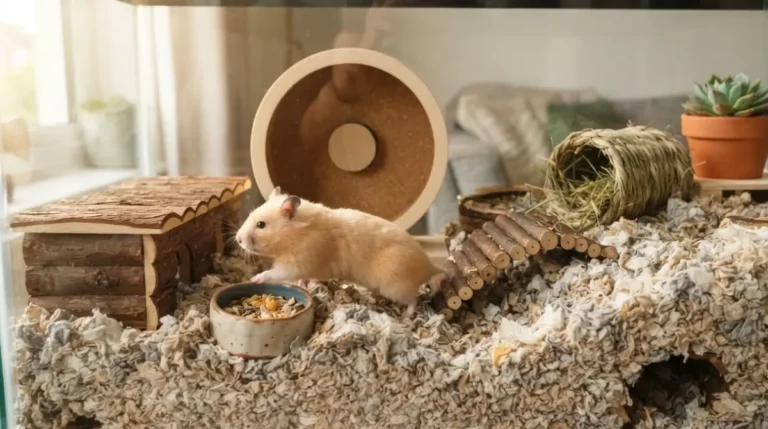
Cheap large hamster cages often look big but fall short: a 40-gallon breeder gives about 648 sq in. Here are 4 that list roughly 775 sq in or more.
 BySameer Patel
Last Updated:
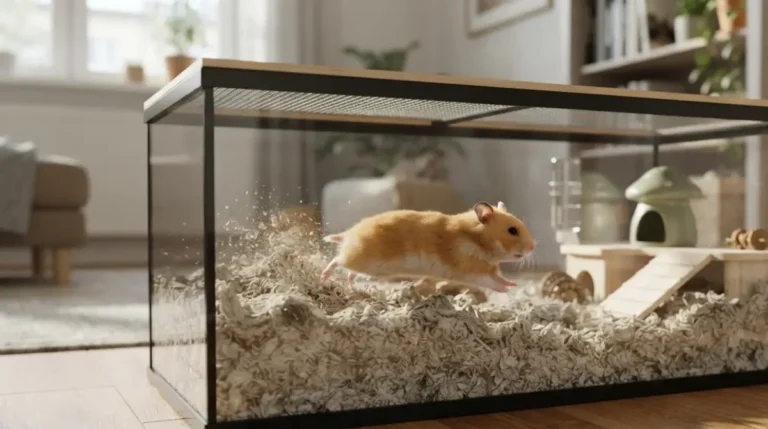
Cleaning a hamster cage less often can be kinder: hamsters rely on scent, and a large, deep-bedded setup stays fresh with daily spot cleans.
 BySameer Patel
Last Updated:
Stacked levels don’t add floor space for hamsters, and Blue Cross notes their poor depth perception makes ledge falls a real risk. Here’s what counts.
 BySameer Patel
Last Updated:
Moving your hamster to a new cage? Use a carrier, not an exercise ball, and bring the old nest along so the home still smells like theirs.
 BySameer Patel
Last Updated:
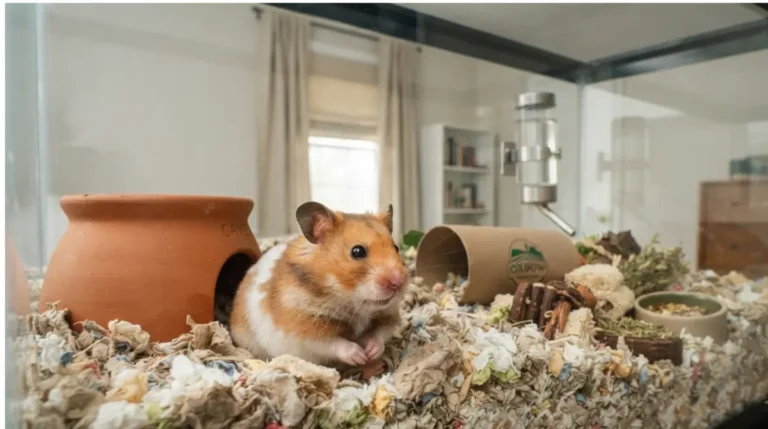
Hamster room temperature matters most overnight. Aim for a steady 64–70°F at the cage, not the thermostat, and see why Djungarians react to day length.
 BySameer Patel
Last Updated:
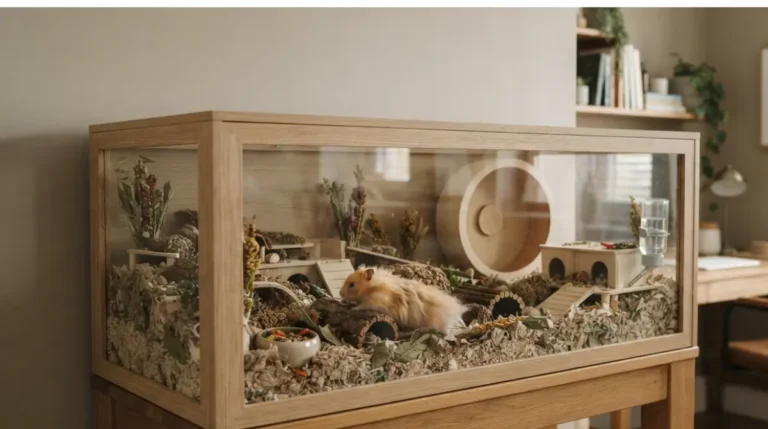
Hamster too hot in its glass tank? PDSA advises a steady 18–21°C (64–70°F), yet sunny tanks can run warmer. Here’s how to spot trouble and cool it safely.
 BySameer Patel
Last Updated:
Good hamster cage placement starts with a steady temperature, quiet, and distance from the kitchen, where CDC says small pets don’t belong.