Where to Put a Hamster Cage in a Calm, Steady Room

Good hamster cage placement starts with a steady temperature, quiet, and distance from the kitchen, where CDC says small pets don’t belong.
Table of Contents
Where should your hamster’s cage go?
The best place for a hamster cage is a quiet interior room that stays at a steady temperature. Keep it away from direct sun, drafts, noisy electronics, other pets, and the kitchen. This applies to Syrian and dwarf hamsters alike.
The short answer
- Choosing a room for a new hamster? Start with the room verdict table below.
- Home runs hot or cold? Go straight to the temperature section.
- Buying for a child or living with a cat or dog? See the household section.
Already placed it? Here’s what to check
If the cage is by a sunny window or next to the TV, you’re in good company. It’s one of the most common setups, and the fix is simple: move it.
🩺 Health Note: This is general placement guidance, not a substitute for an exam by a vet experienced with hamsters. A cage that gets too hot or too cold puts a hamster at real risk. If your hamster seems weak or won’t wake normally after a hot or cold spell, contact a vet today. If you don’t have an exotics vet yet, find one before you need one.
Which room is best for a hamster cage?
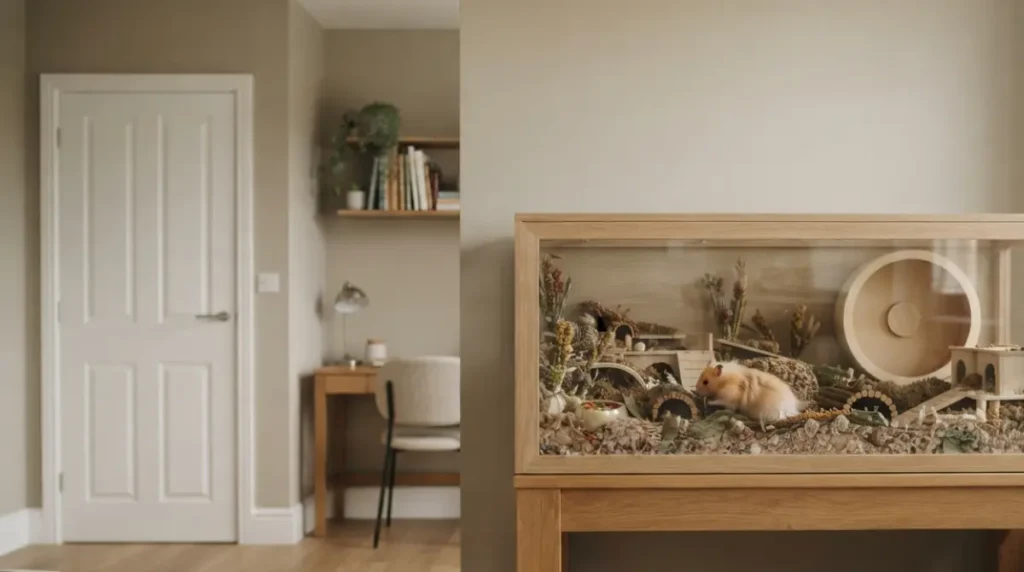
Put a hamster cage in a quiet interior room kept at a steady 64–70°F. It should be out of direct sun and drafts, and away from TVs, computers, running water, other pets, and food areas.
| Room | Verdict | Key Detail |
|---|---|---|
| Quiet bedroom or home office | Good | A door that closes keeps pets and noise out |
| Calm side of the living room | Okay | Keep it well away from the TV and speakers |
| Kitchen | Avoid | CDC advises keeping small pets out of food areas |
| Bathroom or laundry room | Avoid | Damp air and noisy, vibrating appliances |
| Garage, basement, or sunroom | Avoid | Hard to keep at a steady temperature |
Table based on guidance from PDSA, RSPCA, and CDC.
Can it go in my bedroom?
Yes, if night-time noise won’t bother you. Hamsters are nocturnal, so digging and wheel-running happen while you sleep.
Why not the kitchen?
Pet rodents, including hamsters, can carry germs even when they look healthy. CDC guidance on pet rodents and other small mammals says to keep them and their supplies out of kitchens and anywhere food is prepared or eaten.
How to choose the right spot within the room
Once you’ve picked a room, the exact spot matters just as much. This applies to every hamster species.
Keep it off windows, radiators, and vents
Direct sun can overheat a cage fast, and a hamster can’t escape it. A radiator, heating vent, or AC vent brings the same risk of sudden heat or cold drafts. Choose an interior wall instead.
🔄 Outdated Advice: “A sunny windowsill gives your hamster healthy light.” Current guidance from PDSA and RSPCA says to keep hamsters out of direct sunlight. A predictable lights-off time at night matters more than sun.
Floor or table? Choose a stable surface
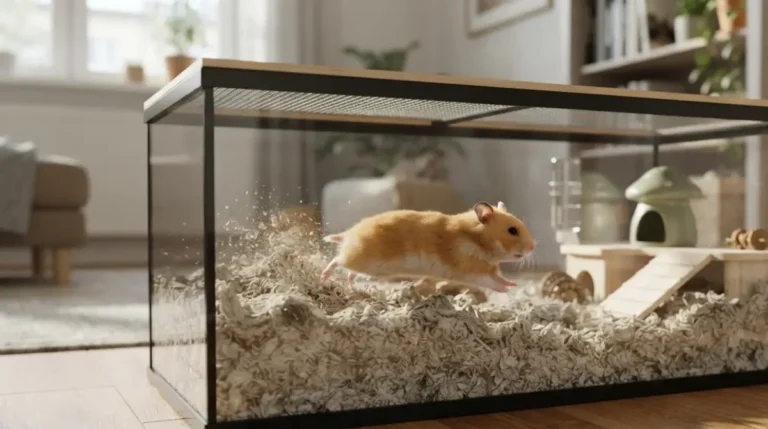
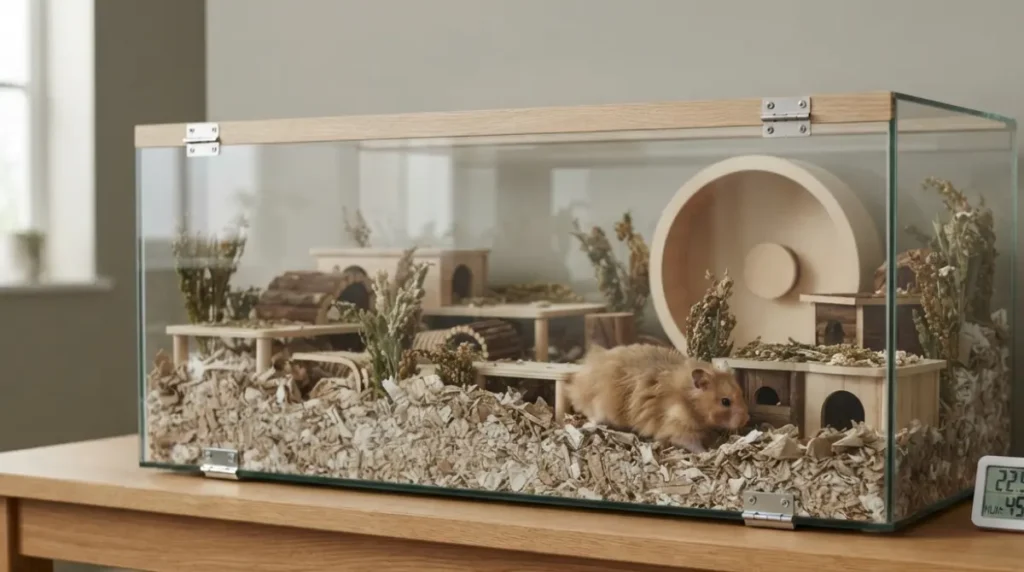
Pick a sturdy, level surface that can hold the full weight of the enclosure plus deep bedding. Put it in a room you can close off from other pets.
Measure the space before you buy
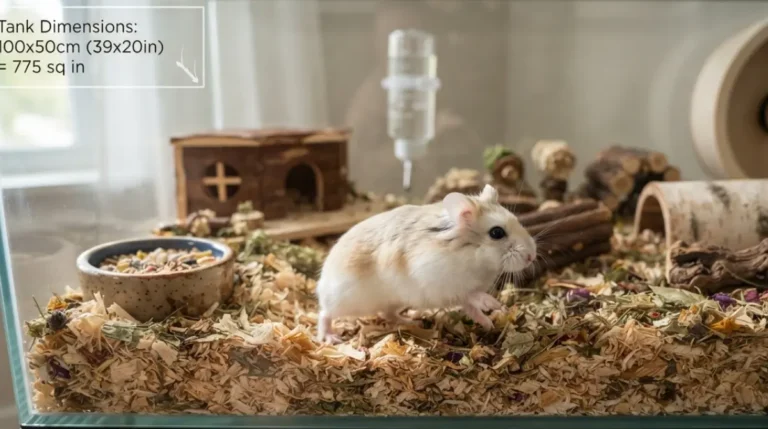
Before you buy a stand or clear a dresser, check what 775 square inches actually looks like. A correctly sized enclosure is bigger than most people expect.
✅ Do This: Measure the surface’s length and depth, then compare it with your enclosure’s footprint using our guide on how to measure your cage’s floor space.
What temperature should a hamster’s room be?
If your hamster won’t wake normally or seems weak after a hot or cold spell, contact a vet experienced with hamsters today. Don’t wait to see if it passes.
The recommended range (and why sources differ)
Respected sources give slightly different ranges for hamster room temperature.
| Source | Range | Key Detail |
|---|---|---|
| PDSA | 64–70°F (18–21°C) | A steady, conservative everyday target |
| Merck Veterinary Manual (owner guide) | 64–79°F (17–26°C) | A wider “ideal environment” range |
Aim for the steadier PDSA band where you can. Both are drawn from PDSA’s hamster housing advice and Merck’s owner guide to hamster housing.
🔍 Why It Works: A hamster can’t leave a cage that’s too warm or too cold. PDSA warns that heat can cause heatstroke. Cold can trigger torpor, a risky hibernation-like state, and Merck notes hamsters often hibernate below 41°F (5°C).
When to call a vet
Any hamster that seems unwell after the room got very hot or cold needs a vet experienced with hamsters, the same day.
How to check the temperature at cage level
Put a digital thermometer right beside the enclosure. The wall thermostat across the room can read quite differently. Merck lists good ventilation as a housing requirement, so check airflow in tanks and enclosed cages during warm weather.
Why a TV or computer nearby can stress your hamster
Hamsters hear ultrasound, which is high-frequency sound that people can’t hear. This is true for both Syrian and dwarf hamsters.
Household sources of ultrasound
RSPCA guidance on hamster environments says to keep hamsters away from these sources:
- TVs and computer screens
- Vacuum cleaners
- Running water
PDSA adds that noise and vibration from appliances like washing machines are stressful too.
🔍 Why It Works: What sounds silent to you can be a constant, stressful noise to your hamster. Moving the cage to the far side of the room is often enough.
Keep lights-out predictable
The RSPCA recommends a room where the lights go off at about the same time each night. Hamsters are also sensitive to bright sunlight.
Keeping the cage safe from pets, kids, and busy hallways
A good spot also has to work for the rest of your household.
A room you can close off from cats and dogs
Choose a room with a door you can shut. That way, cats and dogs can’t hover over or reach the enclosure.
Kids’ rooms and handwashing
CDC does not recommend pet rodents for children under 5. Everyone should wash their hands after handling a hamster or cleaning its cage.
Two Syrians? Two enclosures, two spots
Merck notes that Syrian hamsters can be aggressive toward other hamsters, so each needs its own enclosure. Plan room for both, and compare space needs for Syrian versus dwarf hamsters.
No ideal spot? How to make the best of what you have
Most homes have at least one workable spot for a hamster.
Small spaces and shared rooms
Our small-space hamster cage ideas and large enclosures that fit real rooms can help.
⚠️ Watch Out: Don’t buy a smaller cage just to fit a small spot. Rearrange the room instead, because floor space minimums don’t shrink with your apartment.
Moving the cage when seasons change
Moving the cage is fine when the weather demands it. In cold spells, relocate it somewhere warmer. In heat waves, move it to a cooler, shaded room.
Frequently asked questions
1. Where is the best place to put a hamster cage?
The best place for a hamster cage is a quiet interior room at a steady temperature, away from sun, drafts, electronics, and the kitchen.
2. Can I put a hamster cage in my bedroom?
Yes, a hamster cage can go in your bedroom if night noise won’t bother you, since hamsters are most active at night.
3. Should a hamster cage be near a window?
No. Keep a hamster cage away from windows, because direct sun can overheat it, and PDSA advises avoiding sunlight and drafts. If your hamster seems weak after overheating, call a vet experienced with hamsters.
4. Can a hamster cage go in the kitchen?
No. CDC advises keeping pet rodents, including hamsters, and their supplies out of kitchens and anywhere food is prepared or eaten.
5. What temperature should a hamster cage room be?
PDSA recommends a steady 64–70°F (18–21°C) for a hamster cage room; Merck’s wider range is 64–79°F (17–26°C). Contact a vet if your hamster seems unwell after extreme temperatures.
6. Can I keep a hamster cage in the garage or basement?
It’s best not to, because garages and basements rarely stay at a steady temperature, and cold can push a hamster into torpor. See a vet if your hamster won’t wake normally.
7. Should a hamster cage be on the floor or a table?
Place a hamster cage on a sturdy, level surface that holds its full weight, in a room you can close off from pets.
8. Can a hamster cage be near a TV or computer?
Keep a hamster cage away from TVs and computers. The RSPCA notes these produce ultrasound, which hamsters hear and find stressful.
9. Can a hamster cage be in a room with a cat or dog?
Choose a room you can close off from cats and dogs, so the hamster cage can’t be watched or reached by other pets.
10. Is it okay to move a hamster cage to another room?
Yes. Moving a hamster cage somewhere warmer in cold weather, or cooler in hot weather, protects your hamster from temperature extremes. Call a vet if your hamster seems unwell afterward.
Your next step
Pick a quiet interior room and check the temperature beside the cage, aiming for 64–70°F. Then check the spot against this list:
- No sun or drafts
- Away from electronics and running water
- A door you can close against other pets