How Often to Clean a Hamster Cage in a Large, Deep-Bedded Setup

Cleaning a hamster cage less often can be kinder: hamsters rely on scent, and a large, deep-bedded setup stays fresh with daily spot cleans.
Table of Contents
In a large hamster cage with deep bedding, you only need to spot clean daily or every few days. A full clean can happen far less often than the weekly schedule many pet-store guides still print. Here’s how to find the right rhythm for your setup.
- New owner with a first big cage? Start with the schedule table below.
- Been doing weekly full cleans? Read why less is often kinder.
- Keeping a dwarf hamster? Jump to the Syrian vs dwarf section.
- Cage smells fast? Go straight to the troubleshooting section.
Everything here applies to Syrian and dwarf hamsters, and we say so where they differ. Still sizing the enclosure? Start with how much floor space a hamster really needs.
The hamster cage cleaning schedule that fits your cage size
Most hamster cages need a spot clean daily or every few days. How often a full clean is due depends on cage size. The PDSA says small cages typically need one weekly, but larger set-ups may only need one every few weeks, and the RSPCA says once or twice a month is enough for most cages.
Spot clean, deep clean, full clean: what each means
- Spot clean: remove wet or soiled bedding, uneaten food, and droppings.
- Deep clean: replace one section of bedding down to the base and wipe that area.
- Full clean: empty everything and wash the whole base. This is rarely needed in large, deep-bedded cages.
What the PDSA, RSPCA and retailers each recommend
| Source | Spot clean | Full clean | Key Detail |
|---|---|---|---|
| PDSA (UK vet charity) | Daily | Weekly for small cages; every few weeks for larger set-ups | Return some dry old bedding |
| RSPCA | Every few days | Once or twice a month in most cases | Depends on cage size and toilet habits |
| Petco (US retailer) | Daily scoop | All bedding weekly; deep clean monthly | Retail convention |
| Experienced keepers | As needed | Every 2–3 months or longer with a litter tray | Keeper practice, not a welfare standard |
Sources: PDSA hamster care guide; the RSPCA’s hamster housing guidance; Petco; The Hamster Forum.
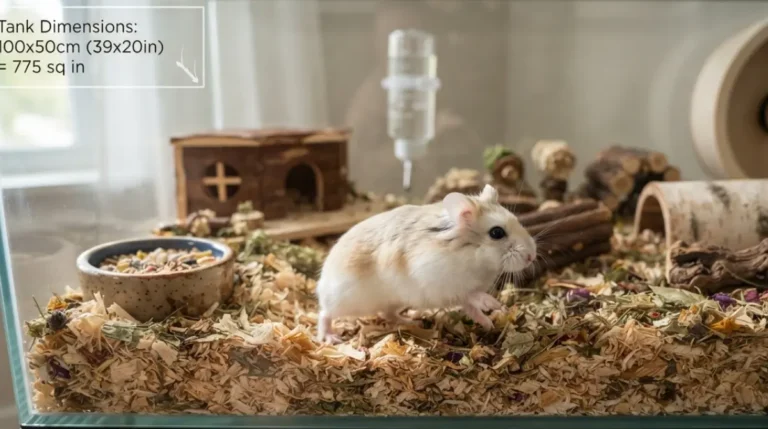
If you own one of the large cages that clear 775 square inches, you sit at the less-frequent end. Treat the calendar as a starting point: damp or smelly bedding overrides it.
Why cleaning too often can stress your hamster
Hamsters live by smell, so a spotless cage can feel like a strange one.
Scent is how your hamster knows it’s home
NC3Rs, which sets UK welfare guidance for laboratory hamsters, notes that hamsters rely heavily on scent cues and that removing them can cause stress. It recommends spot cleaning over replacing all the bedding. The PDSA adds that hamsters are creatures of habit, so nests, toys, and bowls should go back in their original positions.
🔄 Outdated Advice: “Replace all the bedding every week” is still printed on major retail sites. For larger set-ups, the PDSA says a full clean every few weeks may be enough, and the RSPCA puts most cages at once or twice a month.
If you’ve been doing weekly full cleans, you were following advice that’s still widely published. Easing off from here is the fix.
Always keep a handful of clean old bedding
Both the RSPCA and the PDSA advise mixing some dry, unsoiled old bedding into the new, so the cage still smells like home. The same principle helps when moving your hamster to a new cage.
What to remove in a spot clean (and what to leave)
A spot clean takes a few minutes and keeps most of the cage untouched.
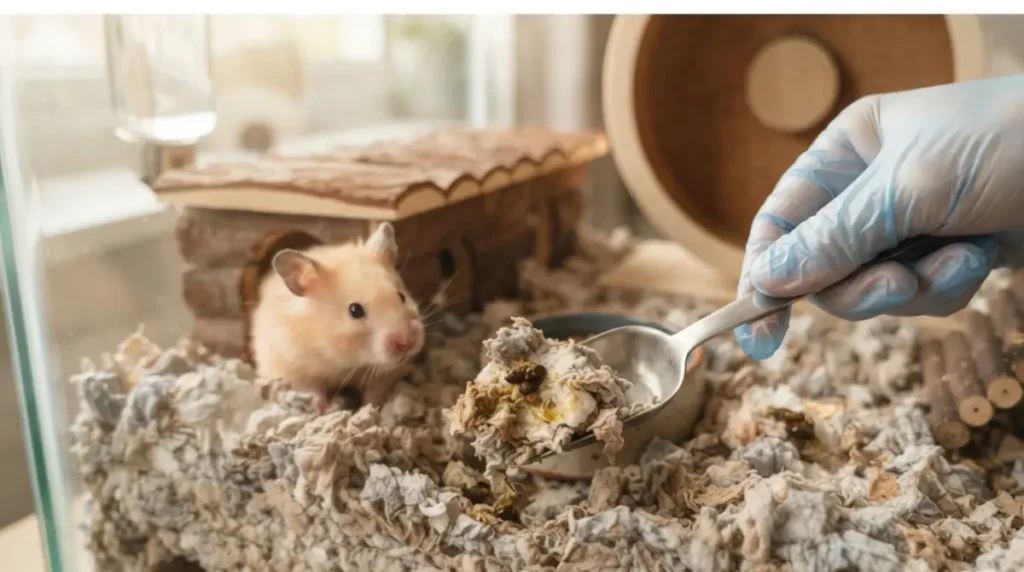
Your spot-clean checklist
- Wet or soiled bedding, usually in the toilet corner.
- Uneaten fresh food, including any left in hideouts.
- Visible droppings.
- Food bowl and water bottle, cleaned and refilled (the PDSA lists these as daily tasks).
- Soiled sand from the sand bath, and a wipe of the wheel if it’s been used as a toilet.
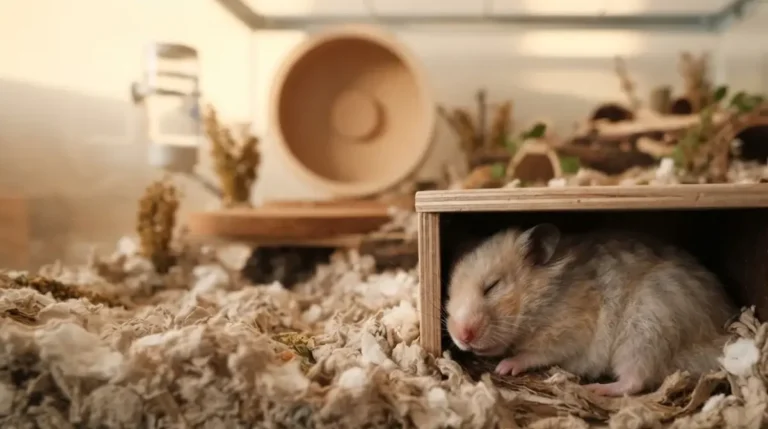
✅ Do This: Spot clean in the evening, when your hamster is awake. The RSPCA and the PDSA both advise against cleaning while they sleep, because the disturbance is stressful.
When to touch the food stash
The PDSA advises removing uneaten food, so take out any fresh food tucked into a hoard before it spoils. Experienced keepers generally leave dry food stashes alone unless they’ve been urinated on.
Syrian vs dwarf hamsters: cleaning differences
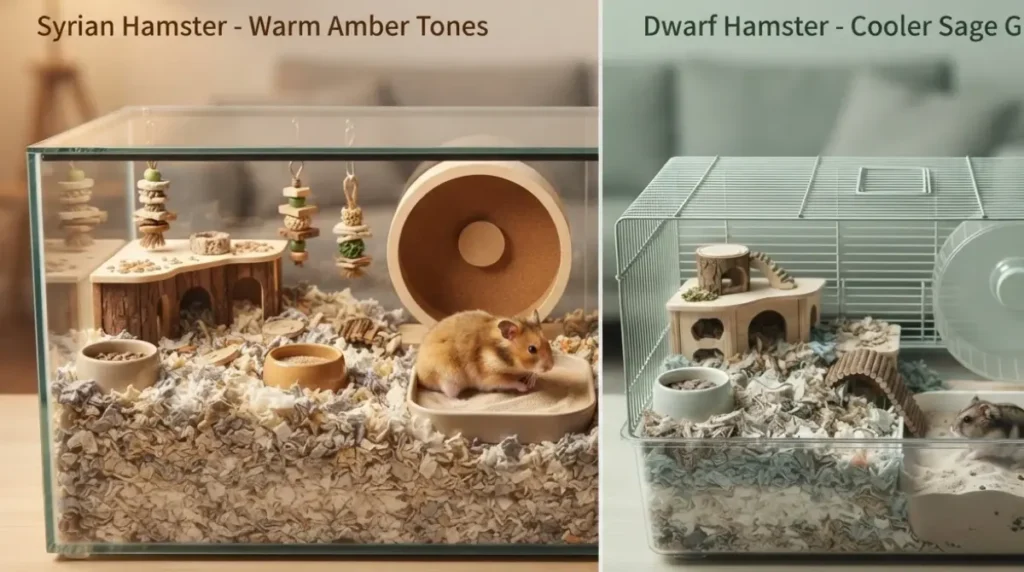
Welfare charities don’t publish separate cleaning schedules by species. The differences below come from experienced keepers.
Syrian hamsters
Many keepers find Syrian hamsters pick one toilet corner and will use a litter tray placed there. That keeps most of the bedding dry, which is why large Syrian setups can go longest between deep cleans.
Dwarf hamsters
Many keepers find dwarf hamsters use the sand bath as a toilet, so plan to sift or change the sand more often. Dwarf enclosures are also sometimes smaller, and a smaller cage needs cleaning more often. Compare the dwarf and Syrian space needs before assuming yours qualifies as large.
How to deep clean a large cage one section at a time
A big cage rarely needs emptying all at once.
The one-third rotation method
Experienced keepers recommend cleaning no more than about a third of the cage at a time:
- Start in the evening, while your hamster is awake.
- Remove the soiled section’s bedding down to the base.
- Wipe that area with a pet-safe cleaner, rinse, and dry fully. The PDSA gives the same order for full cleans.
- Refill with fresh bedding and mix in a handful of clean old bedding.
- Return any items to the same spots.
Safe cleaners and drying
Rinse off cleaner residue and let every surface dry before refilling. Deep bedding is what makes this schedule possible. The PDSA recommends no less than 25 cm (10 inches), and our guide to how deep hamster bedding should be covers the options.
⚠️ Watch Out: The PDSA warns that scented bedding can irritate a hamster’s airways. It also lists wood shavings and sawdust as very dusty, and shredded newspaper as risky because the ink can be toxic.
Hamster cage smells or bedding stays damp? Try this.
A cage that smells within days usually has a fixable cause.
Common causes
- A leaking water bottle soaking one area.
- Bedding too shallow to absorb urine.
- A toilet corner that isn’t being spot cleaned.
The RSPCA advises never letting bedding become damp or smelly. Fix the cause rather than masking the smell, and skip scented products.
When a full clean really is needed
Experienced keepers reserve a full clean for when your vet advises it, for an infestation, or before a new hamster moves into an enclosure. If the smell or wetness changes suddenly with no change to the cage or routine, contact a vet experienced with hamsters.
FAQ: how often to clean a hamster cage
1. How often should you clean a hamster cage completely?
In a large cage, a full clean every few weeks is often enough; the RSPCA suggests once or twice a month for most cages.
2. Is it bad to clean a hamster cage too often?
Yes, it can be. Hamsters rely on scent, and frequent full cleans remove familiar smells, which NC3Rs guidance links to stress.
3. How often should I spot clean a hamster cage?
The PDSA recommends a daily spot clean, and the RSPCA says every few days, removing soiled bedding, uneaten food, and droppings.
4. Should I remove my hamster’s food stash when cleaning?
Remove fresh food from a hamster’s stash before it spoils; experienced keepers generally leave dry food alone unless it’s soiled.
5. What time of day should I clean a hamster cage?
Clean a hamster cage in the evening while your hamster is awake; both the RSPCA and PDSA say disturbing a sleeping hamster causes stress.
6. Why does my hamster cage smell so fast?
A fast-smelling hamster cage usually means a leaking bottle, shallow bedding, or a toilet corner that isn’t being spot cleaned regularly.
7. Should I keep some old bedding when cleaning a hamster cage?
Yes. The RSPCA and PDSA both advise mixing dry, unsoiled old bedding into the new so the cage still smells familiar.
9. What should I clean a hamster cage with?
Use a pet-safe cleaner, rinse off the residue, and dry everything fully before adding fresh unscented bedding back to the hamster cage.
10. Do dwarf hamster cages need cleaning more often?
Sometimes. Keepers find dwarf hamsters often toilet in the sand bath, and smaller cages generally need cleaning more often than large ones.
11. How often should I clean a hamster water bottle?
The PDSA lists cleaning food bowls and water bottles as part of the daily spot clean for a hamster cage.
Keep it simple, keep it familiar
For a large cage with deep bedding, the routine is a daily or every-few-days spot clean, one section refreshed at a time, and a full clean only when it’s genuinely needed. Let damp or smelly bedding set the pace, not the calendar. Back to the hamster cage size guide to check your setup.